
NEWS
President Tinubu Unveils Nigeria’s Industrial Policy 2025 in Abuja, Charges MDAs and Private Sector to Drive Execution for Jobs, Exports and National Prosperity

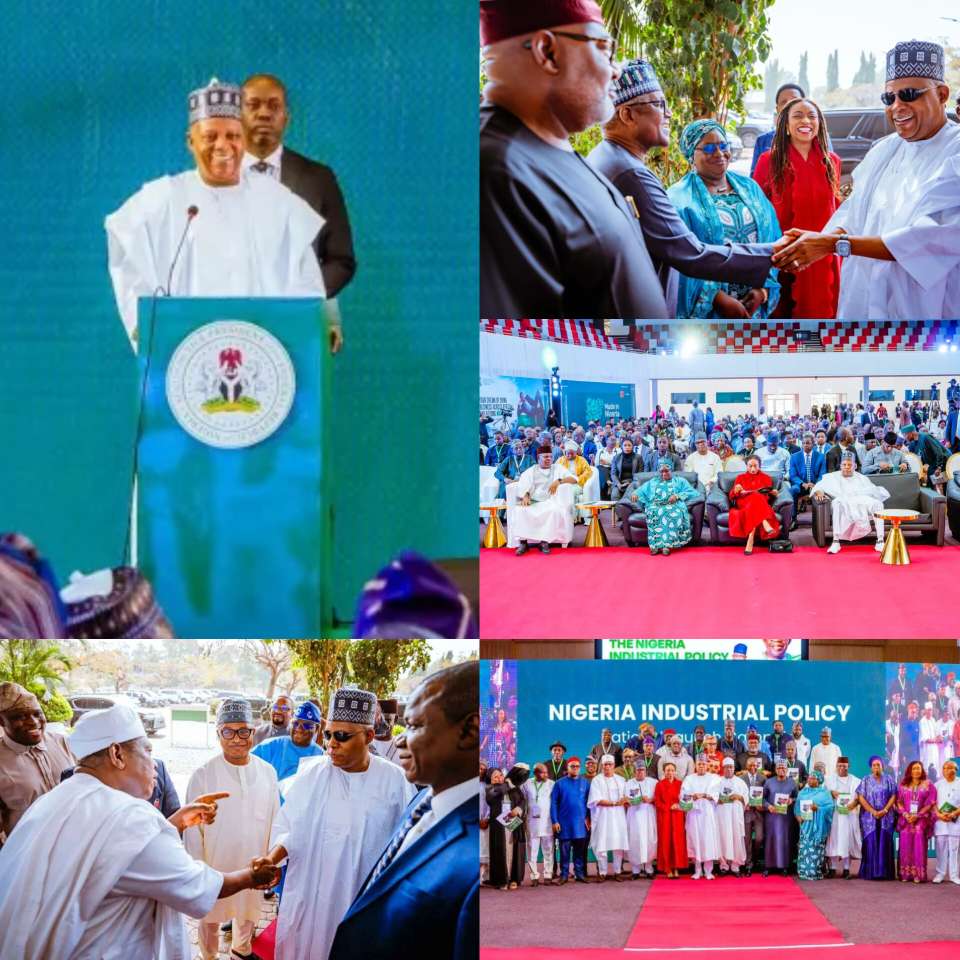
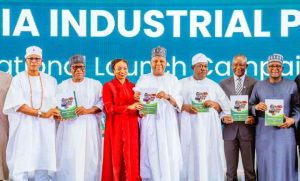
In what marks a defining moment for Nigeria’s economic transformation agenda, President Bola Ahmed Tinubu on Tuesday unveiled Nigeria’s Industrial Policy 2025, urging relevant ministries, departments, and agencies to ensure its swift and disciplined implementation.
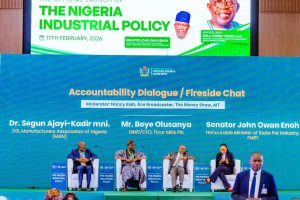
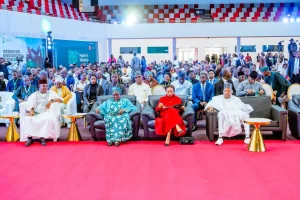
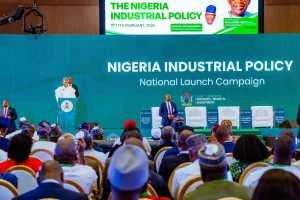
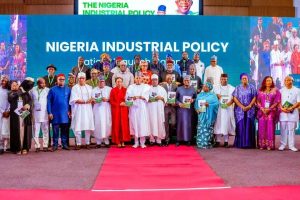
The President, represented by Vice President Kashim Shettima, formally launched the landmark policy at the Bola Tinubu International Conference Centre, Abuja, setting the tone for what the administration describes as a new era of production-driven growth and competitive industrial expansion.
The development was contained in a statement signed by the Senior Special Assistant to the President on Media & Communications (Office of the Vice President), Stanley Nkwocha.
According to Tinubu, the policy serves as a comprehensive roadmap for re-engineering Nigeria’s industrial base, unlocking value across sectors, and placing production, competitiveness, and job creation at the centre of the nation’s economic strategy. He emphasised that policies rarely fail at conception, but at execution, drawing attention to the need for focused and coordinated implementation across government institutions and industry players.
Addressing longstanding structural challenges within Nigeria’s industrial landscape, the President lamented that the country had long grappled “with fragmented value chains, high production costs, infrastructure gaps, policy inconsistency, and insufficient coordination between government and industry.” He added, however, that “this stops now,” noting that the Industrial Policy 2025 directly acknowledges these challenges and provides a framework to confront them head-on.
Reinforcing the urgency of action, Tinubu declared, “We have realised that industrialisation is not a wish you think about; it is an action you perform.
“More than that, we must remind ourselves that this task demands coherence across energy, trade, infrastructure, finance, skills, and innovation. It requires partnership between government and the private sector.”
The President made it clear that the administration’s benchmark for success would not be policy documentation, but visible economic outcomes.
“This administration will not measure success by the number of documents we produce.
“We will measure success by the number of factories that open their gates at dawn, by the jobs created for our young men and women, by the exports that leave our ports bearing the mark of Nigerian excellence, and by the value retained within our own economy.”
Outlining the focus of the policy, Tinubu stated that it prioritises strategic sectors anchored on Nigeria’s comparative and competitive advantages.
“It advances value chain development so that Nigeria moves steadily from exporting raw materials to producing finished goods.
“It integrates our micro, small, and medium enterprises into the heart of industrial growth, because prosperity must not be exclusive.
“It aligns infrastructure and energy with industrial ambition, for factories cannot run on policy alone. It strengthens skills, technology, and innovation to prepare our people for the industries of today and tomorrow.”
He further called for stronger private sector participation, urging businesses “to invest with confidence and responsibility, to deepen local value chains, to create jobs and transfer skills, and to partner with government in building a productive economy.”
President Tinubu commended the Minister of State for Industry, John Enoh, “for his disciplined leadership and clarity of purpose in driving” the policy. He noted that the minister has demonstrated that leadership is “not about noise, but about substance, coordination, and follow-through.”
The President also praised technical teams, industry stakeholders, manufacturers, investors, and practitioners for shaping the policy “into a document grounded in reality and informed by experience.”
Earlier, Enoh described the launch as a turning point aimed at building an industrial Nigeria that produces, competes, and prospers.
In his remarks, Chairman of Dangote Group, Aliko Dangote, thanked the federal government for what he described as a progressive policy. He highlighted that Nigeria is the only country in Africa where the private sector is larger than government.
He added that domestic manufacturers welcome the policy and expressed confidence that “the naira, this year, will be at ₦1,000 to $100.”
Dangote further noted that many investors are willing to invest in Nigeria due to exchange rate stability and ongoing economic reforms, stressing the importance of safeguarding local industries: “If there is no protection, there is no way any industry will thrive here.”
The United Nations Resident and Humanitarian Coordinator in Nigeria, Mohamed Fall, expressed confidence that the launch signalled a significant step toward inclusive economic growth. He highlighted the ongoing partnership between the United Nations Industrial Development Organization and Nigeria, aimed at positioning the country as a key player in regional and global value chains.
Also lending support, President of the Manufacturers Association of Nigeria, Francis Meshioye, commended the President for the initiative and pledged full support to ensure the policy’s effective implementation, particularly in promoting indigenous entrepreneurship as enshrined in the framework.
With the unveiling of the Industrial Policy 2025, the Tinubu administration has signalled a decisive shift from rhetoric to results, placing industrialisation at the heart of Nigeria’s economic future and challenging both government and the private sector to t
 ranslate ambition into measurable prosperity.