
NEWS
“Where Professors Are Now Aiding Illiterates To Rig Elections” — Peter Obi Says, Raises Alarm Over Nigeria’s Electoral and Judicial Institutions, Accuses Professors, Lawmakers and Lawyers of Undermining Democracy

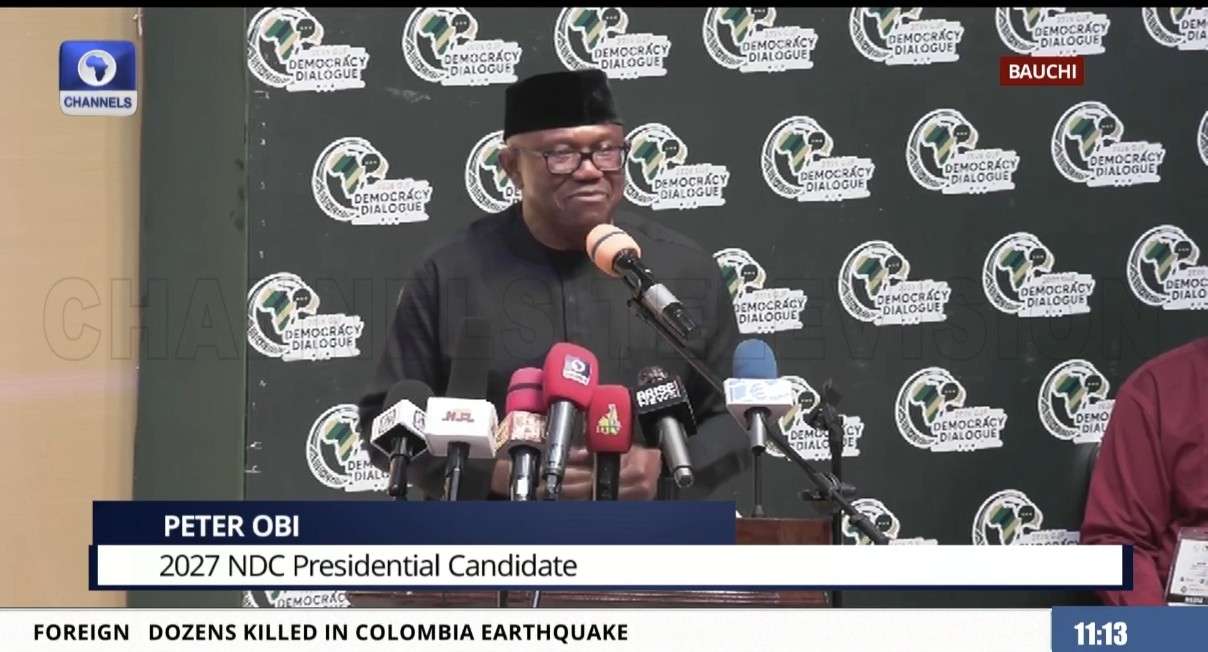
Presidential candidate of the Nigeria Democratic Congress, Peter Obi, has raised concerns over what he described as the worsening state of Nigeria’s electoral, judicial and democratic institutions.
Obi spoke on Tuesday at the 2026 Goodluck Jonathan Foundation Democracy Dialogue in Bauchi, the Bauchi State capital, where he reflected on his experience challenging an election result in court and compared it with what he described as the troubling state of the country’s institutions today.
Recalling his experience before the Court of Appeal, Obi said the judges who handled his case were people he had never met but nevertheless delivered a judgment in his favour.
“I went to the Court of Appeal; five judges I had never met gave judgment in my favour.
“So, if you look at that and look at what is happening today in Nigeria, where professors are now aiding illiterates to rig elections,” Obi said.
The former Anambra State governor argued that the contrast between his experience and the present situation demonstrated what he sees as a significant decline in the integrity of institutions responsible for protecting Nigeria’s democracy.
He also criticised lawmakers over what he alleged were changes to electoral laws that weakened provisions relating to forgery and other electoral offences.
“Where lawmakers have removed forgery as an offence in electoral matters. And Senior Advocates of Nigeria are defending forgery. Our religious leaders are now praying for criminal politicians for blessing. We have a crisis.”
Obi extended his criticism to the judiciary, alleging that some judges had become politically aligned and questioning the independence and neutrality expected of judicial officers.
“And above all, our judges are now singing, On your mandate we stand,’” he said.
According to Obi, the concerns he raised go beyond individual politicians or isolated incidents, pointing instead to what he considers a broader institutional breakdown affecting the electoral process, lawmaking, the legal profession, the judiciary and even sections of the religious community.
He stressed that the credibility of Nigeria’s democracy depends heavily on the strength and independence of its institutions, warning that their continued weakening could undermine public confidence in elections and the rule of law.
The former governor called for a reversal of the trend, describing the situation as a crisis that requires serious attention if Nigeria is to strengthen its democratic system and restore confidence in its institutions.