
NEWS
Iran Announces $30,000 Reward for Killing or Capturing US Soldiers

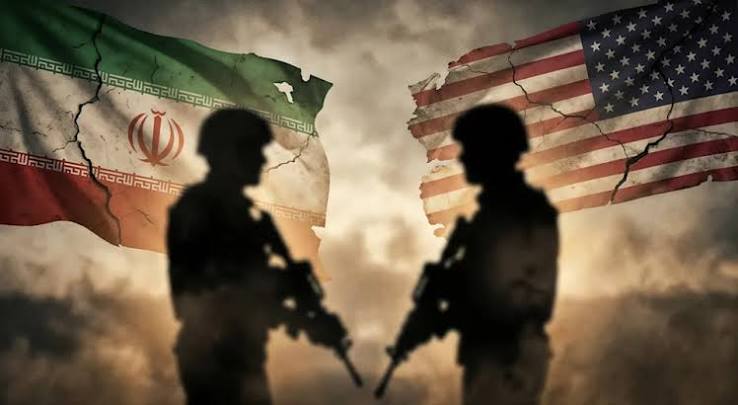
Iran’s military has announced a $30,000 reward for anyone who kills or captures and hands over a United States soldier, in a move that further escalates the already intense hostility between Tehran and Washington.
Iranian Army Commander-in-Chief, Major General Amir Hatami, announced the reward on Sunday, saying the initiative was introduced in response to what he described as “the large number of requests” from individuals seeking to contribute financially to Iran’s military effort.
According to Iran’s state news agency, IRNA, Hatami said the reward would be available to anyone who successfully kills or captures and hands over an American military personnel.
“Anyone who kills or captures and hands over an invading American military personnel will receive a reward equivalent to $30,000 or 5 billion tomans from the Islamic Republic of Iran’s Army,” Hatami said.
The Iranian military commander further announced a special incentive for women who participate in such an action, saying they would receive twice the standard reward.
“Courageous Iranian women who carry out such an action will receive double the reward,” he said.
However, Hatami did not provide details about where or when Iranian forces or civilians might be expected to encounter American military personnel, leaving unclear how the reward would be implemented or verified.
The announcement represents another dramatic development in the confrontation between Iran and the United States, which has intensified following months of military exchanges and failed diplomatic efforts.
The latest escalation follows the military confrontation that began after the United States and Israel launched attacks against Iran on February 28. The fighting continued for nearly 40 days before an April ceasefire was reached, followed by a framework for peace talks in June.
That diplomatic process subsequently collapsed, while intermittent exchanges of fire continued, particularly around southern Iran and the strategically significant Strait of Hormuz.
The Iranian announcement also comes amid longstanding allegations that Tehran has considered retaliatory action against US President Donald Trump. Concerns over potential Iranian attacks have reportedly influenced American security arrangements surrounding the president.
During a NATO summit in Ankara, Turkey, in July, US security officials reportedly employed an elaborate deception to move Trump away from his publicly expected aircraft amid fears of a possible Iranian attack. Reports indicated that Trump was secretly transferred to another aircraft while a decoy departure was maintained to obscure his movements.
The reward announced by Tehran is therefore likely to attract renewed international attention, particularly because it explicitly places American military personnel at the centre of a financial incentive for violent action.
Beyond the immediate military confrontation, the dispute between Iran and the United States continues to revolve around military operations, regional security, the future of negotiations and control of strategic waterways.
At the centre of these tensions is the Strait of Hormuz, one of the world’s most important energy corridors. The waterway serves as a major route for global oil shipments, meaning that any sustained military confrontation or threat to navigation could have consequences far beyond Iran and the United States.
Fighting, threats and military activity around the strait have repeatedly raised concerns about the security of global energy supplies, potentially affecting oil prices, international trade and economies that depend heavily on crude oil imports.
With diplomatic efforts yet to produce a lasting settlement and military tensions remaining unresolved, Iran’s latest reward announcement adds another volatile dimension to an already dangerous confrontation between Tehran and Washington.