
NEWS
President Bola Tinubu Joins DOJ Bid for More Time in US Court Battle Over Drug-Related Records

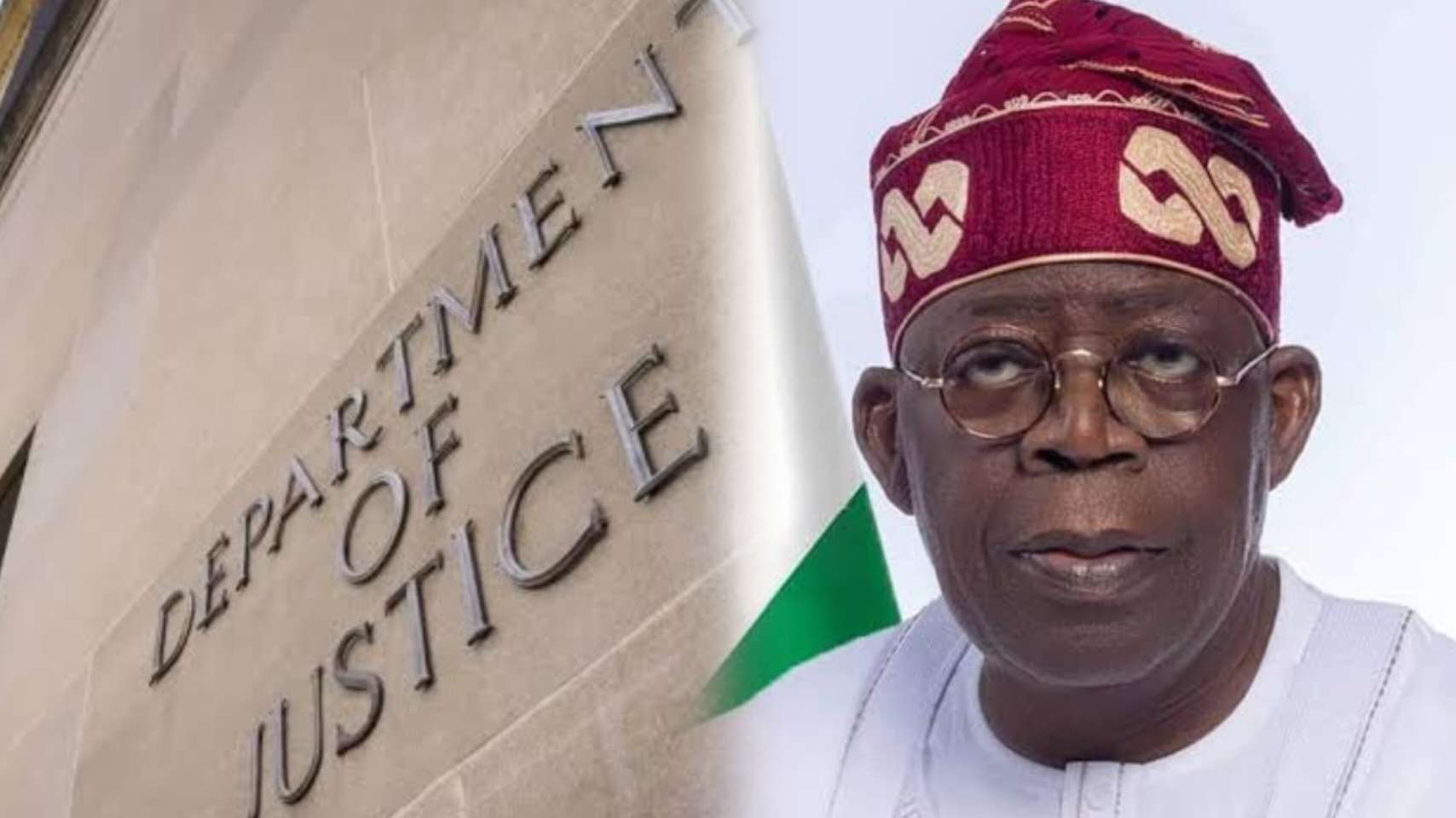
President Bola Ahmed Tinubu has formally joined the United States Department of Justice (DOJ) in seeking additional time to respond to a legal demand for the release of records linked to allegations of drug trafficking involving him, intensifying a closely watched court battle in Washington.
A filing submitted to the United States District Court for the District of Columbia shows that Tinubu, identified in the case as Intervenor Bola Ahmed Tinubu, joined the defendants’ request for a 10-day extension to respond to a motion for summary judgment.
The case, Aaron Greenspan v. Executive Office for U.S. Attorneys, et al., Civil Action No. 23-1816 (BAH), centres on a request for the disclosure of records connected to U.S. government investigations involving Tinubu.
Tinubu Aligns With DOJ Request:-
The notice of joinder filed on Tinubu’s behalf states that the Nigerian President agreed to join the defendants’ application for additional time and asked that his response follow the same timetable as that of the government defendants.
The filing was signed by Tinubu’s attorney, Christopher W. Carmichael of Henderson Parks LLC.
The development was brought to public attention by Von Batten-Montague-York, a U.S.-based policy advisory and lobbying firm retained by former Vice President Atiku Abubakar. The firm has been advocating for the release of the records and said Tinubu’s filing formally places him alongside the DOJ in seeking more time in the proceedings.
Judge Rejects 10-Day Extension:-
The requested 10-day extension, however, has reportedly been rejected by U.S. District Judge Beryl Howell, who has moved the case towards its next significant deadline.
August 21 is now a key date in the proceedings, although the date does not automatically mean that the disputed records will be released to the public.
Instead, the DOJ is expected to communicate its position to the court by that date regarding the demand for disclosure. Tinubu is also expected to formally state any objection he has to the release of the records.
The distinction is significant because the court timetable concerns legal responses and arguments over disclosure rather than an automatic public release of the documents.
Records Linked to Long-Running Controversy:-
The records at the heart of the case relate to U.S. government investigations and allegations surrounding Tinubu and alleged narcotics-trafficking activities dating back to the late 1980s and early 1990s.
The controversy is connected to a Chicago-based heroin-trafficking investigation involving individuals whom U.S. authorities alleged were part of a narcotics network.
One of the issues that has repeatedly featured in political debates surrounding Tinubu is the forfeiture of $460,000 in assets connected to an account associated with him.
U.S. authorities pursued the forfeiture proceedings in 1993, and the matter has subsequently been cited by Tinubu’s political opponents as grounds for further examination of records held by American authorities.
Tinubu Has Consistently Denied Drug Trafficking Allegations:-
Tinubu has consistently denied allegations that he was involved in drug trafficking or any criminal narcotics operation.
His representatives have maintained that the 1993 proceedings were civil forfeiture proceedings rather than a criminal prosecution against him.
They have also argued that the action involved the money or property in question and was not a criminal case brought against Tinubu personally.
Tinubu’s representatives have further maintained that he was never arrested, indicted, arraigned or criminally convicted for a drug-trafficking offence in the United States.
The latest court development nevertheless places the long-running controversy under renewed scrutiny, as the parties move closer to a decisive stage in the legal battle over whether the requested records should ultimately be made public.
With the August 21 deadline approaching, attention is now focused on the positions that will be presented to Judge Howell and what they could mean for the future of the records at the centre of the dispute.