
NEWS
U.S Military Opens Oil Shipping Corridor Through Strait of Hormuz Amid Iran War

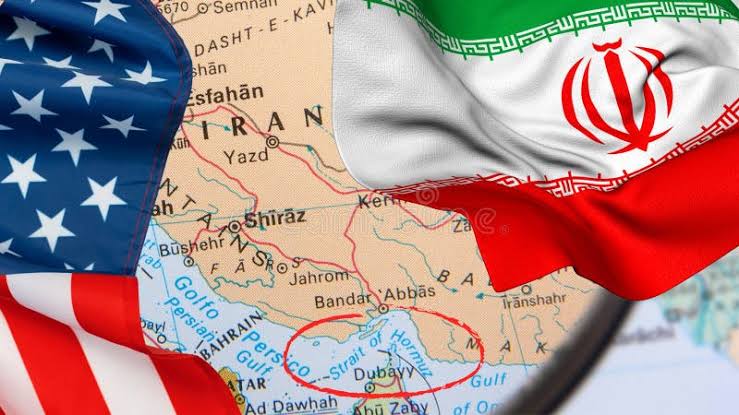
The United States military has reportedly established a shipping corridor through the strategically vital Strait of Hormuz, allowing millions of barrels of oil to continue reaching international markets despite the ongoing war with Iran.
According to a report by Axios, citing two US officials, the operation has been running quietly for several weeks, with between 15 and 20 oil tankers navigating the waterway daily through a southern channel along the coast of Oman.
The corridor is said to be facilitating the movement of approximately 10 million barrels of oil per day, representing about half of the volume that passed through the Strait of Hormuz before the outbreak of the war.
Under the reported arrangement, the US military assists empty oil tankers entering the Gulf from the Arabian Sea. The vessels then load crude oil from major Gulf producers, including the United Arab Emirates, Bahrain and Kuwait, before being guided back through the narrow and highly sensitive waterway.
The operation is reportedly being coordinated by a US military task force based at Fort Bragg in North Carolina.
U.S officials said the corridor became possible following a recent two-week campaign by U.S Central Command that reportedly weakened Iran’s radar and maritime surveillance capabilities. The reduction in Iran’s ability to monitor activity in the area is said to have created an opportunity for tankers to move through the southern channel with a lower level of risk.
One US official reportedly claimed that Washington has effectively maintained control of the southern lane of the Strait of Hormuz for about two months, although Iranian forces still retain the capability to threaten vessels moving through the region.
President Donald Trump has also indicated that large volumes of oil are continuing to pass through the waterway, saying a tremendous amount of oil is still coming out through the Strait of Hormuz.
However, conflicting reports continue to cast doubt over the true state of commercial shipping in the area. While Washington maintains that the strait remains open and that oil is moving through the corridor, Iran insists that shipping through the strategic passage remains restricted.
Reuters reported on August 19 that only six commodity vessels crossed the strait on Tuesday, a figure significantly below normal traffic levels and an indication that many commercial operators may still be avoiding the dangerous route.
The Strait of Hormuz remains one of the most critical energy chokepoints in the world, serving as a major route for global oil and liquefied natural gas shipments. Any prolonged disruption could send shockwaves through international energy markets and threaten supplies across several regions.
The reported US military corridor could therefore provide a crucial lifeline for global energy supplies, helping to keep millions of barrels of oil flowing at a time of heightened tensions in the Gulf.
Yet, with commercial traffic still far below normal levels and Iran continuing to pose a potential threat, the battle for control and access to one of the world’s most important waterways appears far from over.