
NEWS
Petrol Price Heads Towards ₦1,500 as Pump Price Jumps to ₦1,310 Despite Crude Oil Decline

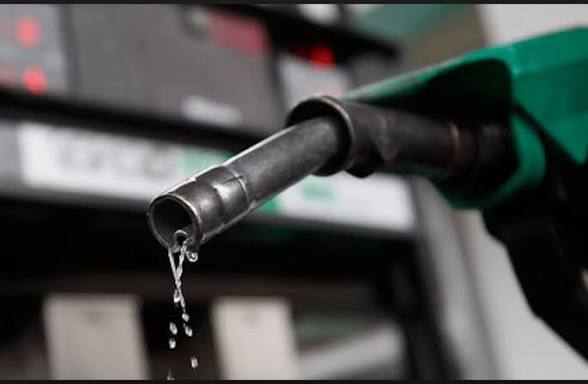
The price of Premium Motor Spirit (PMS), popularly known as petrol, is once again coming under pressure in Nigeria, with the latest increase in pump prices raising concerns that the product could soon approach the ₦1,500-per-litre mark.
The latest development saw the retail price of petrol rise sharply from about ₦1,205 to ₦1,310 per litre in Lagos and surrounding areas, representing a ₦105 increase.
The increase is particularly striking because it occurred at a time when international crude oil prices recorded a decline, prompting fresh questions about the factors driving petrol prices in the Nigerian downstream market.
Checks by Sunday Vanguard showed that MRS, one of the major players in Nigeria’s downstream petroleum sector, adjusted its retail price upward from ₦1,205 to ₦1,310 per litre in Lagos and environs.
Other petroleum marketers also reviewed their prices upwards, with retail prices reportedly ranging from ₦1,315 to more than ₦1,400 per litre, compared with the previous price level of about ₦1,205 per litre.
The latest increase has intensified concerns among motorists and businesses already grappling with elevated transportation and operating costs.
The petrol price increase has come against the backdrop of weaker international crude oil prices.
According to OilPrice.com, Brent crude was trading at $88.10 per barrel, representing a decline of 0.47 per cent, while West Texas Intermediate (WTI) fell by 0.16 per cent to $83.40 per barrel.
The movement in crude prices contrasts sharply with developments in Nigeria’s domestic petrol market, where depot and retail prices have remained elevated.
Analysts say the situation underscores the growing influence of local supply conditions, refining operations, logistics, exchange rates and other domestic market factors on the price Nigerians ultimately pay at filling stations.
Despite the decline in international crude benchmarks, domestic petrol depot prices remained relatively high across major locations monitored on Friday, August 28, 2026.
The Daily Depot Price Intelligence Report showed that Warri recorded the highest PMS price at ₦1,217 per litre, followed by Port Harcourt at ₦1,214, Calabar at ₦1,204 and Lagos at ₦1,202 per litre.
The lowest reported price stood at ₦1,203 per litre at Mainland and Soroman depots in Calabar.
In Warri, Liquid Bulk sold petrol at ₦1,215 per litre, Masters at ₦1,210, Matrix at ₦1,217, Sigmund at ₦1,215 and T.S.L at ₦1,215 per litre.
In Lagos, Aiteo and Dangote depots were both listed at ₦1,200 per litre.
The figures reveal significant regional differences in depot prices and suggest that the Nigerian downstream market is being influenced by more than fluctuations in the international crude market.
Although crude oil remains a major raw material in the production of refined petroleum products, a reduction in international crude prices does not automatically result in an immediate or proportional reduction in the price of petrol at Nigerian filling stations.
Several other variables determine the final cost of petroleum products, including refining margins, availability of refined products, import parity, foreign exchange rates, freight charges, marine transportation, storage expenses, depot charges, financing costs, taxes and the level of competition among suppliers.
Domestic refining capacity is also becoming an increasingly important factor as locally refined petroleum products compete with imported supplies.
Consequently, changes in international crude prices may take time to filter through the domestic supply chain, while other costs can offset the impact of a decline in crude benchmarks.
The international oil market itself has continued to show mixed movements across different crude benchmarks.
While Brent and WTI recorded declines, Murban crude increased by 4.04 per cent to $95.75 per barrel.
The OPEC Basket also gained 1.06 per cent to $87.31, while the Indian Basket rose by 1.53 per cent to $89.52.
The mixed performance highlights the complexity of the global oil market and reinforces the fact that Nigerian petrol prices cannot be determined solely by tracking one international crude benchmark.
The widening gap between international crude prices and domestic petrol prices could have far-reaching consequences for motorists, businesses and the wider economy.
If depot prices remain elevated despite softer international crude benchmarks, petroleum marketers may come under increasing pressure to maintain or further increase pump prices in order to protect their margins.
The situation could become more challenging where transportation expenses, financing costs, logistics and other operational expenses remain high.
For motorists, higher petrol prices could mean increased daily transportation costs. For businesses, particularly those dependent on vehicles, generators and logistics networks, rising fuel expenses could add significantly to operating costs.
The impact could also spread across the broader economy through higher transportation fares, increased logistics expenses and more expensive movement of food and other essential commodities.
Such developments could further complicate efforts to contain inflation, particularly because fuel prices have a direct and indirect impact on the cost of moving goods and services across the country.
Despite the pressure on prices, increased competition among domestic refiners and petroleum suppliers could help moderate the extent to which higher depot prices are passed on to consumers.
As alternative sources of locally refined petroleum products become more available, marketers could have greater flexibility in sourcing products, potentially creating stronger competition within the downstream market.
However, the extent to which this competition translates into lower pump prices will depend on supply volumes, production costs, distribution networks and other market conditions.
For now, the latest price movement indicates that Nigeria’s petrol market is becoming increasingly dependent on domestic factors, including refining capacity, product supply, logistics, exchange rates and market structure.
The prospect of petrol moving closer to ₦1,500 per litre will therefore remain a major concern for motorists and businesses if the current upward pressure on pump prices persists.
With depot prices continuing to hover around elevated levels across several regions, the relationship between depot prices and retail pump prices will remain critical in determining where petrol prices go next and how much further the latest increase could push transportation costs, inflation and the overall cost of living in Nigeria.