
NEWS
Tupac Shakur Murder: Former Gang Boss Duane ‘Keffe D’ Davis Found Guilty Nearly 30 Years After Rapper’s Death

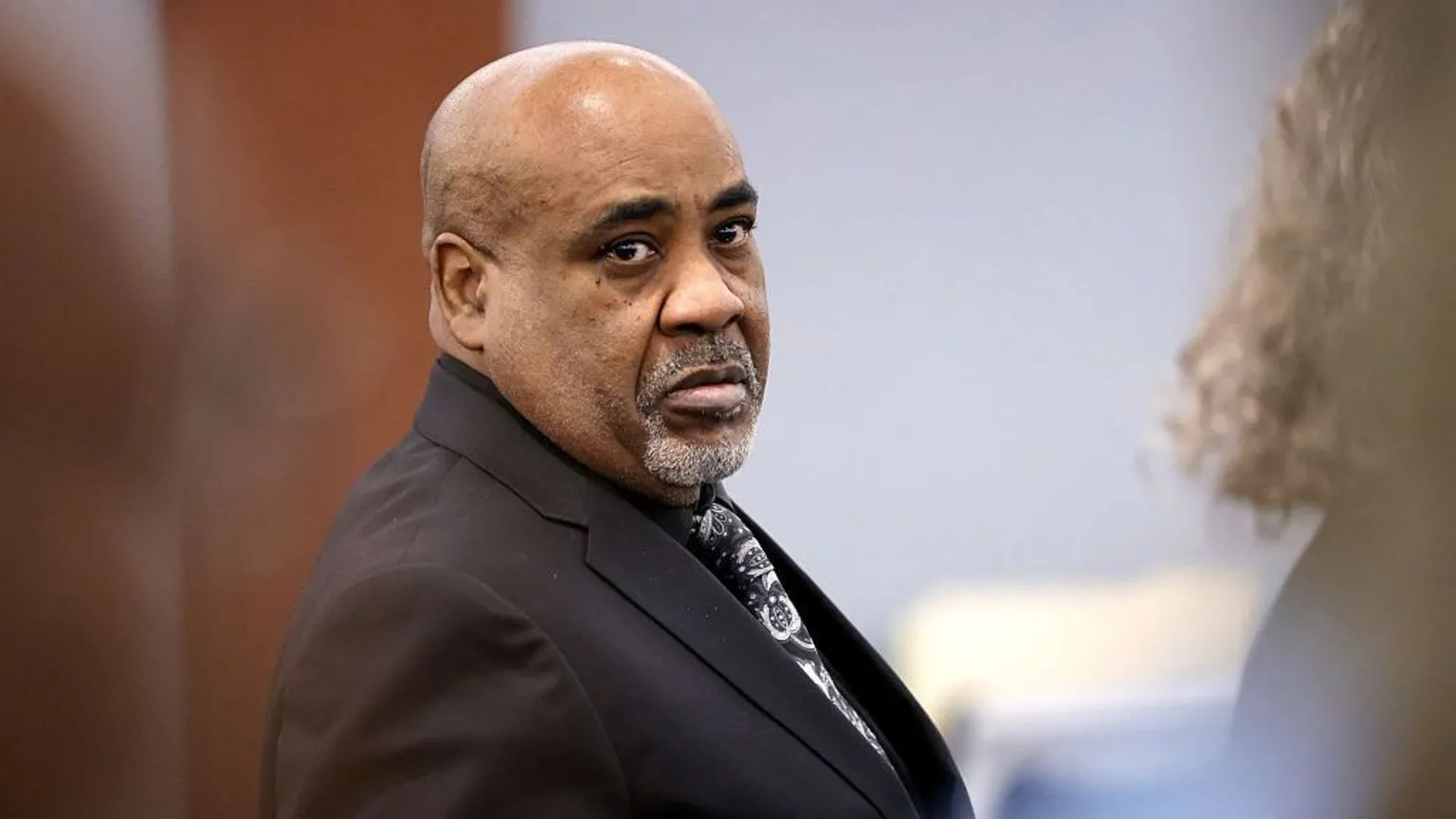
Former gang boss Duane “Keffe D” Davis has been found guilty of orchestrating the 1996 murder of rap icon Tupac Shakur, bringing a dramatic breakthrough to one of the most closely watched cold cases in American music history.
A Las Vegas jury convicted the 63-year-old Davis of one count of murder with a deadly weapon over Shakur’s death in a drive-by shooting on 7 September 1996.
Davis stood impassively in a black suit inside the Las Vegas courtroom as the verdict was delivered. After the proceedings, he indicated that he intended to challenge the conviction on appeal.
The verdict marks the first conviction connected to the killing of Shakur, whose death at the age of 25 shocked the music world and became the subject of decades of speculation, conspiracy theories and unanswered questions.
Prosecutors Say Davis Ordered the Killing:-
During the trial, prosecutors portrayed Davis as the mastermind behind the shooting, arguing that while he did not personally pull the trigger, he orchestrated the attack and provided the firearm allegedly used by his nephew, Orlando Anderson.
Anderson, who was associated with the South Side Compton Crips, was identified by prosecutors as the person who fired the fatal shots from a white Cadillac. He died in an unrelated shooting in 1998 and had consistently denied involvement in Shakur’s killing.
Prosecutors said the shooting was motivated by retaliation after Anderson became involved in a physical confrontation with Shakur and members of his entourage in Las Vegas just hours before the rapper was killed.
The circumstances surrounding the murder were particularly explosive because Shakur’s death occurred during a period of intense tension between rival factions associated with the East Coast and West Coast hip-hop scenes, alongside longstanding conflicts involving the Bloods and Crips.
Davis’ Own Statements Became Central Evidence:-
One of the most significant pieces of evidence presented against Davis was his own account of the events.
The court heard a recording of a 2008 police interview in which Davis acknowledged that he was inside the vehicle from which the shots were fired. He maintained, however, that he was not the person who fired the bullets that struck Shakur.
Davis later provided additional details about his alleged involvement in his 2019 memoir, Compton Street Legend, as well as through various media appearances and interviews.
His statements became particularly important to the prosecution because of a protective agreement he had previously reached with authorities. Prosecutors argued that Davis’ later public disclosures and media activity had effectively undermined that protection, paving the way for his statements from the police interview to be introduced at trial.
In closing arguments, prosecutor Binu Palal urged jurors to believe Davis’ repeated public descriptions of his role.
For years, Palal argued, Davis had been telling audiences “that he is responsible for Tupac Shakur’s murder” through documentaries, his memoir, podcasts and a police interview.
“He’s the shot caller in every instance in every iteration he’s the leader of the South Side Crips.
“When you have the shot caller sitting shotgun when shots are fired, there’s no doubt he’s responsible,“ Palal told the jury.
Defence Called Davis’ Claims Fiction:-
Davis’ defence team offered a dramatically different interpretation of his statements.
His lawyers argued that the former gang leader had exaggerated or fabricated his stories as part of an effort to build his public profile, generate publicity and make money from books and media appearances.
Defence lawyer Michael Sanft urged jurors to regard Davis as an unreliable storyteller whose claims could not establish his guilt beyond a reasonable doubt.
“There’s no proof,“ he told the jury.
But the argument failed to persuade the panel.
After receiving the case on Monday, jurors deliberated for only a matter of hours before returning a guilty verdict.
Emotional Scene as Verdict Is Read:-
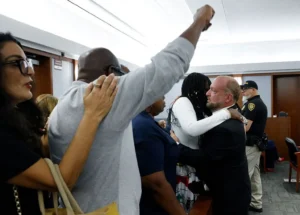
The courtroom became emotional as the verdict was announced. Members of Shakur’s family held hands, with some embracing and crying as the conviction was read. Shakur’s sister was seen embracing one of the prosecutors following the verdict, while other relatives remained visibly emotional nearby.
Outside the courthouse, fans who had followed the case for years also reacted with tears and cheers, reflecting the enduring impact of Shakur’s music and legacy.
The rapper had been just 25 when he was killed, at a time when his career was at its peak. He went on to become one of hip-hop’s most influential and commercially successful artists, with more than 75 million records sold worldwide.
Sentencing Set for October:-
Before the courtroom emptied, Clark County District Court Judge Carli Kierny scheduled Davis’ sentencing for 13 October. During the procedural discussion, Davis appeared to interrupt by raising his hand and asking about his personal belongings.
““I would like my stuff,“ he told the judge, referring to items including his phone.
He then added: “I would like to appeal this matter.“
The judge explained that an appeal could be pursued following sentencing.
Clark County District Attorney Steven Wolfson later said Davis faces a minimum sentence of 40 years in prison.
Prosecutors, however, do not intend to seek additional gang enhancements, with Wolfson citing Davis’ age as a significant factor.
“I don’t know a defendant convicted of murder who doesn’t plan to appeal.
“We feel confident in the strength of our case,“ Wolfson said at a news conference the day after the verdict.
For nearly three decades, the killing of Tupac Shakur remained one of America’s most notorious unsolved murders. The conviction of Davis now represents a major turning point in a case that has continued to captivate generations of music fans and has kept the circumstances surrounding 
 one of hip-hop’s most legendary figures firmly in the public spotlight.