
NEWS
American Congresswoman, Nancy Mace Sparks Outrage After Using Nigeria Photo in Immigration Campaign

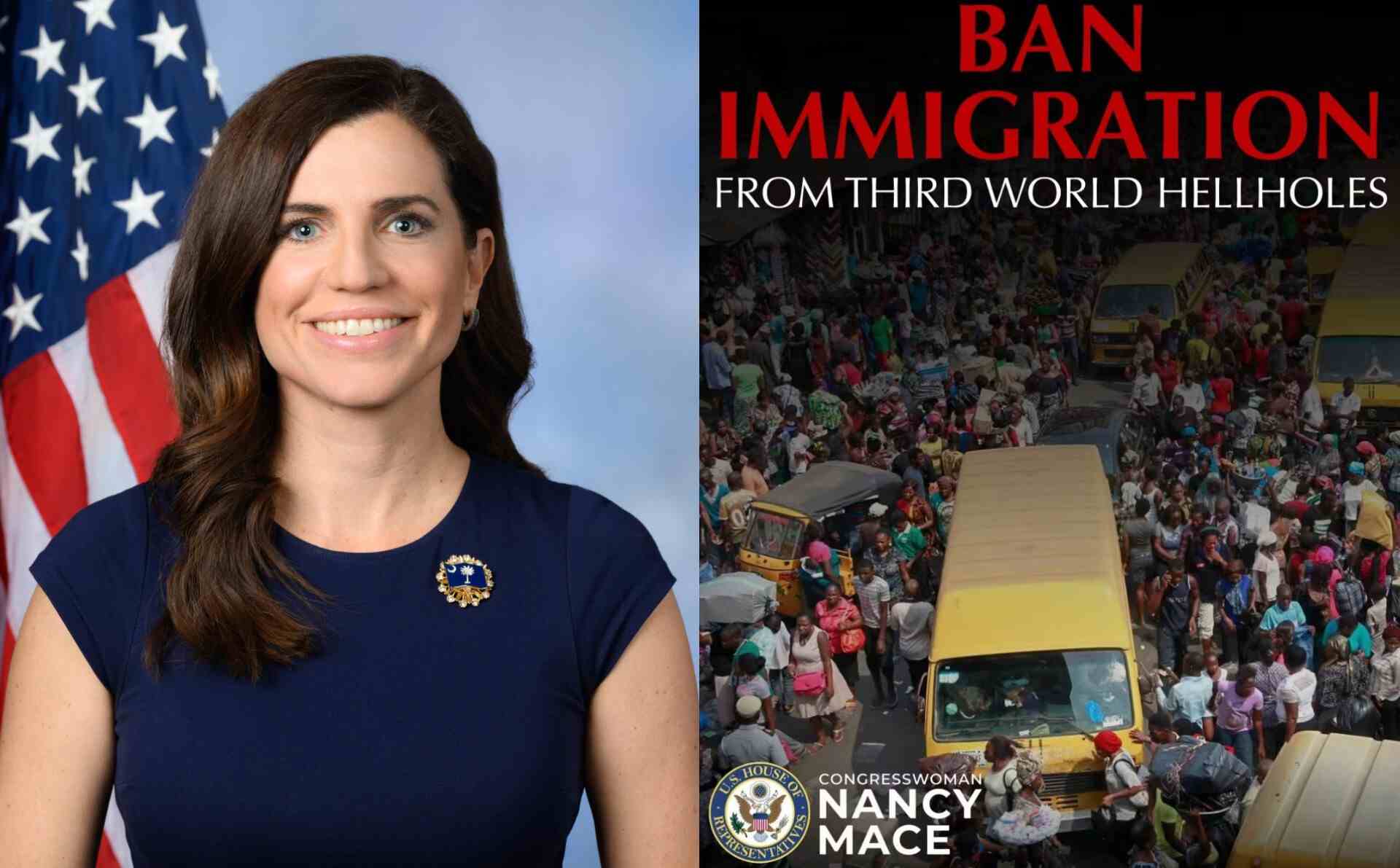
American Congresswoman Nancy Mace has stirred controversy after using a photograph of Nigeria in a social media campaign promoting a proposed immigration restriction targeting citizens of what she described as “third world countries.”
Mace, a Republican member of the United States House of Representatives, shared the campaign message on X, formerly known as Twitter, alongside a photograph depicting Nigeria, as she advocated for tougher restrictions on immigration into the United States.
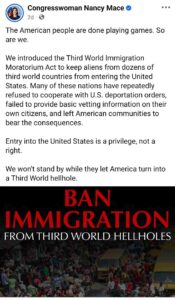
In the post, Mace wrote:
“The American people are done playing games. So are we.
“We introduced the Third World Immigration Moratorium Act to keep aliens from dozens of third world countries from entering the United States. Many of these nations have repeatedly refused to cooperate with U.S. deportation orders, failed to provide basic vetting information on their own citizens, and left American communities to bear the consequences.
“Entry into the United States is a privilege, not a right.
“We won’t stand by while they let America turn into a Third World hellhole.”
The post immediately drew attention because of the use of Nigeria’s image in connection with a message describing certain countries as part of the “third world.”
Mace’s comments come amid continuing debates in the United States over immigration enforcement, deportation, border security and the conditions under which foreign nationals should be admitted into the country.
Her proposed legislation, titled the Third World Immigration Moratorium Act, is presented as an attempt to restrict entry from countries that, according to her, have allegedly failed to adequately cooperate with U.S. authorities on deportations and provide sufficient information for immigration vetting.
The congresswoman’s statement also reflects the increasingly hard-line rhetoric surrounding immigration policy in Washington, where national security, border enforcement and deportation have become major political issues.
However, the language used in the post, particularly the reference to preventing America from becoming a “Third World hellhole,” has the potential to fuel further debate over how developing countries and their citizens are portrayed in American political discourse.
Nigeria, Africa’s most populous country and one of the continent’s largest economies, has maintained extensive diplomatic, economic, educational and cultural ties with the United States, with Nigerians forming one of the prominent African immigrant communities in America.
Mace’s use of a Nigerian image therefore places the country at the centre of a broader American political argument over immigration, raising questions about the distinction between legitimate immigration and national-security concerns on one hand, and sweeping characterisations of entire countries and populations on the other.
As the immigration debate continues to intensify ahead of further legislative action in Washington, the controversy surrounding Mace’s campaign has once again placed the treatment and perception of African nations in American politic
 al messaging under scrutiny.