
NEWS
“Peter Obi Won’t Win a Ward in Anambra If This Continues“ — NDC Chairman in Anambra State, David Chukwudifu Declares, Raises Alarm Over Party Crisis

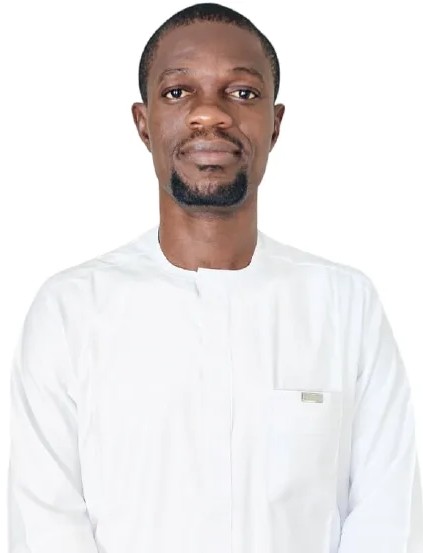
The Chairman of the Nigeria Democratic Congress (NDC) in Anambra State, David Chukwudifu, has warned that the party may struggle to win even a single ward in the state in the 2027 general elections if the alleged marginalisation of its existing leadership by supporters of its presidential candidate, Peter Obi, continues.
Chukwudifu, who accused Obi and his associates of sidelining elected party executives, said the development had weakened the party’s grassroots structure and created uncertainty among members, supporters and prospective volunteers ahead of the next general elections.
In an interview with Yusuf Oketola, the Anambra NDC chairman described the situation as a case of ill-treatment rather than a personal disagreement, insisting that he had never met Obi personally or held discussions with him since the former Anambra State governor joined the party.
According to Chukwudifu, Obi joined the NDC on May 3, 2026, a day before the state congress held on May 4. Both subsequently attended the party’s National Convention in Abuja on May 9.
He alleged that, after the convention, he and members of his state working committee made several unsuccessful attempts to contact Obi through phone calls and WhatsApp messages, hoping to secure a meeting and obtain guidance on the party’s activities in Anambra.
However, he claimed that their efforts yielded no response, leaving the state leadership uncertain about the direction of the party.
Chukwudifu said the situation became more complicated when another group, allegedly associated with Obi, began selling nomination forms, screening aspirants and conducting a primary election without involving the recognised state, local government and ward structures.
He identified Chris McCool Nwosu, whom he said hails from Anambra South, among those involved in the activities. He also mentioned Ikem Uzoezie, a former member of the Anambra State House of Assembly elected under the All Progressives Grand Alliance (APGA), as another figure who emerged during the process.
According to the chairman, the activities of the group effectively displaced the existing party leadership and created parallel operations that excluded elected executives from crucial decisions.
He further alleged that some individuals who previously belonged to the Labour Party and APGA were now playing prominent roles in the affairs of the NDC in the state.
Chukwudifu said his faction had been compelled to inaugurate its own office because the group he accused of taking over the party allegedly operated from hotels rather than maintaining a permanent secretariat.
The chairman also clarified that his previous public comments about Obi should not be interpreted as evidence of a personal relationship between them.
He explained that, after emerging as the state chairman, he had granted an interview in which he referenced Obi’s widely known political philosophy about building a Nigeria where the son of nobody could become somebody without knowing anybody.
Chukwudifu said he identified with the philosophy because he believed he had also risen from humble beginnings, stressing that his remarks were about Obi’s ideology rather than any personal association with the presidential candidate.
He subsequently attributed the current crisis to what he described as the political operating style of Obi and his associates, alleging that similar circumstances had occurred in the Peoples Democratic Party (PDP), Labour Party and African Democratic Congress (ADC) before the latest developments in the NDC.
The chairman further claimed that an individual he described as an ally of Obi once facilitated a telephone conversation with the presidential candidate on speakerphone, during which Obi reportedly indicated that he would not work with the existing state leadership and suggested that Chukwudifu could approach the court if dissatisfied.
However, Chukwudifu also recounted an incident on June 27, 2026, when Obi allegedly denied knowledge of the controversy while speaking with one of the party’s local government chairmen along the Benin-Asaba Road.
According to him, Obi reportedly told the chairman that he was unaware of the situation and advised him to liaise with Senator Tony Nwoye.
Chukwudifu claimed that Nwoye subsequently challenged the man’s status as the party chairman in his local government, adding that no further contact had been made with members of his faction since then.
The Anambra NDC chairman said the dispute had significantly disrupted the party’s activities, particularly its ability to maintain an effective physical presence across the state.
He explained that prospective members and volunteers continued to contact him after obtaining his telephone number from the party’s online portal, seeking information about meetings, participation and opportunities to contribute to the party.
However, he said he had been forced to ask many of them to wait while efforts were allegedly being made to resolve the internal crisis.
Chukwudifu described the party’s current situation as destabilising, claiming that much of its activity in Anambra had shifted online, with meetings conducted virtually and limited effective physical mobilisation on the ground.
He also alleged that Obi had not visited the NDC secretariat in Anambra since becoming the party’s presidential candidate, adding that repeated assurances from some of Obi’s kinsmen that they would intervene had not produced any meaningful outcome.
In a bid to resolve the dispute, Chukwudifu said he formally petitioned the party’s relevant authorities on May 26 and 27, 2026, in accordance with the NDC constitution, which he said required members to exhaust internal dispute-resolution mechanisms before approaching the courts.
He explained that his complaints were directed to the party’s appeal structures, including the zonal working committee headed by the National Vice-Chairman for the South-East and the National Working Committee led by the National Chairman.
According to him, the letters were sent through email, text messages, WhatsApp and DHL, while arrangements were also made for a physical copy to be delivered to the party’s national secretariat in Abuja.
He said copies were sent to the National Chairman and National Secretary but alleged that no response had been received.
Chukwudifu further claimed that the involvement of powerful political interests had made it difficult for the party’s national leadership to intervene effectively in the South-East, particularly in Anambra, which is Obi’s home state.
Looking ahead to the 2027 general elections, the chairman expressed pessimism about the party’s prospects if the situation remains unresolved.
He noted that the NDC would be competing against APGA, which has governed Anambra State for nearly 24 years and, in his assessment, possesses a formidable political structure that would be difficult to overcome without effective grassroots organisation.
He also argued that the political differences between Obi and the state governor made it even more important for the NDC to strengthen its structures, mobilise supporters and build a united front ahead of the elections.
Chukwudifu stressed that political parties must accommodate members rather than push them aside, arguing that every vote counts and that individual supporters can influence several others, particularly within families and local communities.
He questioned the rationale behind what he alleged was the removal or sidelining of 326 ward chairmen, 21 local government chairmen and 29 members of the state working committee, warning that such actions could undermine the party’s electoral chances.
For Chukwudifu, the central issue is whether the NDC can reconcile its competing interests and rebuild confidence among its existing members before the 2027 elections.
He maintained that the party could not achieve meaningful electoral success in Anambra if its internal divisions continued, insisting that urgent intervention was necessary to prevent further damage to its grassroots structure.
His warning places the spotlight on the challenges of party cohesion, internal democracy and grassroots mobilisation as political parties begin positioning themselves for the 2027 general elections.
The allegations, however, reflect Chukwudifu’s account of the dispute, and the claims have not been independently established in the interview.