
NEWS
IMF Urges FG to Introduce Targeted Cash Transfers for Vulnerable Nigerians Amid Rising Cost of Living

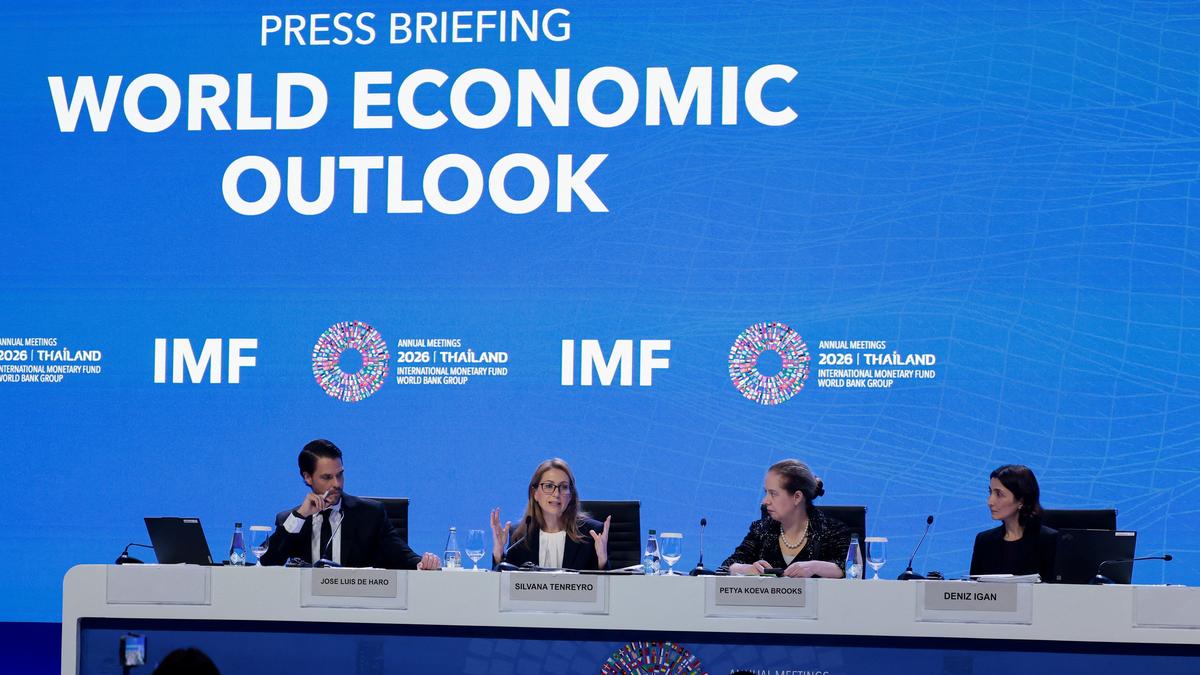
The International Monetary Fund (IMF) has called on the Federal Government of Nigeria to introduce targeted cash transfers and temporary income support for vulnerable households as part of efforts to cushion the effects of rising living costs, reduce poverty and strengthen food security across the country.
The Fund stressed that while Nigeria’s economy has continued to record growth, the high cost of essential goods and services remains a major concern, leaving many households struggling to afford food, energy and other basic necessities.
The IMF said targeted social protection measures should be implemented alongside improvements in public expenditure management and stronger revenue collection to enable the government to achieve fiscal consolidation, reduce public debt sustainably and avoid placing additional pressure on ordinary Nigerians.
Chief of the IMF Research Department’s World Economic Studies Division, Deniz Igan, made the recommendations during a press briefing on the Fund’s World Economic Outlook at the ongoing IMF/World Bank Annual Meetings in Thailand.
Igan acknowledged that Nigeria’s position as an energy-exporting country and the resilience of its economic growth had not eliminated the financial difficulties confronting many citizens, particularly those whose incomes have failed to keep pace with rising prices.
“Although economic growth has held up in Nigeria, given that it is an energy exporter, living costs are still very high, and we are very mindful that the population is suffering,” she said.
She explained that the rising cost of living was part of a broader challenge facing countries experiencing increases in the prices of essential commodities, especially food and energy, which consume a substantial share of household income.
The IMF official noted that the burden of rising prices tends to fall more heavily on low-income earners and vulnerable families, who have limited financial resources to absorb economic shocks.
“In our chapter on fiscal policy, we also examine the pressures countries are facing from the rising cost of living, particularly increases in the prices of essential goods, which account for a significant proportion of the consumption basket,” Igan said.
Against this backdrop, she said the IMF was recommending targeted and temporary financial assistance for Nigerians most affected by economic hardship rather than relying exclusively on broad-based interventions that may not adequately reach those in greatest need.
“In this environment, we advocate cash transfers and targeted, temporary income support for the most vulnerable households in Nigeria,” she said.
According to her, the proposed intervention would provide immediate relief to households struggling to cope with the high prices of essential commodities, helping them meet their basic needs while broader economic reforms continue.
“Such transfers can help reduce poverty and improve food security,” she said.
The recommendation places social protection at the centre of the IMF’s proposed response to Nigeria’s cost-of-living challenges, with emphasis on ensuring that households facing the greatest economic difficulties receive assistance without undermining the government’s long-term fiscal objectives.
However, Igan warned that cash transfers and other forms of temporary support must be backed by a credible fiscal framework to ensure that such programmes remain financially sustainable.
“This should be accompanied by a credible medium-term fiscal framework. That framework should focus on improving the quality of public expenditure and strengthening revenue collection,” she said.
The IMF’s position suggests that providing relief to vulnerable Nigerians should not be treated as a substitute for fiscal reforms. Instead, the Fund advocated a combination of carefully targeted assistance, more efficient government spending and improved revenue mobilisation to protect households while strengthening public finances.
Improving expenditure quality would require governments to ensure that available resources are directed towards programmes and services with meaningful public benefits, while stronger revenue collection would help expand the government’s capacity to finance essential obligations without placing excessive pressure on borrowing.
Beyond fiscal policy, Igan addressed the difficult balance monetary authorities must maintain between controlling inflation and protecting economic activity, particularly when price increases are driven by external supply shocks rather than excessive consumer demand.
Responding to a question about how fiscal and monetary policies could be better coordinated to prevent the burden of economic stabilisation from falling disproportionately on ordinary citizens while preserving price stability and investor confidence, she explained that central banks must carefully assess the source of inflation before determining the appropriate policy response.
She highlighted the particular challenge posed by an oil price shock that drives inflation higher while simultaneously weakening economic activity.
“This is a classic case of a policy trade-off. Inflation is high, but economic activity is being constrained or reduced by the shock. This is where the central bank needs to manage the trade-off.”
Igan explained that supply-driven inflation presents a different policy challenge from inflation caused by strong consumer demand. When prices rise because of supply disruptions or higher production costs, tightening monetary policy can help contain inflationary pressures, but it may also further constrain economic activity.
“This is a different situation from what we see in economies experiencing a demand-driven shock,” she said.
Her explanation underscores the importance of identifying the underlying causes of inflation before adopting monetary measures, as different economic shocks can require different policy considerations.
Nevertheless, the IMF official maintained that central banks must remain committed to price stability and ensure that inflation returns to the desired target within a reasonable period.
“It must ensure that inflation returns to target within the policy horizon, which we typically consider to be two to three years,” she said.
She added that monetary authorities should maintain an appropriately restrictive policy stance to bring inflation under control while considering the consequences of their decisions for businesses, employment and overall economic activity.
“In such circumstances, the central bank must continue to focus on price stability and ensure that its monetary policy stance remains sufficiently restrictive to bring inflation back to target, while also taking account of the effects on economic activity,” Igan said.
According to her, the appropriate response would depend on the specific circumstances of each economy, including labour-market conditions, the prevailing inflation rate before the shock and the extent to which the economy is exposed to the shock.
For Nigeria, these considerations are particularly relevant because the country must manage the effects of domestic price pressures while navigating the implications of developments in international energy markets and the broader global economy.
The IMF’s recommendations highlight the need for policymakers to pursue economic stabilisation without overlooking the immediate welfare concerns of households already struggling with rising expenses.
While fiscal consolidation remains important for controlling public debt and strengthening government finances, the Fund’s position is that the process should be accompanied by measures that protect vulnerable citizens from bearing a disproportionate share of the adjustment burden.
The proposed approach would therefore combine temporary cash transfers for the poorest and most vulnerable households with better management of public resources, stronger revenue collection and monetary policies designed to restore price stability.
Ultimately, the IMF’s message is that Nigeria’s efforts to strengthen its economy and place public finances on a sustainable path should go hand in hand with practical measures to ease hardship, improve access to food and ensure that the benefits of economic growth translate into better living conditions for ordinary Nigerians.