
NEWS
Russia’s Rosatom Signs Historic Deal to Supply Indonesia With Electricity From Floating Nuclear Power Plants

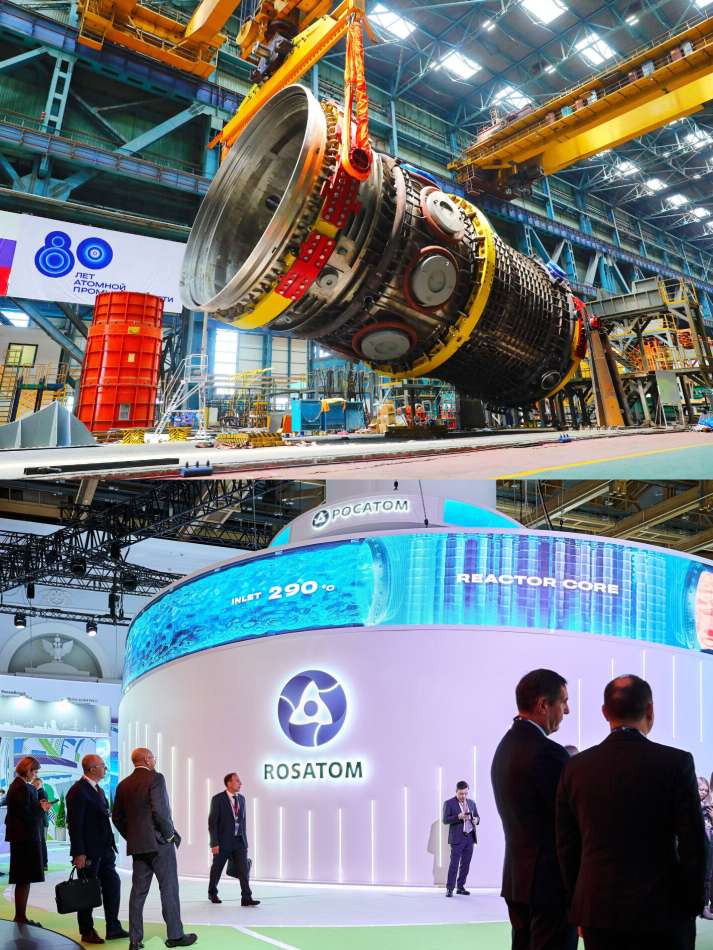
Russia’s state-owned nuclear corporation, Rosatom, has signed a landmark agreement with Indonesia to supply electricity to the Southeast Asian nation using floating nuclear power units, marking a significant development in international nuclear energy cooperation.
The agreement, concluded on the sidelines of the Russian Energy Week forum, brings together Rosatom and Indonesian company PT Pembangkit Listrik Nuklir in a project designed to provide a reliable electricity supply to the North Maluku region of eastern Indonesia.
According to The Caspian Post, citing Russia’s state news agency TASS, the deal represents a major step towards expanding the application of floating nuclear technology beyond Russia and establishing a new model for delivering electricity to regions facing energy infrastructure challenges.
Under the agreement, Rosatom will supply two PEB-100 floating nuclear power units with a combined generating capacity of 200 megawatts (MW). The facilities are expected to provide electricity to the northern part of Halmahera Island in North Maluku, helping to strengthen the region’s power supply and support its economic development.
The project highlights the growing interest in innovative nuclear energy solutions, particularly in geographically dispersed areas where conventional power infrastructure can be expensive or difficult to develop.
Floating nuclear power units are designed to generate electricity from facilities installed on specialised vessels or floating platforms. Their mobility and modular design offer the potential to deliver power to coastal communities and remote locations without relying entirely on extensive land-based energy infrastructure.
For Indonesia, an archipelago comprising thousands of islands, such technology could provide an alternative approach to addressing electricity supply challenges in remote areas while supporting industrial development and improving access to dependable power.
Commenting on the agreement, Rosatom Chief Executive Officer Alexey Likhachev described the deal as a historic milestone for the global nuclear energy industry, emphasising its significance as the first export agreement of its kind.
“I would like to note that this is the world’s first export agreement for the supply of electricity from a floating nuclear power unit.
“I am confident that for the global business community, it will be a striking example of how, with systemic government support, private business can initiate large-scale infrastructure projects in the nuclear energy sphere, which are capable of transforming the national economy,” Rosatom CEO, Alexey Likhachev said, commenting on the signing of the agreement.
His remarks underscore Russia’s ambition to expand its nuclear energy partnerships internationally and position floating nuclear technology as a viable option for countries seeking alternative ways to meet their electricity needs.
The agreement also demonstrates how cooperation between state-backed nuclear corporations and private-sector partners can facilitate the development of major energy infrastructure projects, particularly in markets where conventional electricity generation and distribution systems face geographical or financial constraints.
The planned 200 MW floating nuclear power project could become an important component of electricity supply in North Maluku, a region where dependable energy infrastructure is essential for households, businesses and industrial activities.
By introducing floating nuclear generation, the project could help diversify Indonesia’s energy supply options and provide additional capacity to support future demand. Its ultimate impact, however, will depend on implementation, infrastructure integration, regulatory approvals and the project’s ability to meet applicable nuclear safety and environmental requirements.
The development also comes amid wider international efforts to explore nuclear energy as a source of reliable, low-carbon electricity. Although nuclear projects require substantial planning, investment and stringent safety oversight, they can provide continuous power generation independent of weather conditions.
For Rosatom, the agreement offers an opportunity to demonstrate the export potential of its floating nuclear technology while strengthening Russia’s energy cooperation with Indonesia.
If successfully implemented, the project could attract further international interest in floating nuclear power solutions, particularly among island nations and countries seeking to extend electricity access to remote communities.
The agreement therefore represents more than a bilateral energy deal: it signals a potentially important new chapter in the development and international deployment of f

 loating nuclear power technology.