
NEWS
U.S Congress Sets November 12 Hearing on Alleged Killing of Christians in Nigeria, Tinubu Government Faces Fresh International Scrutiny

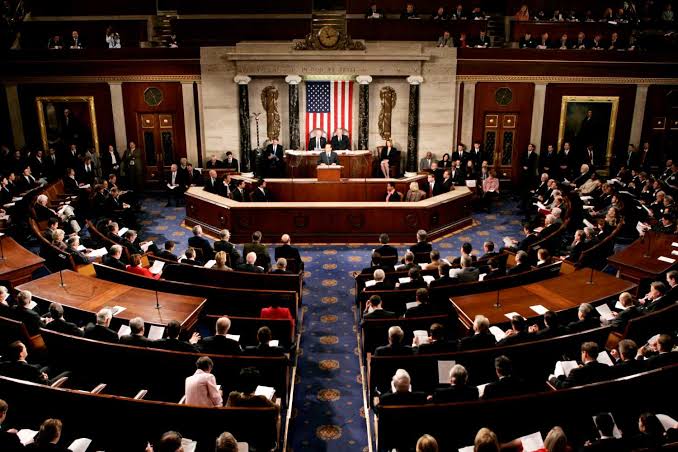
The administration of President Bola Ahmed Tinubu is set to face renewed international scrutiny as the United States Congress prepares to examine Nigeria’s efforts to protect Christians, tackle religious violence and restore security across the country’s troubled Middle Belt.
The United States House of Representatives has scheduled a high-profile congressional hearing for Thursday, November 12, 2026, to assess Nigeria’s response to allegations of widespread killings of Christians and attacks on vulnerable religious communities.
The hearing, scheduled to commence at 11:00 a.m. at the Rayburn House Office Building in Washington, D.C., will be led by Congressman Chris Smith, Chairman of the House Foreign Affairs Subcommittee on Africa. Proceedings are also expected to be streamed live on YouTube, allowing the public to follow the deliberations.
Smith’s office announced the hearing on Monday, describing it as ‘One Year Later: Assessing Nigeria’s Efforts to Protect Christians and Secure the Middle Belt’.
The session is expected to place the Tinubu administration’s security record under the spotlight, particularly its efforts over the past year to protect Christian communities, strengthen security in the Middle Belt and bring perpetrators of religiously motivated violence to justice.
Lawmakers are also expected to examine the activities of terrorist organisations, including Boko Haram, and assess whether the Nigerian government has made sufficient progress in confronting extremist violence and preventing attacks on innocent citizens. The congressional hearing will feature two panels of witnesses drawn from the United States government and international policy, human rights and religious freedom organisations.
The first panel will comprise Frank Garcia, Assistant Secretary of State for African Affairs, and Riley Barnes, Assistant Secretary of State for Democracy, Human Rights and Labour. Their testimonies are expected to provide the US government’s assessment of Nigeria’s security situation, diplomatic engagement and human rights record.
The second panel will feature Nina Shea of the Hudson Institute, Ryan Brown, Chief Executive Officer of Open Doors US, and Oge Onubogu of the Centre for Strategic and International Studies. Their contributions are expected to provide additional perspectives on religious freedom, the humanitarian implications of persistent insecurity and the challenges facing vulnerable communities in Nigeria. Beyond assessing Nigeria’s performance, the lawmakers will consider possible measures Washington could adopt to pressure Nigerian authorities into doing more to prevent violence against Christians and non-radical Muslim communities. The development represents another significant chapter in the increasingly sensitive diplomatic relationship between Washington and Abuja, particularly over religious freedom, counterterrorism operations and the protection of civilian populations.
The hearing is particularly significant because it comes exactly one year after US President Donald Trump redesignated Nigeria as a Country of Particular Concern (CPC), a designation reserved for countries accused of engaging in or tolerating particularly severe violations of religious freedom.
Nigeria was first placed on the list in 2020 during Trump’s first administration. However, former President Joe Biden removed the country from the designation after assuming office.
On October 31, 2025, Trump reversed that decision, returning Nigeria to the list amid mounting allegations of attacks on Christian communities by radical Islamist groups. In announcing the redesignation, Trump argued that Christianity was facing an existential threat in Nigeria and accused extremist groups of killing thousands of Christians.
His administration subsequently escalated its rhetoric by threatening to withdraw American assistance to Nigeria and suggesting the possibility of direct military intervention if the Nigerian government failed to address the killings.
In a particularly forceful warning issued on November 1, 2025, Trump declared:
“If the Nigerian Government continues to allow the killing of Christians, the USA will immediately stop all aid and assistance to Nigeria, and may very well go into that now-disgraced country, ‘guns-a-blazing,’ to completely wipe out the Islamic terrorists who are committing these horrible atrocities.
“I am hereby instructing our Department of War to prepare for possible action. If we attack, it will be fast, vicious, and sweet, just like the terrorist thugs attack our cherished Christians“ Trump said on November 1, 2025.
The remarks generated considerable diplomatic attention, placing Nigeria’s security challenges at the centre of international discussions and raising questions about the future of US-Nigeria relations.
Since then, both countries have moved towards closer military cooperation, establishing a partnership aimed at confronting terrorist organisations operating in northern Nigeria.
The collaboration has provided a platform for security engagement between the two countries, even as concerns persist over the effectiveness of ongoing counterterrorism efforts and the protection of vulnerable populations.
Thursday’s congressional hearing is therefore expected to provide an important assessment of what has changed since Trump’s redesignation of Nigeria and whether the Tinubu administration has taken adequate steps to address Washington’s concerns.
It could also shape the next phase of American diplomatic, security and economic engagement with Nigeria, depending on the findings and recommendations emerging from the proceedings.