
NEWS
“Whoever Shows Us a Finger, We Are Ready to Cut Off His Fingers” — Borno Commissioner, Sainna Buba Declares, Threatens Political Opponents

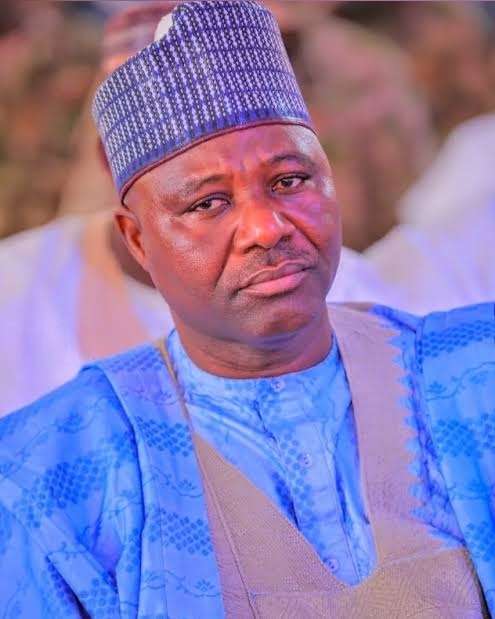
Sainna Buba, the Borno State Commissioner for Youth and Sports Development, has triggered a wave of concern and condemnation following remarks in which he appeared to threaten political opponents and critics with physical retaliation and punitive treatment for refusing to support the ruling All Progressives Congress (APC).
The commissioner made the controversial statements at a campaign inauguration organised by the Tinubu City Boy Movement, a political support group mobilising backing for President Bola Tinubu and his anticipated 2027 re-election campaign.
Speaking before supporters at the event, Buba adopted unusually aggressive language while addressing political opponents, critics and those he suggested might oppose the APC during the emerging preparations for the 2027 general elections.
In remarks that have since drawn attention, the commissioner warned that anyone who challenges or confronts his political camp should be prepared for retaliation.
“Whoever shows us a finger, we are ready to cut off his fingers,” Buba stated, adding, “We are now playing politics. Whoever shows us a finger, we will show him a finger… Whoever dares to show us a finger again, we will break his finger.”
The remarks have raised questions about the boundaries between forceful political mobilisation and language that could be interpreted as a threat of violence, particularly when coming from a serving government official.
Buba went further by appearing to link access to government benefits with political allegiance, suggesting that citizens who support his political camp would enjoy government patronage while those who refuse could face punishment.
“The government is our government. Those who follow us will enjoy the honey; if you refuse, then you will be flogged,” he said.
The statement has intensified concerns over the use of government authority and public resources in political mobilisation, with critics arguing that government officials have a responsibility to protect citizens regardless of their political affiliations.
At the heart of the controversy is the question of whether political competition in the run-up to 2027 should be conducted through persuasion, policies and the ballot box, or through intimidation and threats against citizens who hold opposing views.
Nigeria’s democratic system is founded on the principle that citizens are free to support different political parties and candidates without fear of retaliation.
Consequently, statements suggesting that political opponents could be physically punished or excluded from government benefits are likely to attract heightened scrutiny.
The timing of the remarks has also added to their significance. Although the 2027 general elections are still ahead, political parties, support organisations and political actors across the country have already begun laying the groundwork for what is expected to be a highly competitive electoral season.
In Borno State, where political stability and security remain particularly sensitive issues, inflammatory rhetoric by a government official could generate additional public concern over the safety and freedom of political participation.
Critics have therefore called for greater restraint from political leaders and public officials, warning that aggressive political language can deepen divisions and potentially embolden supporters to view political opponents as enemies rather than fellow citizens with different political choices.
The controversy also comes against the backdrop of another recent political statement from the Federal Capital Territory, where the Chairman of Kuje Area Council, Danjuma Shekwolo, reportedly told residents to either support the APC in the 2027 election or leave the council area.
The two incidents, occurring within days of each other, have fuelled renewed debate about the tone of political mobilisation ahead of the next general elections and whether some political actors are increasingly resorting to coercive language to secure electoral loyalty.
For now, Buba has not publicly clarified whether his comments were intended literally or were delivered as aggressive political rhetoric.
The Borno State Government had also not issued an official response to the commissioner’s remarks at the time of reporting.
With political activities gradually intensifying ahead of 2027, the episode is likely to keep attention focused on the responsibility of public officials to uphold democratic values, respect political differences and ensure that citizens can make electoral choices without intimidation.