
NEWS
2027 ELECTIONS: WHY TINUBU MAY STRUGGLE TO WIN SECOND TERM — POLITICAL ANALYST, ABBATI BAKO REVEALS

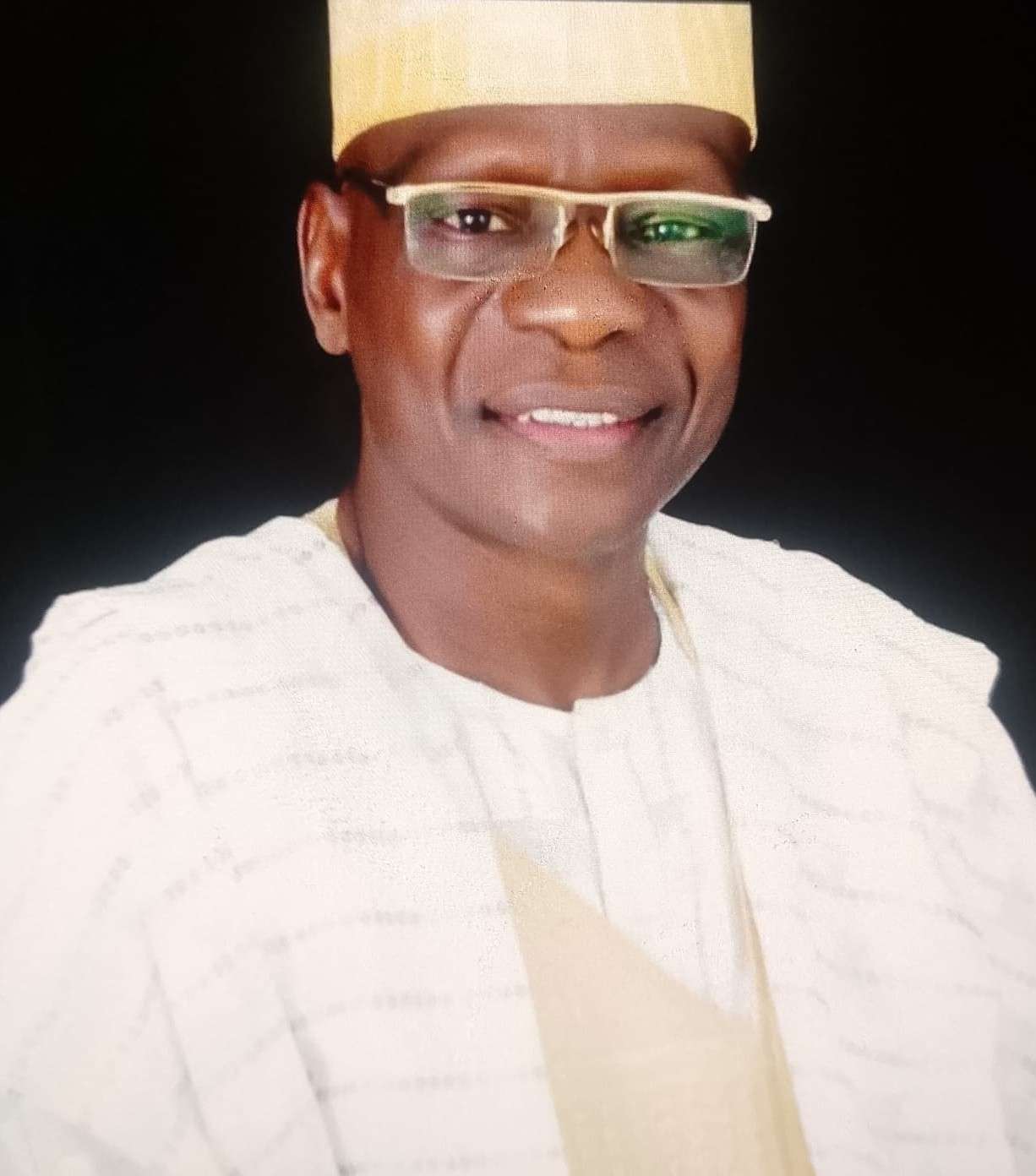
A Nigerian political scientist and strategist, Abbati Bako, has identified seven major political and socio-economic factors which, according to him, could threaten President Bola Ahmed Tinubu’s bid for re-election in the 2027 presidential election.
Bako, an alumnus of the University of Kent, United Kingdom, made the assessment in a political analysis titled “Elections 2027: Why President Bola Ahmed Tinubu May Not Win.”
According to him, the outcome of the 2027 election could be determined less by political speeches and more by the economic realities confronting Nigerians, particularly the cost of food, fuel, transportation, electricity and other necessities.
He argued that incumbency alone does not guarantee electoral victory, recalling the defeat of former President Goodluck Jonathan in 2015 despite the advantages of occupying the presidential seat.
Bako identified the economy as one of the biggest threats to the Tinubu administration’s re-election bid, arguing that Nigerians would ultimately judge the administration by their experiences in markets and homes rather than by government speeches or policy announcements.
He pointed to increases in fuel prices, foreign exchange rates, food prices and electricity tariffs since the beginning of the Tinubu administration, arguing that the consequences of the reforms have placed significant pressure on households and businesses.
According to him, the economic reforms amount to what he described as “Shock Therapy without Anesthesia,” with international financial institutions applauding the reforms while ordinary Nigerians bear the immediate consequences.
Bako maintained that by 2027, voters would likely remember the difference between what basic commodities cost before Tinubu assumed office and what they cost at the time of voting, arguing that such personal economic experiences could become a major factor in determining how Nigerians cast their ballots. The political analyst also highlighted Northern Nigeria as another major factor that could determine the 2027 presidential contest.
He noted that Tinubu secured substantial support from northern voters in 2023, making the region critical to his electoral victory. However, Bako argued that economic hardship, insecurity and political dissatisfaction could weaken that support ahead of 2027.
He pointed to continued security challenges, including banditry and kidnapping across several northern states, as well as the economic difficulties confronting predominantly agricultural communities.
According to him, farmers are particularly vulnerable to rising fuel prices, inflation and insecurity, which have combined to make agricultural production increasingly difficult.
Bako also identified what he described as a growing perception of political marginalisation among sections of the North, citing disagreements involving prominent northern political figures and concerns over appointments, projects and resource allocation. He therefore questioned whether Tinubu could secure the same level of northern support that contributed significantly to his 2023 victory.
The analyst further identified Nigeria’s youthful electorate as another major challenge for the ruling administration. He argued that a significant proportion of registered Nigerian voters are young people whose priorities are increasingly centred on employment, economic opportunity, security and quality of life.
Bako described them as the “EndSARS generation,” “crypto generation” and “Japa generation,” arguing that many young Nigerians are less interested in traditional political structures and more concerned about tangible results.
He maintained that the large-scale migration of Nigerians seeking opportunities abroad has become a reflection of frustration among young people, while social media platforms have provided the generation with powerful channels through which it expresses dissatisfaction with government policies and political leadership.
For the ruling party, he argued, winning over young voters would require demonstrable improvements in their economic circumstances rather than relying solely on traditional political mobilisation.
Bako also pointed to the possibility of a broad opposition coalition as a major threat to Tinubu’s second-term ambition. He recalled that the coalition that brought together several opposition political forces ahead of the 2015 election played a decisive role in defeating Jonathan.
According to him, a similar political realignment could emerge in 2027 if major opposition figures and parties succeed in putting aside their differences and presenting a common presidential candidate. He cited political figures including Atiku Abubakar, Peter Obi, Rabiu Kwankwaso, Nasir El-Rufai, Rotimi Amaechi and others as part of a wider opposition conversation.
Bako argued that the combined electoral strength of the major opposition candidates in 2023 exceeded Tinubu’s total vote, suggesting that a united opposition could significantly alter the electoral equation in 2027.
However, whether such a coalition can overcome ideological differences, personal ambitions, regional interests and the complexities of Nigeria’s electoral system remains one of the major questions ahead of the election.
Another issue raised by Bako is the applicability of Tinubu’s Lagos governance model to the rest of Nigeria. He argued that the model that helped transform Lagos’s internally generated revenue and infrastructure landscape cannot automatically be replicated in states with weaker industrial and commercial bases.
According to him, Lagos possesses unique economic advantages, including its ports, large commercial sector, industrial base and huge population, which make its revenue-generating capacity different from that of many northern and rural states. He warned that aggressive taxation without corresponding expansion of economic opportunities could place additional pressure on citizens and businesses in less-developed states.
The analyst said growing public frustration could increasingly be expressed through the phrase “Renewed Hope, Renewed Hardship and Renewed Tax.”
In his concluding assessment, Bako argued that the 2027 presidential election could effectively become a referendum on the economic and security conditions Nigerians experience under the Tinubu administration.
He maintained that political power ultimately depends on voters’ perception of who can provide a better future, particularly at a time when Nigerians are grappling with inflation, unemployment, insecurity and declining purchasing power.
According to him, Tinubu’s political experience remains considerable, but the administration’s economic policies could become a liability if Nigerians do not begin to experience significant improvements before the election.
Bako suggested that substantial improvements in the value of the naira, fuel prices, security and general living standards could alter the political narrative before 2027.
He concluded that the combination of economic hardship, northern discontent, youth frustration, opposition realignment and public dissatisfaction could create a formidable challenge for the President.
“The Northern states are grumbling. The Youth are angry. The opposition is uniting. The market women are crying,” he stated.
Bako therefore warned that unless significant changes occur before the 2027 election, the outcome could surprise the political establishment in Abuja in much the same way the 2015 presidential election shocked the Jonathan administration.
He stressed that in a democratic system, political power ultimately rests with voters, whose decisions can be shaped by the realities of their daily lives.
Abbati Bako, Political Scientist and Strategist, is a member of the International Political Science Association and a researcher in Globalization Policy.