
NEWS
PUTIN ANNOUNCES SUCCESSFUL TEST OF RUSSIA’S NUCLEAR-POWERED “BUREVESTNIK” MISSILE, A WEAPON WITH ‘UNLIMITED RANGE’ AND UNRIVALED PRECISION

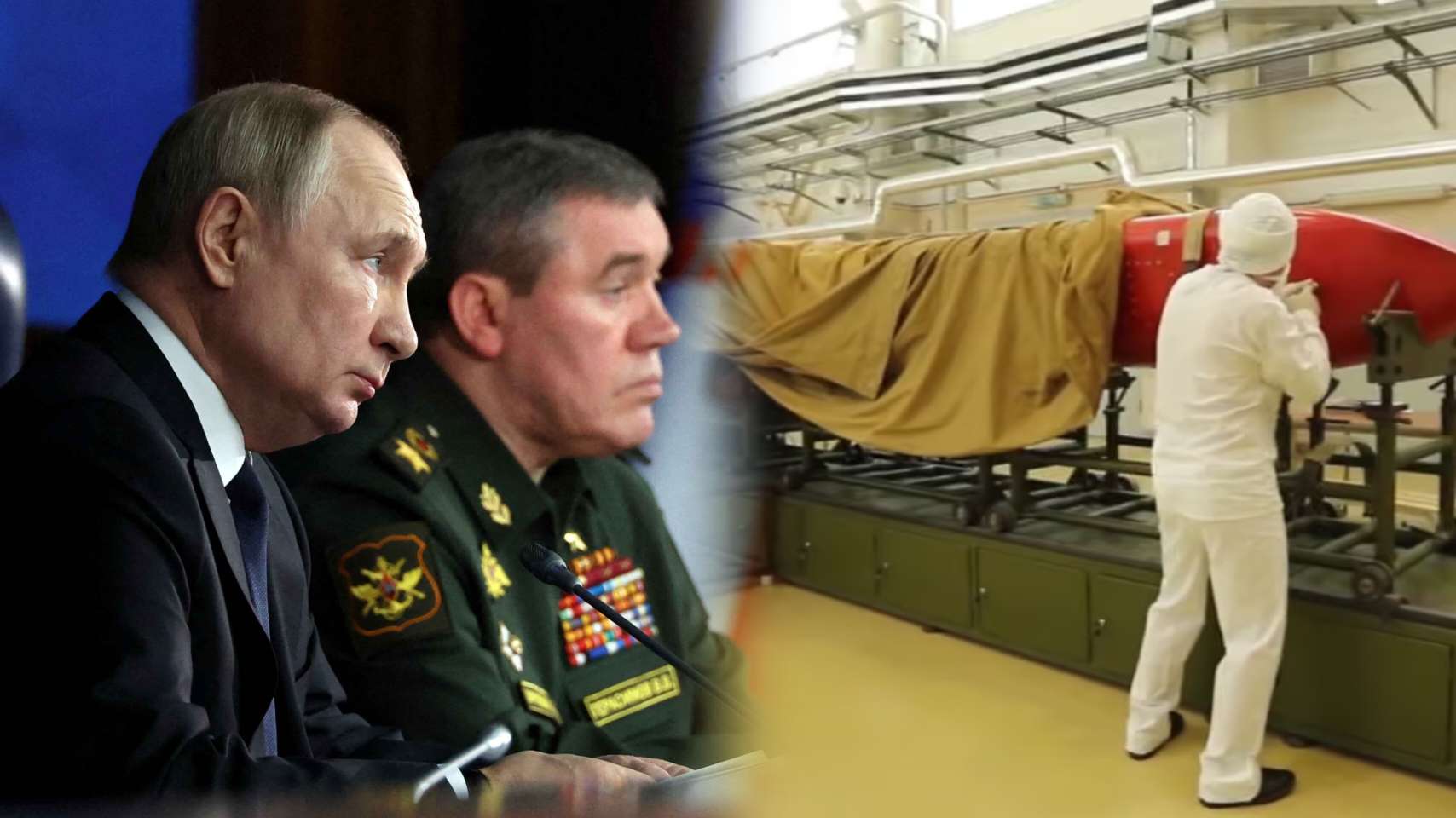
…as Moscow Hails Breakthrough in Nuclear Missile Technology as Kremlin Prepares Deployment Amid Escalating Ukraine War and Stalled Peace Talks
In a dramatic statement early Sunday, President Vladimir Putin announced that Russia has successfully conducted a full-scale test of its nuclear-powered intercontinental cruise missile, Burevestnik, a weapon he described as “truly unique” and unmatched by any nation in the world.
According to Chief of the General Staff, Valery Gerasimov, who briefed the Russian leader on the development, the missile test took place on Tuesday, covering an astonishing 14,000 kilometers (8,700 miles) in approximately 15 hours of uninterrupted flight.
“The technical characteristics of the Burevestnik allow it to be used with guaranteed precision against highly protected sites located at any distance,” Gerasimov said, emphasizing the missile’s ability to penetrate even the most fortified defense systems.
President Putin, visibly elated during a visit to one of Russia’s joint forces command centers, reaffirmed the missile’s significance to the country’s defense strategy, stating, “It is truly a unique weapon, one that no other country in the world possesses.”
He further ordered the immediate preparation of infrastructure to facilitate the deployment of the Burevestnik into active service within the Russian Armed Forces, signaling that the weapon may soon enter operational readiness.
Confirmation of the Burevestnik’s successful test follows months of satellite imagery and navigational warnings that had hinted at an impending launch from a northern test site.
The weapon, first unveiled by Putin in 2018, is reputed to have an “almost unlimited range” and the capability to evade U.S. missile defense systems, giving it strategic reach beyond traditional intercontinental ballistic missiles (ICBMs).
The Burevestnik, also known under NATO’s designation SSC-X-9 Skyfall, is one of the cornerstones of Russia’s advanced weapons initiative. It gained infamy in 2019, when a failed test led to a fatal explosion during a recovery mission in the Arctic, killing several scientists and military personnel involved in the secretive program.
The announcement of this successful test comes at a pivotal time in global geopolitics. Russian forces continue to advance in Ukraine, making slow but steady territorial gains amid heavy combat and significant casualties on both sides.
Meanwhile, peace negotiations between Moscow and Kyiv have once again stalled, despite renewed diplomatic interventions.
U.S. President Donald Trump, who has pledged to “end the war quickly” if reelected, has yet to make headway in restarting formal dialogue between the two nations.
Military analysts suggest that the Burevestnik test could reshape the global balance of nuclear deterrence, introducing a weapon that challenges existing missile defense doctrines and potentially ushers in a new arms race reminiscent of Cold War rivalries.
For Russia, the successful test marks a major technological and symbolic victory, reinforcing Putin’s narrative of national resilience and military superiority.
As the Kremlin moves to operationalize its new strategic asset, the world watches closely, aware that the reawakening of nuclear brinkmanship may be redefining th
 e future of global security.