
NEWS
US–Nigeria Security Cooperation Faces New Conditions as Rep. Riley M. Moore Lists Demands Before Military Partnership Can Proceed

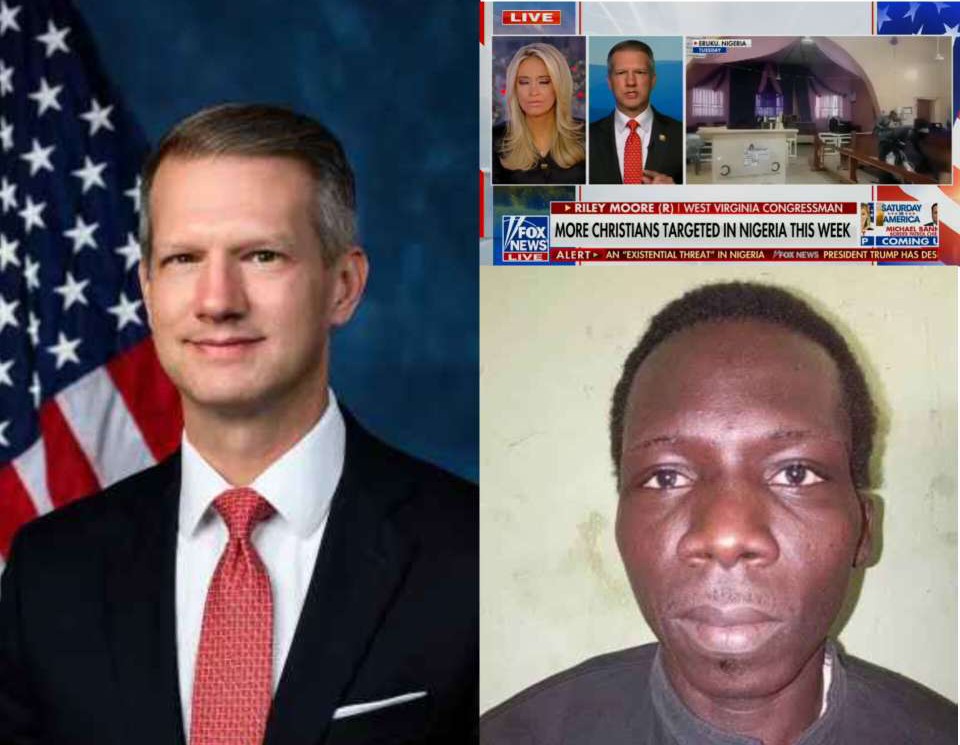
In a development that has triggered widespread reactions across Nigeria’s security and diplomatic circles, US Congressman Riley M. Moore has announced two major conditions that the Nigerian government must fulfill before the United States can consider entering into any military partnership aimed at tackling Nigeria’s worsening security challenges.
Speaking during an interview with Fox News, Rep. Moore made it clear that Washington will not move forward with collaborative military efforts until Abuja demonstrates concrete action on specific human-rights and security concerns.
According to the congressman, the first condition is the release of Sunday Jackson, a Nigerian farmer who was recently sentenced to death for killing a Fulani herdsman, an act he claimed was in self-defence following an alleged invasion of his farmland.
It was earlier reported that Jackson received the death sentence under controversial circumstances, a case that has since sparked debates on self-defence laws, rural insecurity, and alleged ethnic profiling in Nigeria’s Middle Belt.
In the Fox News interview, Moore stressed that the young man’s release is non-negotiable, insisting that justice must be served before any meaningful military partnership can begin.
The congressman emphasized:
“It sounds like they are open to partner with the United States to stop these killings. They met with myself and the administration as well.
“We made some progress in getting them to place to partner with us to stop these killings but there is a lot of things they need to do and I think one of the first steps is releasing Sunday Jackson.”
Beyond Jackson’s case, Moore noted that the second prerequisite is for the Nigerian government to produce a credible and actionable plan to disarm Fulani herdsmen who, according to him, are responsible for recurring violence and communal unrest across the Middle Belt, a region long plagued by deadly clashes between farming and herding communities.
The congressman underscored this by adding:
“Another one of coming up working with us with a plan to disarm the radical Fulani militants in the Middle Belt of the country.”
The comments come at a time when Nigeria’s federal authorities have been engaging diplomatic counterparts to counter what they describe as false narratives of Christian genocide, with officials insisting that efforts are underway to address insecurity across all regions.
Meanwhile, concerns over increasing insecurity continue to mount. Recent warnings such as those from Gani Adams, who raised alarm over terrorist infiltration in the South-West, highlight the expanding threat landscape.
As Nigeria struggles with mass abductions, communal killings, and the proliferation of armed groups, the conditions set by Rep. Moore add a new layer of international scrutiny, one that may shape the next phase of US–Nigeria security cooperation.
The unfolding situation has placed pressure on the Nigerian government, which must now balance domestic legal processes, ethnic tensions, and international expectations as it seeks support in confronting the nation’s persistent de
 cade-long security crisis.