
NEWS
#ICYMI: GOVERNOR ALEX OTTI FLAGS OFF MASSIVE MSME COMPETITIVENESS & INDUSTRIAL PRODUCTIVITY PROGRAMME IN ABIA, SETS TARGET FOR 10,000 BENEFICIARIES


The Executive Governor of Abia State, Dr. Alex Chioma Otti, OFR, has formally flagged off the Micro, Small and Medium Enterprise (MSME) Competitiveness and Industrial Productivity Programme (MCIPP), a transformative industrial development scheme designed to strengthen indigenous creativity, empower entrepreneurs, and position Abia as a global hub for skills and innovation.
The event, held on Thursday at the Michael Okpara Auditorium, Umuahia, marked a major milestone in the Otti administration’s drive to rebuild Abia’s industrial capacity and enhance the global competitiveness of local businesses.
The MCIPP is a joint initiative of the Abia State Government and Ethnocentrique Limited, implemented in collaboration with critical stakeholders.
According to the organisers, the programme is structured to provide long-term support for MSMEs through enterprise development systems, certification, intellectual property protection, and skills training.
Speaking during the flag-off, Governor Otti reaffirmed his administration’s unwavering commitment to strengthening the MSME ecosystem through funding access, capacity-building, and well-structured operational systems.
The Governor recalled that the State Government had earlier launched the first phase of the programme involving 1,000 MSMEs, adding that plans have been concluded to scale participation to 10,000 beneficiaries in the next phase.
He commended Ethnocentrique Limited for initiating the industrial support model before the State’s involvement, noting that the success of the pilot phase convinced the government to fully adopt and expand the project.
Governor Otti also announced ongoing efforts to promote Abia’s iconic “Akwaete Cloth” at the United Nations General Assembly.
He, however, expressed concern that counterfeit Akwaete fabrics were already being sold abroad, stressing the urgency of trademarking the original product to protect its identity and global value.
He used the opportunity to caution manufacturers and consumers against branding local products with fake foreign names. According to him, such practices suppress indigenous innovation, undermine national pride, and stifle economic growth.
“Our major task is to change the mindset of consumers, traders and manufacturers so that ‘Made-in-Abia’ products would be recognised as original rather than fake,” Governor Otti said.
In her speech, the Chief Executive of Ethnocentrique Ltd., Mrs. Irunna Ejibe, said the MCIPP marks a clear departure from ad-hoc interventions to a sustainable and structured industrial ecosystem anchored on standards, certification, and enterprise systems. She disclosed that recent interventions in the State have generated a ₦4.4 billion ecosystem value, created 2,000 jobs, formalised over 500 MSMEs, and opened new financing and market access opportunities for young entrepreneurs.
Mrs. Ejibe further revealed that phase one of the MCIPP will cover the certification of 1,000 artisans, development of assessors, training of 100 Business Development Service Providers (BDSPs), registration of 2,000 businesses, and the trademarking of 100 indigenous brands.
In his remarks, the Registrar of Trademarks, Commercial Law Department of the Federal Ministry of Industry, Trade and Investment, Dr. Shafiu Yauri, explained that Nigeria currently operates manual, semi-digital, and fully online trademark systems supported by the World Intellectual Property Organization’s (WIPO) Industrial Property Automation System. He noted that Nigeria maintains one of the lowest official trademark fees in Africa to encourage MSME participation and disclosed that the ministry is planning a major SME-focused intellectual property training programme in 2026.
Also speaking, the President of the Leather Products Manufacturers Association of Abia State, Mr. Confidence Nwobilor, stated that the campaign against foreign-branded “Made-in-Abia” goods has achieved only 20 percent success. He lamented that many traders still prefer foreign labels, leading to loss of invisible tax revenue, especially when such goods enter export markets.
Earlier in his opening remarks, the Commissioner for Industry and SME Development, Mr. Mike Akpara, said the initiative is targeted at boosting business formalisation, intellectual property protection, and artisan certification. He added that the programme aims to register 4,000 MSMEs with the Corporate Affairs Commission and other sectoral regulators, produce 1,000 National Skills Qualifications Framework (NSQF) certified artisans, and train 200 NSQF assessors to strengthen local certification structures.
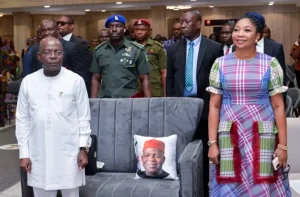
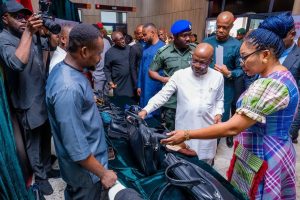
The flag-off ceremony drew stakeholders from across sectors, signalling a renewed era of structured industrialisation, enterprise growth, and global competitiveness for Abia State u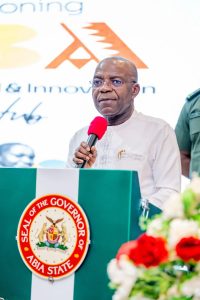





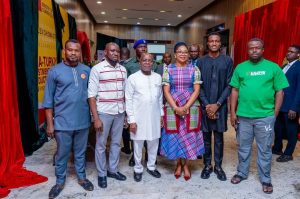
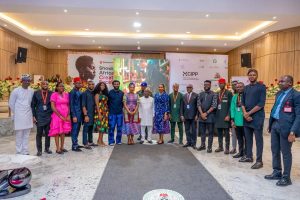 nder Governor Otti’s leadership.