
NEWS
“Quota System Doesn’t Work Here… We Don’t Know State of Origin” — Abia State Governor, Dr. Alex Otti Says, Reaffirms Merit-Driven Civil Service as Abia State Emerges First Pilot State for National Strategic Service Reform Plan


….as FG Endorses Abia as First Pilot State for National Public Service Modernization Plan


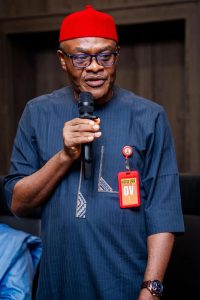
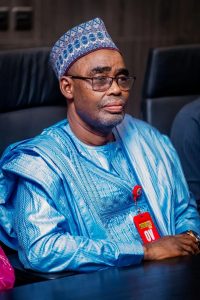
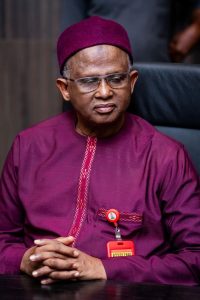


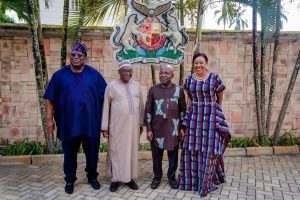
The Executive Governor of Abia State, Dr. Alex Chioma Otti, OFR, has once again underscored his unwavering commitment to building a civil service anchored strictly on merit, competence, and excellence. He made this known on Monday while receiving a delegation of Federal Civil Service Commissioners and State Chairmen of Civil Service led by the Chairman of the Federal Civil Service Commission, Prof. Tunji Olaopa, at the Government House, Umuahia.
Governor Otti declared emphatically that merit, not quota system, not influence, and not State of origin will remain the foundation of the new civil service culture in Abia State.
“So, what that has done is that people have understood now that what would promote you will be hard work and excellence, not who you know.
“Quota system doesn’t work here. And we don’t know State of origin.
“We just hired 5,394 teachers. We didn’t care where they came from. In fact, from an analysis that was done by my people, a lot of them came from Cross River and Akwa Ibom States.
“What we are interested in, is not where they come from, but what they have in their head.
“We want to depart from what they use to do. So, that’s the civil service that we are building will be service and competence driven. And we also have been trying very hard to correct the wrongs of the past,” Governor Otti stated.
While acknowledging the ongoing national conversation on civil service reforms, Governor Otti assured the delegation that Abia State is already taking decisive steps even ahead of federal expectations.
According to him, the civil service remains the backbone of governance, and transforming it is essential for sustainable development.
Reiterating his administration’s commitment to rebuilding a functional, professional, and motivated civil service.
“We’ve tried to reinvent the civil service because the civil service is the engine room of any government,” he said.
Governor Otti disclosed that one of the most troubling discoveries since assuming office was the massive backlog of pension gratuities left unpaid since 2001.
According to him, a committee set up by his administration uncovered that the outstanding gratuity debt owed Abia pensioners amounts to over ₦60.1 billion.
“We’re now thinking of how to take them out. And these are people who have worked. And they’re retired.
“Some of them are dead. Maybe if they got this money, they would still be alive today. So that’s what it is. So, it looks difficult, but it’s very easy,” he said, expressing concern for pensioners whose livelihoods were affected.
Earlier, the Chairman of the Federal Civil Service Commission, Prof. Tunji Olaopa, announced that Abia State has been selected as the first pilot partner for the National Strategic Plan aimed at revolutionising career management, redesigning administrative structures, and modernizing public service processes across Nigeria.
Prof. Olaopa praised Governor Otti’s leadership style, describing it as results-driven and impactful.
“We are enlisting some partners in the States’ Commissions and I am very proud to say that Abia State happens to be the first on the list of pilots.
“I am proud of Governor Otti’s achievements and he is doing it without noise,” he said.
The event had in attendance key government officials including: the Secretary to the State Government, Prof. Kenneth Kalu; Chief of Staff to the Governor, Pastor Caleb Ajagba, PhD; Commissioner for Finance, Hon. Uwaoma Ukandu; Commissioner for Information, Prince Okey Kanu; Commissioner for Basic and Secondary Education, Elder Goodluck Ubochi; Chairman, Abia State Civil Service Commission, Pastor Eno Jerry-Eze, among others.
The visit marks another milestone in Abia’s ongoing transformation under Governor Otti’s leadership, one defined by transparency, meritocracy, and results that continue to earn national recognition.