
HEALTH
NAFDAC Raises Alarm Over Fake Kiss Condoms, Orders Nationwide Market Sweep

The National Agency for Food and Drug Administration and Control (NAFDAC) has issued a public health warning over the circulation of falsified Kiss condoms in Nigerian markets, citing serious risks to consumer safety and reproductive health.
In a directive issued to all its zonal directors and state coordinators, the agency ordered immediate surveillance and a coordinated mop-up of the fake products across markets nationwide. The move follows findings that counterfeit versions of the popular condom brand are being sold to unsuspecting consumers.
According to NAFDAC, the use of fake condoms poses grave health dangers due to poor manufacturing quality, lack of sterilisation, and the absence of regulatory approval. These deficiencies significantly reduce effectiveness against unintended pregnancy and sexually transmitted infections (STIs).
Additional risks include frequent breakage, allergic reactions, infections, and a false sense of protection that could expose users to preventable health complications.
NAFDAC stressed that only genuine, quality-assured condoms produced by approved manufacturers can guarantee safety and effectiveness.
Healthcare professionals, pharmacists, patent medicine vendors, and consumers have been urged to remain vigilant and report any suspected sale of substandard or falsified condoms and other medical devices. Reports can be made at the nearest NAFDAC office, through the toll-free number 0800-162-3322, or via email at sf.alert@nafdac.gov.ng.
HOW TO IDENTIFY FAKE ‘KISS’ CONDOMS
To help the public avoid counterfeit products, NAFDAC released detailed distinguishing features between original DKT Kiss condoms and the fake versions.
DIFFERENCES ON THE BOX PACK:
Original Kiss condom boxes carry clear instructions advising users to read usage guidelines carefully and warning against reuse due to increased risk of failure or infection. They also contain medical device information, including references to MDSS GmbH in Hannover, Germany, proper storage and caution details, and a visible condom image with a detailed product description. The manufacturer’s Nigerian address is listed as Plot 4, Block E, Isolo Industrial Layout, Oshodi-Apapa Expressway.
In contrast, fake boxes lack additional product information, appear darker in colour, sometimes have plain white interiors, and often do not display a condom image. They carry incorrect or incomplete addresses, commonly citing 42, Montgomery Road, Yaba, Lagos and omit storage and caution information entirely.
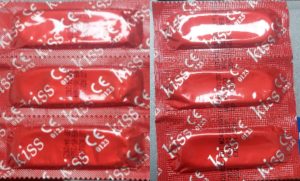
DIFFERENCES ON THE CONDOM PACK:
Original DKT Kiss packs are light red, with the brand name closely printed across six lines. Fake versions are darker, display the brand name loosely across five lines with wide spacing, and contain a longer condom strip than the original.
WALLET AND PACKAGING IRREGULARITIES:
Authentic Kiss wallets feature a lighter red colour, correct Oshodi-Apapa address, full manufacturer details, and a clear product description beside the condom image. The hidden flap includes revision dates, medical device status, MDSS GmbH details, and caution information. Inside, users find detailed instructions and important notes presented in eight bullet points.
Fake wallets are darker, list incorrect addresses, omit manufacturer details, and describe the condom differently. They lack the colour wave seen on original packs, show inconsistencies in barcode lines that affect traceability, and do not include medical device or caution information. Inner instructions are shortened, with only six bullet points under important notes.
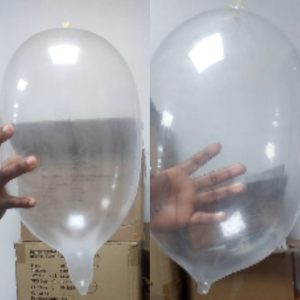
PHYSICAL DIFFERENCES IN THE CONDOM:
NAFDAC also noted visible differences in the condoms themselves. Original Kiss condoms are larger, oval-shaped, more lubricated, and have a bigger teat end for semen collection. Fake versions are thinner, rounder, less lubricated, and have smaller teat ends, reducing both comfort and effectiveness.
NAFDAC reiterated its commitment to protecting public health and urged Nigerians to purchase condoms only from trusted sources, examine packaging carefully, and report suspicious products immediately.
The agency warned that the continued circulation of fake condoms undermines national efforts in sexual and reproductive health and poses avoidable risks, particularly to young people and sexually a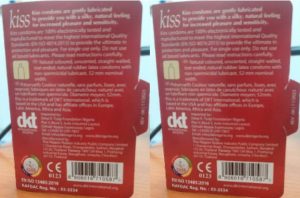
 ctive populations across the country.