
CRIME
Gov. Alex Otti Inaugurates Nchedo Sexual Assault Referral Centre in Aba, Vows Drastic Reduction of Gender-Based Violence Through Strong Institutional Response and Sustained Advocacy


…as Abia’s First Lady, Mrs. Priscilla Otti Says “Help Is Here”
…as Facility Becomes One-Stop Centre for Medical, Legal and Psychosocial Support
The Executive Governor of Abia State, Dr. Alex Chioma Otti, OFR, has inaugurated the Nchedo Sexual Assault Referral Centre (SARC) in Aba, expressing strong optimism that gender-based violence (GBV) will reduce drastically in the state through sustained advocacy, coordinated institutional response and deliberate societal reorientation.
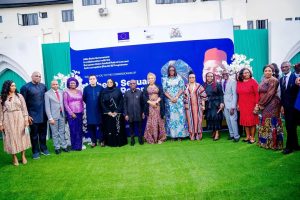
The centre, located within the premises of the Aba General Hospital, was established by the Abia State Government in collaboration with the European Union-funded Rule of Law and Anti-Corruption (RoLAC) programme. The inauguration ceremony drew key stakeholders from the justice, health and social protection sectors, alongside development partners and international agencies.
Speaking at the event, Governor Otti commended stakeholders for their commitment to addressing gender-based violence in the state. He lauded the commissioners for justice, women affairs, poverty alleviation and social protection, as well as health, for their roles in ensuring the actualisation of the project.
The governor appreciated the European Union for supporting the initiative for one year and expressed hope for an extension of the partnership to deepen impact and expand coverage.
He disclosed that the state government had already received requests for additional centres across the state but would begin by building two additional facilities.
“We hope to get to a level where such centres become unnecessary because the acts are abnormal,” he said.
Governor Otti described sexual assault and child molestation as aberrations and called for collective societal reorientation.
“Our major task is to reorient our people and reinforce moral standards,” he said.
As part of broader reforms in the health sector, the governor directed his Special Adviser on Health to assess dilapidated structures within the hospital premises and submit a comprehensive proposal for the retrofitting of the buildings. He expressed confidence that the facilities would be upgraded to acceptable standards within a year in line with his administration’s rebuilding agenda.
In her address, the Minister of Women Affairs and Social Development, Imaan Sulaiman-Ibrahim, described gender-based violence as “pervasive and largely underreported across the country.”
She noted that the menace affects women, men, girls and boys, manifesting in physical, emotional and digital forms.
According to her, the newly inaugurated facility will provide safe and confidential medical, psychosocial and legal services for survivors.
She revealed that as of November 2025, Nigeria had 50 sexual assault centres across 24 states, assisting over 58,000 survivors.
“While this progress is commendable, it remains insufficient when measured against reported and unreported cases,” she said.
The minister stressed that GBV survivors require timely medical attention, psychosocial care and coordinated legal support, warning that fragmented responses often compound trauma.
She also raised concerns over rising technology-facilitated violence, including cyberstalking and digital harassment.
“Our institutional response must evolve to address emerging threats,” she said.
She further emphasised the importance of women’s economic empowerment in addressing the root causes of violence, stating that protection services are central to national stability and social justice.
The minister commended President Bola Tinubu for declaring 2026 the Year of Social Development and the Family and lauded the Abia State Government for prioritising the protection of women and children.
According to her, silence, stigma and impunity must not define survivors’ experiences, and the centre must operate with professionalism, confidentiality and compassion.
In her remarks, the wife of the Abia State Governor, Mrs. Priscilla Chidinma Otti, described the centre as a symbol of hope, protection and accountability for survivors of GBV in the state.
She disclosed that her office receives numerous distress calls daily, reflecting the urgency and magnitude of the problem.
“Today, we say clearly that help is here,” she said, urging survivors to report cases promptly.
Mrs Otti described the facility as a major milestone in the state’s efforts to combat gender-based violence and appreciated the European Union and its implementing partners for strengthening justice delivery systems in Abia.
She stressed that the success of the initiative would not be measured merely by the physical structure but by the healing of survivors, prevention of recurrence and prosecution of offenders.
She also appealed to the state government to establish additional centres across the remaining senatorial zones to improve access to services.
The Commissioner for Poverty Alleviation and Social Protection, Mrs. Ngozi Felix, described the centre as a milestone in the state’s commitment to protection, dignity and coordinated care for survivors.
She explained that the facility was designed to eliminate the trauma survivors often face when moving between hospitals, police stations and other agencies in search of help.
“With Nchedo SARC, survivors can now access emergency medical treatment, forensic examination, post-exposure prophylaxis, counselling, legal guidance and referrals to shelter and social services under one roof,” she said.
Ms Felix disclosed that the project was secured through Abia’s participation in the European Union-funded Rule of Law and Anti-Corruption Programme, with the support of the governor and his wife.
She added that the centre forms part of a broader justice reform initiative, including the Sexual Offenders Register domiciled at the Ministry of Justice, aimed at deterring offenders and strengthening prosecution.
The Nchedo SARC, she noted, will operate round-the-clock, providing free and confidential services to survivors of gender-based violence. It is expected to reduce re-traumatisation, preserve forensic evidence and strengthen access to justice while restoring public trust in institutions.
Also speaking, World Bank representative and Task Team Leader of Nigeria for Women Project, Michael Ilesanmi, said the establishment of the centre reinforced Abia’s commitment to gender equality and women’s economic empowerment.
He described the facility as a fulfilment of commitments made under the Nigeria for Women Scale-Up Programme.
Danladi Plang, Head of Programme, International IDEA/Rule of Law and Anti-Corruption Programme, emphasised the need for sustained funding, replication of the model across the state and stronger prosecution mechanisms to combat impunity.
He further called for the establishment of shelters for survivors, noting that some victims are abused within family settings and may require safe accommodation after receiving treatment.
In his remarks, Ruben Alba Aguilera, Head of the Section of Peace, Governance and Migration at the European Union Delegation to Nigeria and ECOWAS, disclosed that the European Union has invested over N2 billion in supporting Sexual Assault Referral Centres across Nigeria.
He stressed that prevention and protection remain central pillars in addressing gender-based violence and urged both state and federal governments to ensure sustainability of the centres beyond donor funding.
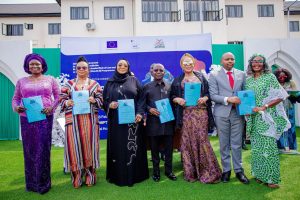
The event climaxed with the signing of the state’s SARC Memorandum of Understanding by the Ministries of Poverty Alleviation and Social Protection, Health, Justice and Women Affairs to enhance inter-ministerial cooperation and ensure the effective operation of the centre.
With the inauguration of the Nchedo SARC, Abia State has taken a decisive step toward strengthening protection mechanisms for survivors, institutionalising c















 oordinated responses and reinforcing its broader justice and social reform agenda.