
NEWS
President Trump Declares U.S. Must “Own” Greenland to Block Russia, China, Sparks Global Backlash

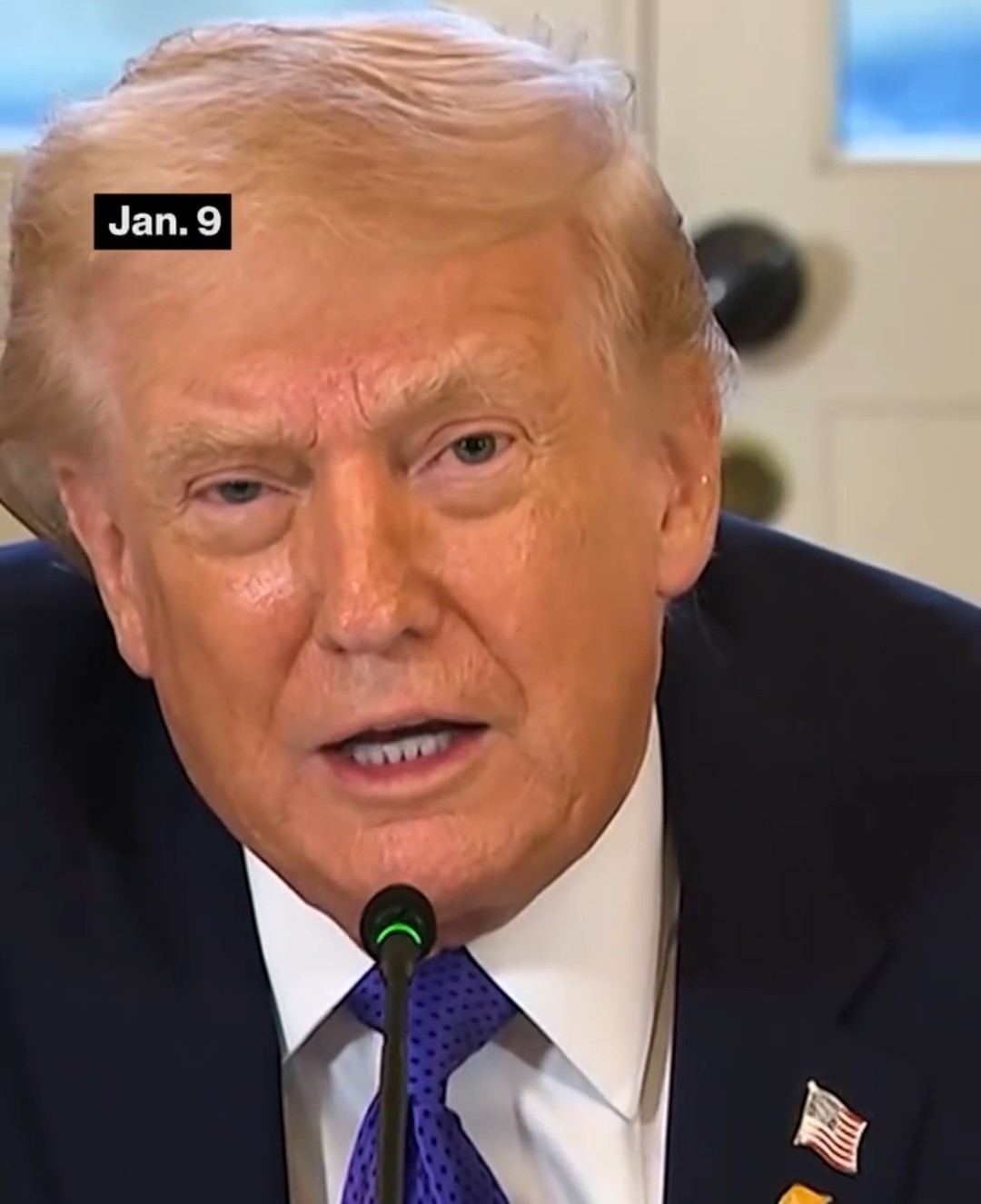
In a dramatic escalation of U.S. foreign policy rhetoric, President Donald Trump has insisted the United States must “own” Greenland to prevent Russia or China from gaining influence over the strategically vital Arctic territory, comments that have reignited diplomatic tensions with allies and drawn firm rejection from Greenland’s own leaders.
Speaking to reporters on Friday, in response to a question from the BBC, Trump emphatically stated: “Countries have to have ownership and you defend ownership, you don’t defend leases. And we’ll have to defend Greenland.”
He doubled down on the urgency of the matter, adding that the United States will accomplish this “the easy way” or “the hard way.”
The White House has confirmed that the administration is exploring all options regarding Greenland, including purchasing the semi-autonomous territory from Denmark. Officials have also not ruled out the use of force if necessary.
However, Denmark and Greenland have both maintained a united front in rejecting the idea of selling the island, with Danish leadership warning that military action would strike at the heart of the trans-Atlantic defence alliance.
In a joint statement issued on Friday night, leaders of Greenland’s political parties, including members of both government and opposition condemned the U.S. assertions and demanded respect for Greenland’s sovereignty.
They declared:
“We do not want to be Americans, we do not want to be Danes, we want to be Greenlanders. The future of Greenland must be decided by the Greenlandic people.”
Although sparsely populated, Greenland’s geography between North America and the Arctic Ocean gives it immense strategic importance. The territory offers critical early-warning positions in the event of missile attacks and is ideal for monitoring naval activity in the Arctic.
The U.S. maintains over 100 military personnel at the Pituffik base in northwest Greenland, a facility first established during World War II, and under bilateral agreements, the U.S. can deploy additional troops as needed.
President Trump has repeatedly asserted that Greenland is of vital national security interest, even claiming without verifiable evidence that the island is “covered with Russian and Chinese ships all over the place.”
In his comments to reporters, he underscored his geopolitical stance, saying:
“I love the people of China. I love the people of Russia,” but added, “I don’t want them as a neighbour in Greenland, not going to happen.”
Trump further stressed that NATO must understand this priority.
Denmark’s NATO partners, including major European nations and Canada have issued statements reaffirming that only Denmark and Greenland can make decisions concerning the territory’s future and diplomatic relations.
They emphasised that while Arctic security is a shared concern, it must be pursued collectively by allies, and must uphold the principles of the UN Charter, including sovereignty, territorial integrity, and respect for borders.
Concerns over Greenland’s future heightened following the U.S. military intervention in Venezuela this past weekend, where U.S. forces seized that country’s president, Nicolás Maduro. Critics say Trump’s aggressive foreign policy signals a readiness to use force to achieve geopolitical objectives.
Trump had previously floated the idea of purchasing Greenland in 2019, only to be told it was not for sale.
Amid the growing controversy, U.S. Secretary of State Marco Rubio is scheduled to hold talks with Danish representatives next week, a meeting that could shape the next phase of this dispute.
Interest in Greenland is also tied to its rich natural resources, including rare earth minerals, uranium, iron, and potentially substantial oil and gas reserves which are becoming more accessible as ice melts due to climate change.