
NEWS
Cabinet Shake-Up After Budget Showdown as President Tinubu Removes Doris Uzoka-Anite as Finance Minister of State, Appoints Taiwo Oyedele Amid Fallout from Ikwechegh’s ₦1.15 Trillion Capital Funds Interrogation

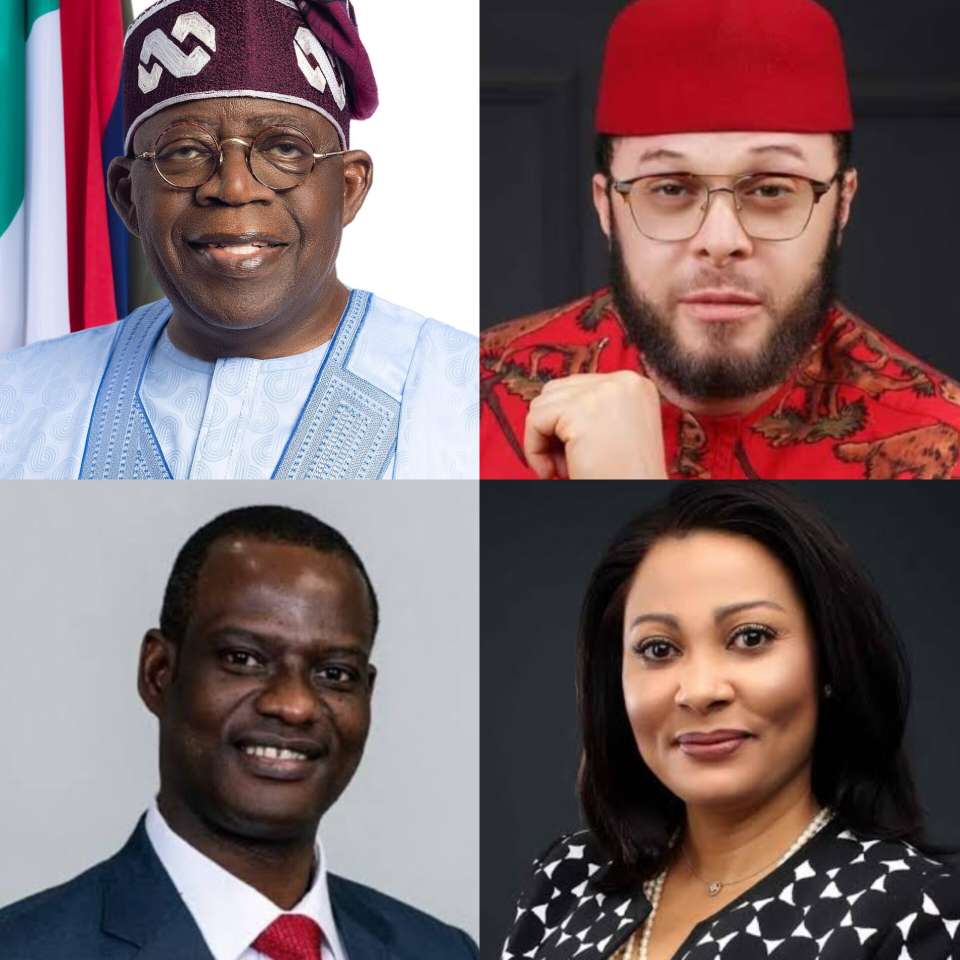
In a dramatic development that has stirred intense political and economic discussions across Nigeria, President Bola Ahmed Tinubu has removed Dr. Doris Uzoka-Anite as Minister of State for Finance and appointed Mr. Taiwo Oyedele as her replacement, in a cabinet reshuffle that political observers are linking to last week’s explosive budget defence hearing at the National Assembly.
The development comes exactly seven days after Hon. Alex Mascot Ikwechegh, the lawmaker representing Aba North/Aba South Federal Constituency in the House of Representatives, confronted the Minister of Finance over ₦1.15 trillion in approved capital funds that remain undisbursed—with capital projects across Nigeria reportedly sitting at zero percent execution.
The dramatic sequence of events began on Wednesday, February 25, when Hon. Ikwechegh—who is a member of the House Committee on Aids and Loans took the floor during the Appropriation Committee’s budget defence session and began raising probing questions that would ultimately reverberate far beyond the walls of the National Assembly.
Armed with documents from his committee assignment, the lawmaker presented what he described as a troubling pattern involving massive external borrowing, large-scale financial approvals, and yet no visible implementation of capital projects.
According to the figures presented during the session, the Federal Government had secured or approved multiple financial packages, including:
1. $1.2 billion for digital infrastructure
2. $500 million economic stimulus package
3. $500 million MSME support (December 2025)
4. $500 million African Development Bank support for economic governance and energy transition approved in November 2025
5. $21 million, ¥15 billion and €4 billion in recent executive loan requests
In addition to these international financing arrangements, Ikwechegh pointed out that ₦1.15 trillion—m representing 30 percent of the 2025 capital budget had been approved but had not been disbursed.
Despite this avalanche of borrowed funds and record-breaking revenues reportedly generated by federal agencies such as the Federal Inland Revenue Service and the Nigeria Customs Service, Hon. Ikwechegh told the committee that capital projects across the country remained stalled.
Addressing the finance ministry during the hearing, he stated:
“With all these funds put together... I want you to enlighten us on why the 2024 budget is yet to be fully implemented, and why the 2025 budget has only been funded 34%—most of which is recurrent expenditure.”
The moment that reportedly stunned the committee came shortly afterward when the lawmaker asked a question that left the room in silence.
“I want you to enlighten us on why our capital projects still remain at zero. Talking about our country. This is our country. Are you not in Nigeria? Why the capital of the Nigerian government remains at zero in 2026?”
During the exchange, the Minister of Finance, Mr. Wale Edun, was pressed to explain the situation. He responded by shifting responsibility for the issue of capital fund disbursement to the Minister of State for Finance, Dr. Uzoka-Anite, explaining that she handled the relevant processes.
Following the exchange, the committee adjourned its session to Thursday, February 26, summoning Uzoka-Anite to appear before lawmakers to provide further clarification on the matter.
When she appeared before the committee the next day, the minister confirmed that the ₦1.15 trillion capital allocation had indeed been approved. However, she explained that “pre-disbursement conditions” had not been met by certain ministries, departments, and agencies.
Hon. Ikwechegh, however, was prepared with further questions.
Rising again during the hearing, he asked:
“Mr. Chairman, can the minister tell this committee which specific ministry met all conditions and still did not receive funding? If none existed, why was ₦1.15 trillion approved when the government knew conditions weren’t met?”
According to those present at the session, the minister was unable to identify any ministry that had fulfilled all conditions and yet failed to receive the funds.
The implication of that moment was not lost on members of the committee and observers in the room. It suggested two troubling possibilities: either the funds were approved without proper verification processes being completed, or the funds had been withheld despite approvals.
Speaking to journalists after the hearing, Hon. Ikwechegh framed the issue in strong legal language, warning of the possible implications if irregularities were confirmed.
“If this infraction is identified, it means there has been misappropriation of funds which is a crime.”
Exactly one week later, events took another dramatic turn.
At about 3:30 PM on Tuesday, March 3, the presidency announced a cabinet reshuffle affecting the Ministry of Finance.
In a statement issued by Bayo Onanuga, Special Adviser to the President on Information and Strategy, the presidency disclosed that Uzoka-Anite had been moved to the Ministry of Budget and National Planning as Minister of State.
The redeployment marks her third ministerial portfolio within two years, having earlier served as Minister of Trade and Investment before her appointment to the finance ministry.
Replacing her is Taiwo Oyedele, a 50-year-old economist and tax expert widely known for his work in fiscal policy reform. Oyedele previously chaired the Presidential Committee on Fiscal Policy and Tax Reforms and spent 22 years at the global consulting firm PricewaterhouseCoopers (PwC), where he rose to become Fiscal Policy Partner and Africa Tax Leader.
His appointment is however subject to confirmation by the Senate.
While the official presidential statement did not directly mention the budget defence hearing or the interrogation led by Hon. Ikwechegh, the timing of the reshuffle has drawn significant attention among political analysts and governance observers.
For many Nigerians, the unfolding sequence of events has been interpreted as a rare demonstration of legislative oversight translating into immediate political consequences.
A lawmaker asked questions. A minister could not provide answers. Within one week, that minister was removed from the position connected to the issue under scrutiny.
In Aba North and Aba South Federal Constituency, one of Nigeria’s major commercial zones, constituents of Hon. Ikwechegh are already celebrating what they see as strong representation at the national level.
When the lawmaker asked, “Why the capital of the Nigerian government remains at zero in 2026?” he was raising a question that resonates deeply with ordinary citizens across the country, many of whom are still waiting for critical infrastructure such as roads, hospitals, and schools that were approved in budgets but have yet to materialize.
However, despite the cabinet reshuffle, the fundamental issue raised during the hearing remains unresolved.
The key question that dominated the budget defence session still lingers:
1. Where is the ₦1.15 trillion?
2. If funds were approved by the National Assembly, borrowed from international lenders, and generated by government revenue agencies, yet failed to reach the capital projects they were intended to finance, the legal implications could be far-reaching.
As Hon. Ikwechegh himself emphasized during the hearing:
“If this infraction is identified, it means there has been misappropriation of funds—which is a crime.”
The removal or redeployment of a minister, observers say, does not answer that question.
Instead, it raises another one that now hangs over the entire issue:
Will there be further accountability?