
NEWS
OTTI UNLEASHED: HOW ONE LECTURE, ONE LEADER, AND ONE BLUNT RESPONSE EXPOSED NIGERIA’S GOVERNANCE CRISIS

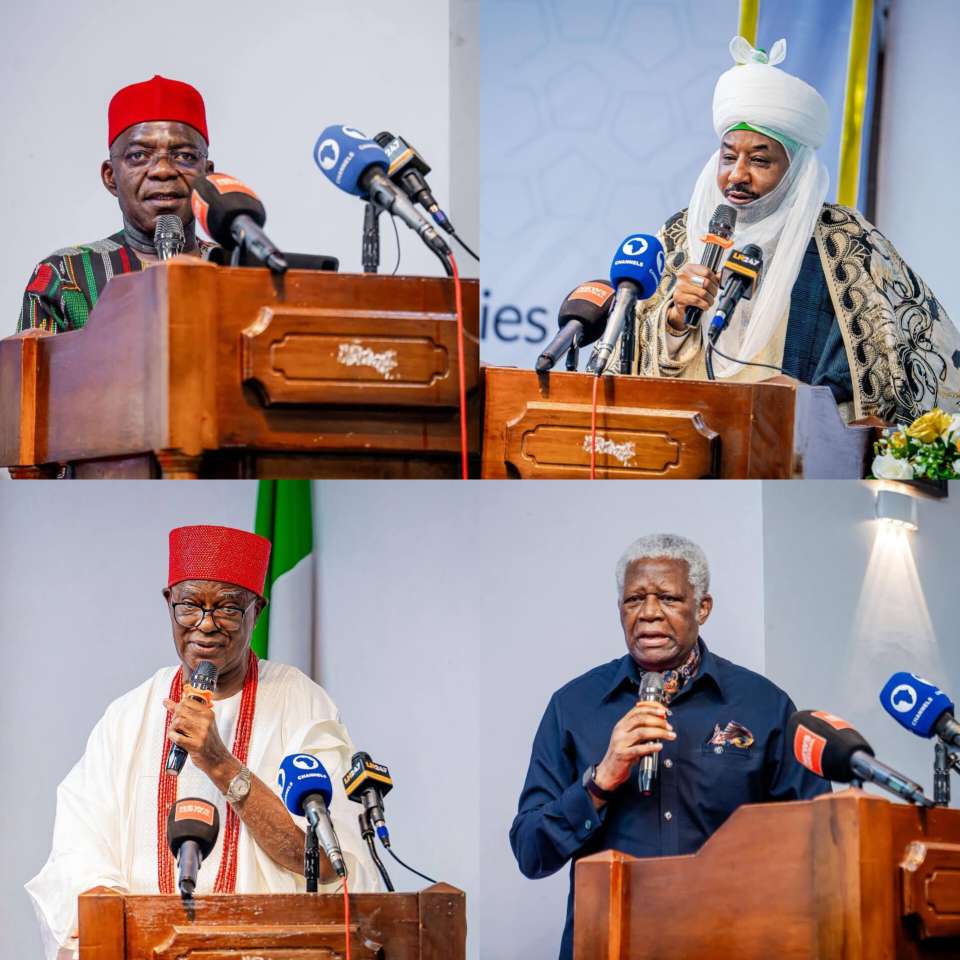
By @TheKELVINATOR
(THE EYES OPENER)
At a time when Nigeria’s political space is thick with noise, distractions, and ideological confusion, Abia State Governor, His Excellency, Dr. Alex Chioma Otti, OFR, stepped forward in Lagos not just to deliver a lecture, but to draw a hard line between leadership and chaos, between governance and empty activism.
What happened at the 5th Annual Lecture of TheNiche at the Nigerian Institute of International Affairs was more than an intellectual gathering. It became a defining moment, one where Alex Otti didn’t just speak about economic governance; he embodied it. And in the same breath, he sent a sharp, unapologetic message to critics, including activist Omoyele Sowore.
“I Won’t Dignify Him…” — Otti’s Subtle but Scathing Swipe
Governor Otti’s response to Sowore was not loud, but it was lethal in its simplicity:
“I don’t think I want to dignify Sowore… he said he has slept in my house on two occasions… he came to my house, he ate my food… Abia people will not agree with him.”
Governor Otti’s response to Sowore was not loud, but it was cutting in its precision. He made it clear that he would not elevate what he considered baseless criticism, recalling that the same critic had once been received warmly in his home during a campaign period. His remark that Abia people would ultimately judge such opinions was more than a dismissal, it was a confident assertion that leadership must be measured by impact, not noise. In a political environment where many are quick to engage in public spats, Otti’s restraint came across as deliberate and calculated.
Standing before a distinguished audience, Otti dismantled the illusion that Nigeria’s economic crisis can be solved with quick fixes. His message was firm and unapologetic: the country’s problems are deeply structural, rooted in years of poor political decisions. He argued that every hardship experienced by citizens from struggling businesses to failing infrastructure can be traced back to leadership choices. For him, governance is not abstract; it is a chain reaction where political decisions directly shape economic realities.
Drawing from Abia’s recent history, Otti pointed to a period when governance failures plunged the state into decline, with institutions weakened and public trust eroded. He contrasted that past with the ongoing recovery under a leadership approach anchored on competence and service. Without theatrics, he presented Abia as evidence that when governance is driven by discipline and clarity of purpose, systems can be rebuilt, investor confidence restored, and hope revived.
What gave his message even greater weight was the chorus of validation from some of Nigeria’s most respected voices. The Emir of Kano, Muhammadu Sanusi II (CON) described Otti as one of the rare public office holders who successfully bridges economic knowledge with practical governance. His remarks carried a broader warning that public office must never be reduced to a profit-making venture but should remain a platform for service and lasting impact.
The Obi of Onitsha, Nnaemeka Alfred Achebe, reinforced this perspective by highlighting Otti’s transition from the private sector as a strength that enhances governance outcomes. He raised concerns about Nigeria’s political structure, where money increasingly dictates power, and subtly positioned Otti as an example of what leadership could look like when competence outweighs financial influence.
The panel session, which included voices like the National Chairman of the Nigerian Labour Congress (NLC) Comrd. Joe Ajaero, pushed the conversation further, emphasizing that governance must be judged by tangible results rather than promises. Their consensus aligned with Otti’s core argument that efficiency, institutional strength, and measurable impact on citizens’ welfare should define leadership.
Adding to the momentum, General Ike Nwachukwu (Rtd), commended the transformation taking place in Abia State and urged citizens to support continuity in leadership where performance is evident. His position underscored a critical national dilemma, whether Nigerians will sustain progress by rewarding results or undermine it through inconsistent political choices.
Beyond addressing leaders, Otti turned his focus to citizens, challenging them to rethink their role in governance. He stressed that voting is not just a civic exercise but a serious economic decision with long-term consequences.
According to him, national progress depends not only on those in power but also on the willingness of citizens to critically evaluate leadership and demand accountability.
By the end of the event, what emerged was more than a lecture, it was a statement. Dr. Alex Otti positioned himself not just as a participant in Nigeria’s political system but as a challenger of its failures. His calm but firm response to criticism, combined with a data-driven approach to governance and validation from respected national figures, painted the picture of a leader intent on redefining what public service should represent.
In a landscape dominated by rhetoric, Otti’s message stood out for its clarity: leadership is not about who speaks the loudest, but about who delivers results that people can see and feel.