
NEWS
“The Ultimate Arbiter of Electoral Integrity Is Public Trust” — INEC Chairman Announces October 9 PVC Collection, Says Voters Has Risen To More Than 103 Million

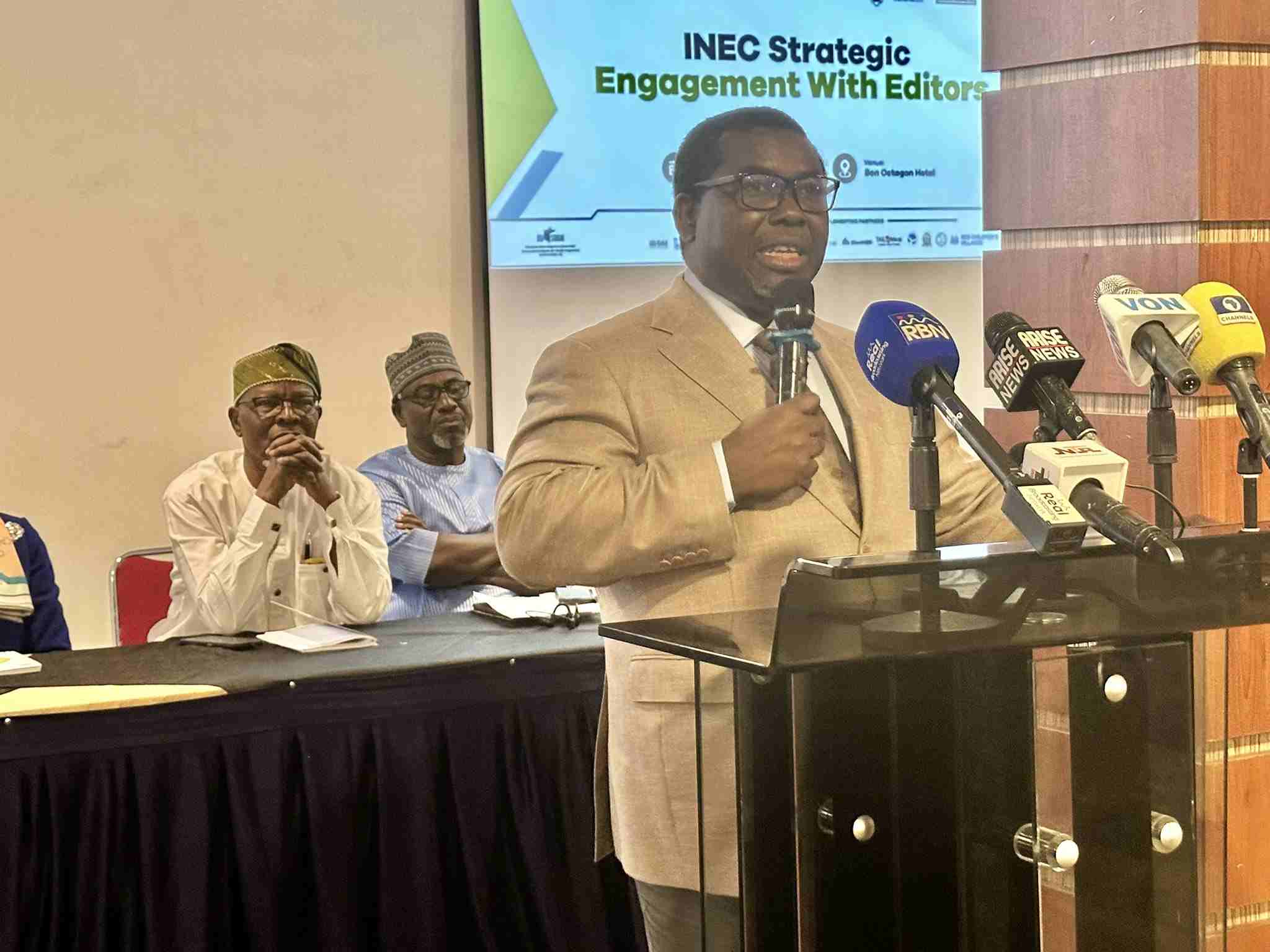
The National Register of Voters has risen to more than 103 million ahead of Nigeria’s 2027 general elections, with the Independent National Electoral Commission (INEC) intensifying preparations to deliver a transparent, technology-driven and credible electoral process.
INEC Chairman, Prof. Joash Amupitan, SAN, disclosed the figure on Monday, October 5, 2026, at a strategic workshop for media executives organised by INEC in collaboration with Development Alternatives Incorporated (DAI) and the Nigerian Guild of Editors (NGE) in Abuja.
The workshop, held at BON Hotel Octagon in the Jahi District of the Federal Capital Territory, was themed “Strengthening Democracy Through Partnership Among Editors, Civil Society and Electoral Institutions.”
It brought together key stakeholders to examine ways of deepening collaboration among the electoral umpire, the media, civil society organisations and other actors ahead of the 2027 elections.
Amupitan said the increase in the voters’ register followed the successful implementation of the Commission’s three-phase Continuous Voter Registration (CVR) exercise, which attracted more than 10.6 million new applicants.
He disclosed that the public display of the Preliminary Register of Voters, which allowed citizens to raise claims and objections, had also been completed, while INEC had concluded the final Automated Biometric Identification System (ABIS) cleanup of the register.
A major highlight of the workshop was the announcement of the commencement date for the nationwide collection of Permanent Voter Cards (PVCs).
The INEC Chairman announced that collection of PVCs across the country will commence on Friday, October 9, 2026, urging all eligible Nigerians who registered or successfully updated their voter information to participate in the process.
He said the development was particularly significant as Nigeria moves closer to the 2027 general elections, stressing that the Commission was taking deliberate steps to strengthen the credibility and efficiency of the electoral system.
According to Amupitan, INEC remains committed to improving the deployment of technology in elections, particularly through continuous enhancements to the Bimodal Voter Accreditation System (BVAS) and the INEC Result Viewing Portal (IReV).
He said the objective was to ensure that legitimate votes were properly accredited, counted and transparently transmitted, while strengthening public confidence in the electoral process.
Beyond technology and operational preparedness, however, the INEC Chairman identified public confidence as the most critical factor in determining whether elections are perceived as credible.
“The ultimate arbiter of electoral integrity is public trust,” Amupitan said.
He explained that operational efficiency on the part of the electoral commission alone could not guarantee democratic stability, noting that credibility also depended on the confidence of citizens, political actors, the media, civil society and other stakeholders in the electoral process.
The INEC Chairman therefore called for a stronger and more structured partnership between the Commission, editors, civil society organisations and other stakeholders.
He said INEC was willing to listen to concerns from newsrooms, respond to operational challenges and provide timely information to close communication gaps that could otherwise create room for speculation and misinformation.
Amupitan also urged media organisations to establish dedicated digital fact-verification desks to strengthen the accuracy of election-related reporting.
He pledged that INEC would provide editors with direct access to the Commission for the verification of field incidents, logistical developments and security-related reports in real time.
According to him, timely access to authoritative information would help journalists distinguish verified information from false or misleading claims, particularly in an increasingly digital media environment where unverified reports can spread rapidly.
He further proposed the establishment of a sustained editorial feedback mechanism between INEC and the Nigerian Guild of Editors. The mechanism, he said, would provide an avenue for both sides to periodically review operational progress, identify emerging challenges and address concerns throughout the 2027 election cycle.
Earlier, President of the Nigerian Guild of Editors, Mr Eze Anaba, described the workshop as timely, particularly with the country approaching another crucial general election.
Anaba stressed that elections went beyond the mere act of casting ballots, arguing that citizens must have confidence that their votes would count and that the institutions responsible for conducting the elections would operate fairly, professionally and transparently.
He urged editors and journalists to maintain the highest standards of accuracy, fairness, balance and public interest in their coverage of the 2027 electoral process.
The NGE President also called for improved access to credible, accurate and timely information from INEC, noting that effective communication between the electoral body and the media would be essential in keeping Nigerians properly informed and reducing the spread of misinformation.
With the voters’ register now exceeding 103 million, the commencement of nationwide PVC collection on October 9 represents another major milestone in Nigeria’s preparations for the 2027 general elections.
The workshop consequently underscored the growing importance of collaboration among INEC, the media and civil society in building an electoral process that is not only technicall

 y sound but also trusted by the Nigerian public.