
NEWS
BLOODSHED IN BORDER COMMUNITIES AS SCORES OF FULANI HERDERS FEARED KILLED AS NIGERIAN VIGILANTES, SOLDIERS, AND CROSS-BORDER ACTORS LAUNCH DEADLY RAID OVER ALLEGED ANSARU LINKS

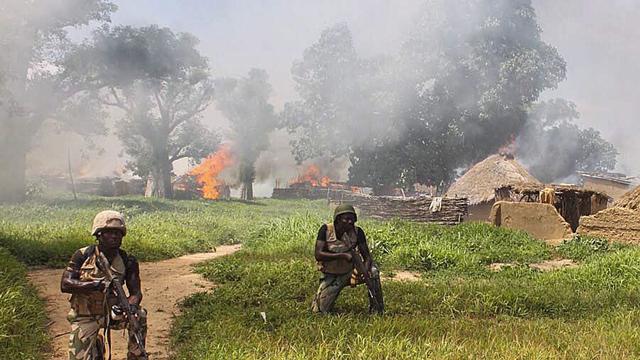
A grim picture is emerging from Nigeria’s north-central region, where a state-backed militia working alongside security forces has allegedly killed scores of ethnic Fulani herders in a controversial raid that is already raising serious humanitarian and security concerns.
According to multiple local sources who spoke to AFP, the deadly operation targeted Fulani herding communities accused of collaborating with the jihadist group Ansaru. The raid, which unfolded in and around Kabe in Borgu Local Government Area, near the border with Benin Republic, reportedly involved Nigerian vigilantes from Bussa district as well as armed actors from across the border.
The coordinated assault is said to have resulted not only in mass killings but also widespread arrests, as security forces and allied vigilante groups moved aggressively through Fulani settlements.
On Thursday, the operation intensified, with security personnel reportedly conducting door-to-door searches in herding communities. Young men suspected of acting as informants for the al-Qaeda-linked Ansaru group were singled out, with witnesses alleging that those who resisted arrest were shot on the spot.
“Security personnel killed 41 suspected Ansaru informants in the raids in which many others were arrested,” said Ahmad Ali, a community leader from the nearby village of Konkoso.
“It was a joint operation between community vigilantes and those from neighbouring Benin, with the help of Nigerian soldiers,” Ali added.
Despite the gravity of the allegations, official responses remain limited. A Nigerian military spokesman declined immediate comment, stating that he would seek further details on the incident. Meanwhile, uncertainty surrounds the role of neighbouring Benin, as a spokesperson for its military has yet to respond to inquiries.
The incident highlights deepening tensions in Niger State, a region already grappling with years of violence driven by banditry, kidnapping, and the creeping expansion of jihadist networks.
Niger is among several states in central and northwestern Nigeria that have been persistently targeted by armed gangs known locally as “bandits,” who raid villages, abduct residents, and plunder communities. In recent years, extremist groups linked to the long-running insurgency in northeastern Nigeria have also begun to establish a presence in the state.
Security experts have warned about growing cooperation between bandits and jihadist factions, an alliance that has heightened fears and triggered harsh countermeasures.
The Fulani ethnic group, many of whom are pastoralists, have increasingly found themselves caught in the middle. While some individuals have reportedly been recruited by extremist groups in the wider Sahel region, analysts caution that broad accusations and reprisals against entire communities risk worsening the crisis.
Researchers have repeatedly warned that targeting Fulani civilians could backfire, potentially pushing more individuals toward extremist groups as a means of survival or protection.
While community leaders report that 41 people were killed, a humanitarian worker assisting displaced residents in the area put the figure slightly lower.
The source attributed the killings to “vigilantes from Nigeria and Benin,” underscoring the cross-border nature of the operation.
Adding another layer to the narrative, a resident of Kabe, identified as Abubakar, described the raid as a “pre-emptive raid” carried out amid escalating tensions between Fulani herders and local farming communities.
According to him, the operation followed threats allegedly made by herders after two of their kinsmen, accused of being Ansaru informants, were killed in the nearby community of Sabalunna.
In retaliation, Ansaru fighters reportedly attacked Sabalunna, burning parts of the community and issuing a chilling warning.
“They would never condone the killing of their people,” Abubakar said, confirming the earlier death toll of 41.
He further claimed that Fulani groups had openly threatened to disrupt farming activities during the rainy season by attacking farmers in their fields.
“The Fulani herders openly threatened to disrupt farming this rainy season as they would be attacking farmers while working on their farms in the bush,” he said.
“This prompted the pre-emptive raid.”
In the aftermath of the violence, Fulani settlements in the affected areas have reportedly been abandoned. Survivors fled with their livestock, leaving behind deserted camps and a growing humanitarian vacuum.
The incident underscores the fragile and volatile security landscape in the region, where cycles of violence, retaliation, and mistrust continue to deepen divisions between communities.
As questions mount over the conduct of the operation and the involvement of cross-border actors, observers warn that without careful handling, the situation could spiral further fueling more violence and undermining already strained efforts to restore peace.