
NEWS
FG Unveils FreeTV as Nigerians to Enjoy Over 100 Television Channels Without Monthly Subscription Fees

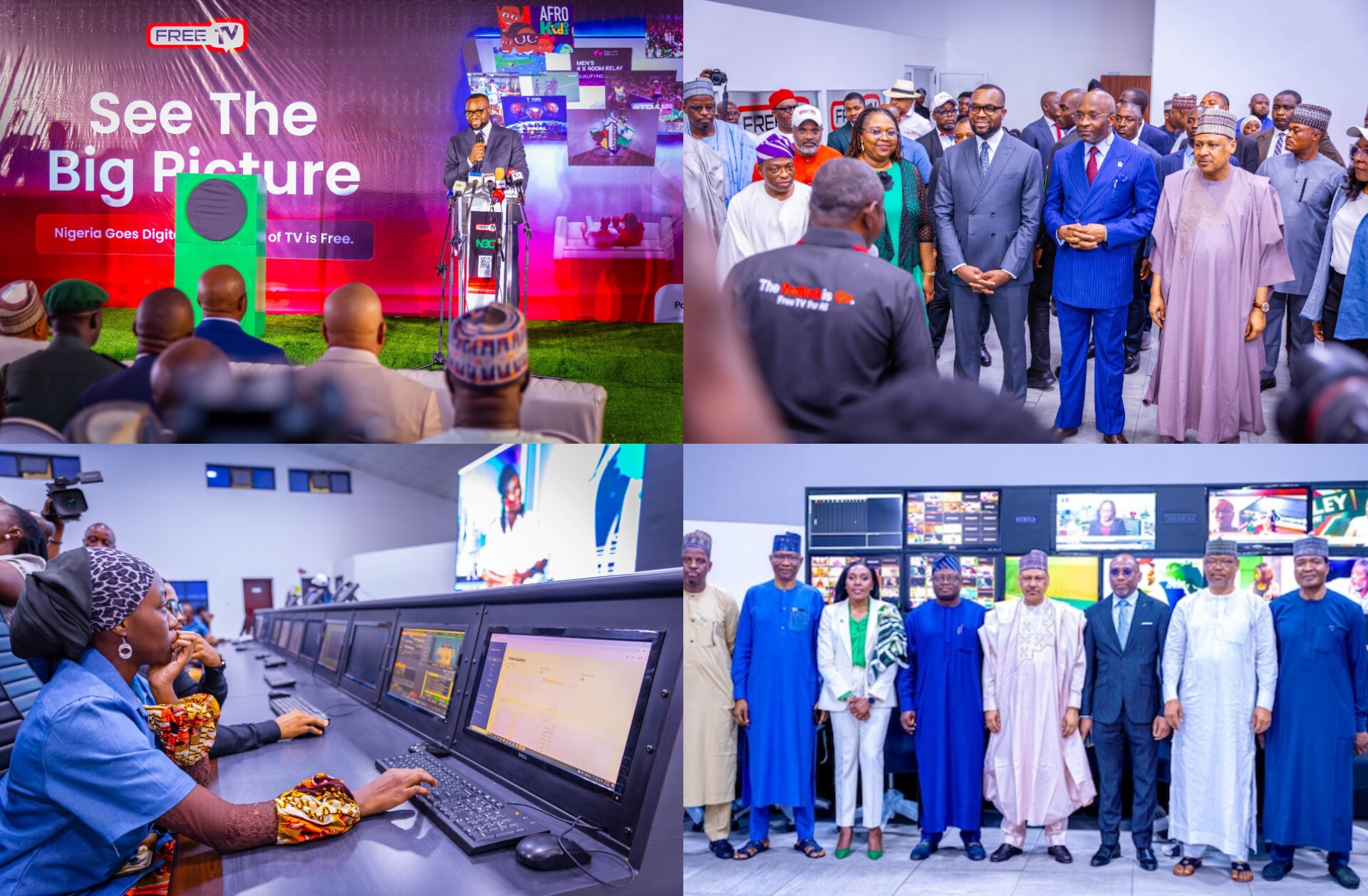
In a landmark move aimed at deepening digital inclusion and transforming the nation’s broadcasting landscape, the Federal Government has officially launched FreeTV, a revolutionary digital television platform that will provide Nigerians with access to more than 100 television channels at no cost.
The initiative, unveiled on Tuesday, June 17, represents a significant milestone in Nigeria’s ongoing Digital Switch-Over (DSO) programme, which seeks to fully transition the country from analogue to digital broadcasting while expanding access to quality television content across all regions.
With the launch of FreeTV, millions of Nigerians can now enjoy a diverse range of television programming, including news, sports, movies, music, educational content, children’s entertainment, religious programmes, and indigenous language channels without the burden of monthly subscription payments.
The platform has been designed to ensure easy accessibility for households nationwide. Users can access the service through satellite and terrestrial broadcasting networks using compatible DVB-T2 and DVB-S2 decoders. Many households already using free-to-air decoders may be able to connect immediately without purchasing additional equipment.
In addition to traditional television access, the government has introduced a FreeTV mobile application, enabling users to stream content directly on their smartphones and other mobile devices. This innovation is expected to significantly expand access to television services, particularly among younger audiences and residents in underserved communities.
A major advantage of the new platform is that Nigerians will not be required to purchase new television sets to enjoy the service. Existing television sets can seamlessly connect to the platform through compatible decoders, making the transition affordable and convenient for millions of households.
The National Broadcasting Commission (NBC) described the initiative as a strategic intervention aimed at promoting digital inclusion and ensuring that citizens, regardless of income level or geographical location, can benefit from modern broadcasting technology.
Beyond expanding access to information and entertainment, FreeTV is expected to become a catalyst for economic growth within Nigeria’s media and creative sectors. Industry stakeholders believe the platform will create fresh opportunities for content producers, filmmakers, broadcasters, technicians, and other professionals within the creative ecosystem.
To support content development and industry expansion, regional production centres have already been established in Lagos, Abuja, Port Harcourt, Enugu, Kano, and Benin. These hubs are expected to stimulate local content creation while generating employment opportunities for producers, editors, camera operators, sound engineers, technical personnel, and other media professionals.
Observers note that the introduction of FreeTV aligns with the Federal Government’s broader vision of leveraging technology to bridge information gaps, strengthen local content production, and position Nigeria as a leading player in Africa’s digital broadcasting industry.
The launch also marks another major achievement in Nigeria’s long-running Digital Switch-Over project, which is designed to improve picture and sound quality, increase channel capacity, and create a more robust environment for local content production and distribution.
With regional production hubs spread across six major cities and access to more than 100 channels, FreeTV is expected to create thousands of direct and indirect jobs while enhancing the growth of Nigeria’s broadcasting and creative economy.
As the nation advances toward a fully digital broadcasting ecosystem, the Federal Government has encouraged Nigerians to verify the compatibility of their decoders and take advantage of the new service.
Despite the successful rollout of FreeTV, authorities have maintained that Nigeria’s final analogue television switch-off remains scheduled for December 31, 2028, a deadline that will mark the completion of the country’s transition to digital broadcasting.
The introduction of FreeTV is widely seen as a game-changing development that promises to democratize access to information and entertainment, empower content creators, and accelerate Nigeria’s journey into a 
 digitally connected future.