
NEWS
Atiku’s $1.2m US Lobbying Deal Sparks Fresh Political Firestorm as Sunday Dare Blasts ‘Foreign Propaganda’

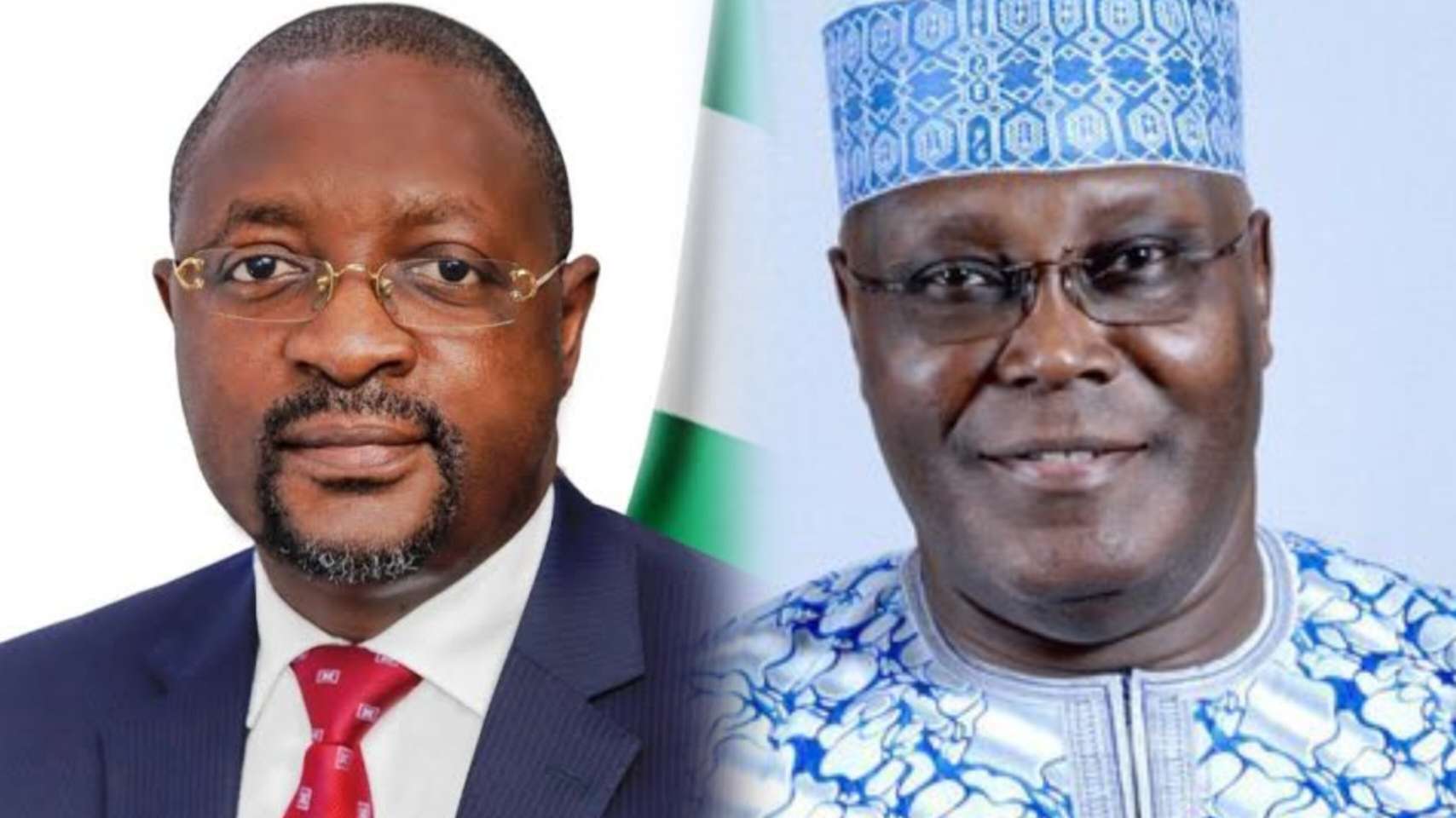
A fresh political controversy has erupted over former Vice President Atiku Abubakar’s reported $1.2 million lobbying arrangement in the United States, with Special Adviser to President Bola Ahmed Tinubu of Nigeria on Media and Public Communications, Sunday Dare, accusing the opposition camp of deploying foreign lobbyists to manufacture damaging narratives ahead of the 2027 general elections.
Dare, in a strongly worded statement, described the emerging controversy as a calculated political distraction, arguing that the coordinated media campaign surrounding a Washington, D.C.-based advisory firm amounted to little more than an attempt to give political speculation the appearance of classified intelligence.
According to him, the development is “not an intelligence breakthrough” but “a clinical demonstration of desperation.”
He alleged that the campaign was being driven by Dr Karl-Marx Edward Okeke-Von Batten, whom he described as a commercial lobbyist operating under a multi-million-dollar retainer allegedly funded by Atiku.
Dare pointed to publicly available filings under the United States Foreign Agents Registration Act (FARA), claiming they show that Atiku contracted Washington-based Von Batten-Montague-York, L.C. under a $1.2 million, 12-month retainer.
He argued that the agreement raises questions about the political objectives behind the firm’s activities and accused it of being deployed to “counterbalance” narratives coming from the Nigerian government while reviving historical legal records for political purposes ahead of 2027.
Dare maintained that the reports being circulated from Washington should not be interpreted as official positions of the United States government.
“The incendiary press releases being carefully churned out from Washington are public relations propaganda sheets passed off as the view of the U.S. Government. They are not,” he stated.
He further challenged those behind the allegations to produce what they described as a “highly classified intelligence report,” identify their unnamed sources and provide documentary evidence to substantiate the claims.
The Presidential aide also dismissed suggestions that Okeke-Von Batten has direct influence over President Donald Trump or the ongoing legal proceedings involving historical FBI records.
Dare argued that the FBI’s involvement in the case was connected to protecting investigative techniques and confidential sources rather than any political effort to shield Nigerian officials.
“He has absolutely zero to do with what is playing out in the U.S. court system,” Dare said, adding that the case had been active since 2023.
He challenged the lobbyist to approach the judge handling the matter, warning that attempting to interfere with judicial proceedings could have serious consequences.
Dare also took aim at Okeke-Von Batten’s description of himself as a “Senior Government Advisor,” arguing that publicly available information identifies him as a U.S.-based consultant of Nigerian origin and founder of Von Batten-Montague-York, L.C.
He referenced aliases allegedly associated with the consultant, including Ikemefuna Okeke and Karl Von Batten, while questioning the credibility of portraying a commercial lobbyist as an independent geopolitical authority.
According to Dare, Okeke-Von Batten’s statements should be regarded as those of an individual associated with political interests linked to Atiku and not as statements representing the U.S. government or President Trump.
The controversy also touched on President Bola Tinubu’s movements outside Nigeria.
Dare rejected suggestions linking the President’s European trip to the ongoing U.S. Freedom of Information Act proceedings, insisting that Tinubu was on a previously scheduled annual leave.
“This orchestrated distraction attempts to tie the president’s movements to foreign legal proceedings,” Dare said, maintaining that there was “absolutely no connection” between Tinubu’s trip and the ongoing FOIA proceedings.
Dare further cited recent public commentary by Senior Advocate of Nigeria, Wole Afolabi, who appeared on Channels Television to discuss FOIA requests concerning historical records held by U.S. federal agencies.
According to Dare, Afolabi explained that efforts by the legal team to keep portions of the records confidential were consistent with U.S. laws protecting investigative procedures and sources.
Dare argued that if Tinubu had been criminally liable under U.S. law in connection with historical investigations, American authorities would have prosecuted him at the time.
He therefore accused political actors of recycling decades-old legal records in an attempt to create fresh political ammunition.
Beyond the immediate controversy, Dare framed the dispute as part of a larger battle over the direction of the 2027 presidential contest.
He accused the opposition of failing to present Nigerians with a coherent alternative economic programme, alleging that its strategy had increasingly relied on “muckraking, emotional manipulation, and ethnic polarisation.”
According to him, political resources should be directed towards developing grassroots structures, agricultural policies, industrial plans and economic blueprints rather than paying foreign lobbyists to generate controversy.
“When a political camp invests millions not into building grassroots infrastructure, agricultural masterplans, or industrial blueprints, but into hiring foreign mouthpieces to manufacture fictitious crises, they confirm their detachment from the everyday realities of ordinary Nigerians,” he stated.
Dare insisted that the 2027 election would ultimately be determined by Nigerian voters and not by political narratives generated in Washington.
He argued that the Tinubu administration’s economic reforms, infrastructure programme and institutional policies would ultimately be judged by their impact on citizens.
“True democratic validation is earned through the ballot box and tangible service delivery to the citizens at home, not through manufactured headlines bought and paid for in foreign currency,” Dare declared.
He maintained that Nigerians would ultimately distinguish between political propaganda and verifiable performance.
The former minister concluded by arguing that political leadership could not be outsourced to foreign consultants, insisting that electoral legitimacy would have to be earned through domestic accountability, economic planning, national vision and tangible development.
The controversy over the alleged $1.2 million lobbying arrangement is therefore likely to remain a major talking point as Nigeria’s political parties and presidential hopefuls intensify preparations and positioning ahead of the 2027 elections.