
NEWS
‘Rich Dad Poor Dad’ Author Robert Kiyosaki Reveals $1.2 Billion Debt, Says Borrowing Is Part of His Wealth Strategy

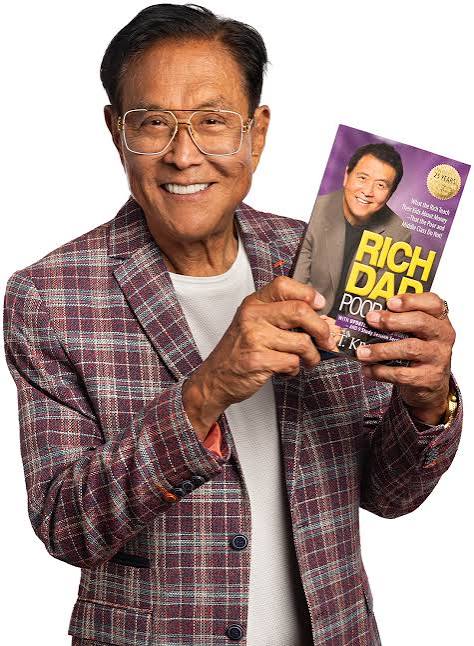
…as Author Is $1.2 Billion In Debt
Robert Kiyosaki, the renowned author of the bestselling personal-finance book “Rich Dad Poor Dad,” has revealed that he is associated with a staggering $1.2 billion in debt through his extensive real-estate investment portfolio, a figure he says reflects a deliberate strategy for building wealth rather than financial distress.
The 79-year-old financial educator and entrepreneur has repeatedly cited the enormous debt figure while explaining his philosophy that wealthy investors can use borrowed money to acquire assets that generate income and appreciate in value.
“So, I’m a billion two in debt,” he told the “Get Rich Education” podcast over the summer.
Kiyosaki, who has spent decades teaching people about investing, financial independence and wealth creation, immediately acknowledged that his approach is not necessarily suitable for everyone.
He added that people “[s]hould not do what I do, right?”
“Rich Dad Poor Dad” author Robert Kiyosaki has repeatedly touted being $1.2 billion in debt as part of his investment strategy.
“But I studied it since 1974… If you’re going to learn to use debt, you’d better take some education.”
The eye-catching admission has generated renewed interest in Kiyosaki’s unconventional approach to debt, particularly because the figure could easily be interpreted as meaning he personally owes $1.2 billion.
However, according to his former wife and longtime business partner, Kim Kiyosaki, that interpretation is misleading.
Kim recently told Vanity Fair that the $1.2 billion figure is largely connected to properties owned alongside business partners rather than representing a personal liability of the same amount.
“We have a lot of apartment houses with our partners,” Kim told the magazine, putting the portfolio at some 1,500 units.
“So technically, yes, we have all this debt,” she said, adding that the borrowing is attached to real estate and that Kiyosaki’s personal share is small.
The distinction is important because Kiyosaki’s investment philosophy centers on using debt to purchase income-producing assets rather than taking on loans to finance everyday consumption.
Under his strategy, properties can appreciate over time, allowing investors to borrow against the increased equity without necessarily selling the underlying assets.
According to Vanity Fair, Kiyosaki has used this approach by borrowing additional money against the rising value of his properties and treating the loan proceeds as tax-free income. The strategy can provide access to capital without triggering the same tax consequences that could arise from selling an appreciated asset, although the borrowed money still has to be repaid.
Kiyosaki also reportedly places individual investments into separate limited liability companies, creating legal and financial barriers between different assets.
“If it all comes to hell, you can talk to my attorney,” Robert Kiyosaki told the magazine.
“Firewalls — that’s the way the rich play the game.”
Based on Kiyosaki’s reported income and his own claims about his investments, Vanity Fair estimated that his personal portion of the debt could be substantially smaller potentially between $30 million and $60 million if his claim of earning approximately $3 million annually is accurate.
The strategy has attracted support from some real-estate investors and tax professionals who argue that leveraging appreciating properties is a common practice among sophisticated investors.
David A. Perez, an enrolled agent and founder of Tax Maverick AI who said he uses a similar strategy as a multifamily real-estate investor, described Kiyosaki’s approach as “a great strategy.”
Perez also said carrying significant property-backed debt can be “actually very normal,” particularly when the underlying assets are generating income and increasing in value.
He explained that borrowing against the equity in a property can generally result in a loan rather than taxable proceeds from a sale, although taking on additional debt can also increase mortgage payments, interest expenses and pressure on cash flow.
But not everyone views Kiyosaki’s enormous leverage as a model that ordinary investors should emulate.
John Poole, founder of Scottsdale, Arizona-based consultancy JPTD Partners, warned that debt can rapidly become dangerous when the value or income associated with leveraged assets declines.
“I think there’s good debt and there’s bad debt, and then there’s $1.2 billion of debt, which you better know exactly what in the world you’re doing,.
“Leverage works beautifully on the way up, and if it’s not continuing on that way up, then it’s like a chainsaw financially coming down,“ he told The Post.
Poole acknowledged that borrowing against appreciated assets can have legitimate uses, including certain estate-planning strategies, but cautioned that investors cannot indefinitely rely on rising asset values and refinancing.
“It doesn’t go on forever. There has to be a payday, and be prepared for that payday, irrespective of the size,” Poole added.
He offered a particularly stark warning for inexperienced investors considering copying Kiyosaki’s strategy.
“[Kiyosaki] may call this the ‘Rich Dad debt,’ but for the average investor, it could turn out to be ‘Poor Dad bankruptcy’ really quickly.”
Kiyosaki’s philosophy of separating “good debt” from “bad debt” has been a central theme of his financial-education empire, which was built largely around Rich Dad Poor Dad.
First self-published in 1997, the book has sold more than 44 million copies, according to Vanity Fair, and became one of the most influential personal-finance titles of its generation.
The book contrasts the financial lessons Kiyosaki says he learned from his biological father, whom he called the “Poor Dad,” with those he attributes to the father of his childhood best friend, whom he referred to as the “Rich Dad.”
Kiyosaki’s biological father, Ralph Kiyosaki, was Hawaii’s state superintendent of education and unsuccessfully ran for lieutenant governor in 1970.
Kiyosaki later identified his “Rich Dad” as Richard Kimi, a Hawaii businessman who owned a chain of hotels that at one point included the Waikiki Biltmore Hotel.
Over the years, Kiyosaki has consistently encouraged his readers and followers to focus on assets capable of generating cash flow, particularly real estate and businesses, while being strategic about taxes.
His philosophy also draws a sharp distinction between borrowing to acquire assets and borrowing to fund personal expenses.
Kiyosaki has additionally expanded his business empire beyond Rich Dad Poor Dad, including co-authoring two books with Donald Trump, among them the 2006 title Why We Want You to Be Rich.
Kim Kiyosaki believes the billionaire-dollar debt figure is also part of the author’s attention-grabbing communication style.
“He loves to say things that shock,” Kim told the magazine, saying Kiyosaki uses the billion-dollar figure to grab attention before explaining “why investment debt is good.”
Ultimately, the $1.2 billion figure appears to tell a more complicated story than a simple tale of one individual owing an enormous sum of money.
For Kiyosaki, debt is a financial instrument that can be deployed to acquire and expand income-generating assets. For critics and more conservative investors, however, the sheer scale of the leverage highlights the risks that arise when borrowing is heavily dependent on property values, rental income and continued access to financing.
The debate surrounding Kiyosaki’s debt strategy therefore mirrors one of the oldest arguments in investing: leverage can dramatically accelerate wealth creation when markets move in an investor’s favor, but it can magnify losses just as quickly when conditions turn against them.
The Post has sought comment from Kiyosaki.