
NEWS
Abike Dabiri-Erewa, Rufai Oseni Clash at Kikelomo Abati’s 20th Media Anniversary Over Responsible Journalism

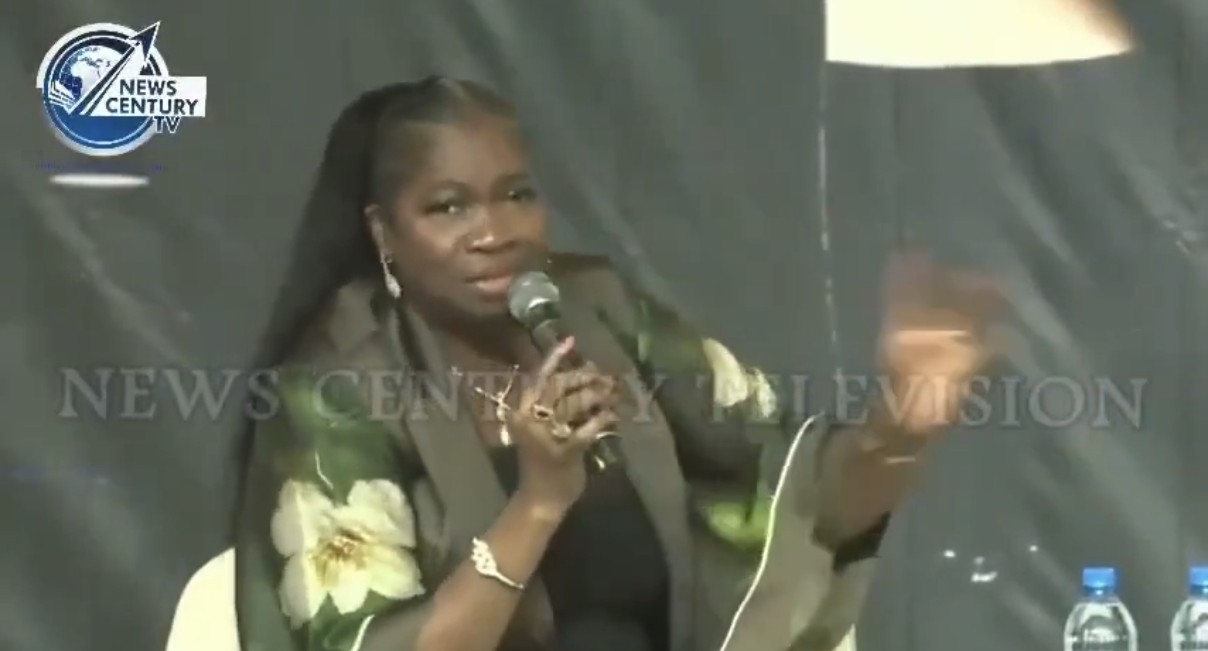
The 20th anniversary celebration of Mrs Kikelomo Atanda-Owo Abati, wife of renowned journalist and television personality Dr Reuben Abati, has been overshadowed by a heated exchange involving the Chairman and Chief Executive Officer of the Nigerians in Diaspora Commission (NiDCOM), Mrs Abike Dabiri-Erewa, and Arise News journalist Rufai Oseni.
The incident occurred during the anniversary event, which was expected to celebrate Mrs Abati’s two decades of contributions to the media industry. However, the gathering took a dramatic turn when Dabiri-Erewa, while speaking on responsible journalism and professional standards, recounted a controversial social media incident involving her and Oseni.
Addressing the audience, Dabiri-Erewa reflected on the growing influence of social media in shaping public perception and the responsibility of journalists to verify information before drawing conclusions or amplifying allegations.
“In terms of journalism, there’s no talk about irresponsible journalism. Yes, I’m on Twitter. I hear a lot of things,” Dabiri said.
She explained that an account operating under the Twitter handle Voice of Igbos had repeatedly insulted her.
According to her account, she investigated the identity behind the handle and discovered that it was allegedly operated by a woman named Stephanie, who lived in Surulere, Lagos.
Dabiri-Erewa narrated that after the account attacked her, another person responded to the exchange, prompting her to react with a smiley emoji. She maintained that her response was subsequently interpreted by Oseni as an endorsement of an offensive statement allegedly directed at the Igbo ethnic group.
“Somebody replies to her. Then I do a smiley. And then Rufai Oseni comes and says, Abike Dabiri calls everybody — Igbos — monkeys and gorillas,” she said.
The NiDCOM chief executive expressed dissatisfaction with the interpretation, arguing that the controversy escalated online despite her insistence that she had not made the statement attributed to her.
“So that is irresponsible. And then it went viral. Even though I didn’t say Igbos.”
Her account brought the question of responsible reporting to the centre of the anniversary gathering, with Dabiri-Erewa insisting that journalists must be held to the same standards of accountability they demand from public officials.
She argued that journalists have a duty to exercise restraint, establish the facts and provide context, particularly when dealing with social media exchanges that can easily be misunderstood, misrepresented or circulated to millions of people within a short period.
“We have to ensure that you hold people responsible, but you must be responsible yourself. So we will not accept irresponsible journalism. For you to hold any government official responsible, you must be responsible,” she said.
Dabiri-Erewa subsequently launched into a broader criticism of what she described as the declining professional standards within the Nigerian media industry, lamenting what she perceived as a departure from the values and principles that traditionally guided journalism.
“And let me tell you, some journalism is going to the dogs. There’s no journalism anymore. There are no standards. There are no values.
“The journalists that we were trained [by] are going to the dogs. There must be values. There must be standards. And not everybody is a journalist, please. That profession is destroyed.”
The remarks appeared to heighten tensions at the event, particularly as Oseni was present among the audience.
According to the account of the incident, the Arise News journalist attempted to respond while Dabiri-Erewa was speaking, but his words could not be clearly heard because he did not have a microphone.
Dabiri-Erewa subsequently stood up and raised her voice, adding a dramatic moment to what had initially been a celebration of Mrs Abati’s professional milestone.
Although the precise words exchanged at that point were not audible, the incident drew attention to the disagreement between the two public figures and shifted the focus of the gathering from the anniversary celebration to the contentious debate over journalism, social media interpretation and professional responsibility.
The episode also underscored the increasingly complicated relationship between public officials, journalists and social media users, where brief online interactions can become the subject of intense public debate, sometimes with far-reaching reputational consequences.
At the heart of Dabiri-Erewa’s criticism was her argument that journalists must exercise caution when reporting or interpreting online exchanges, especially when the statements involved touch on sensitive issues such as ethnicity and public perception.
However, the incident also highlighted the importance of transparency, fair representation and the opportunity for all parties involved in a controversy to explain their positions before conclusions are drawn.
As the disagreement between Dabiri-Erewa and Oseni became a talking point at the anniversary gathering, the occasion served as a reminder of the persistent debate over ethical journalism in Nigeria, including the boundaries between criticism, accountability, interpretation and responsible public communication.
What was intended to celebrate Kikelomo Atanda-Owo Abati’s 20-year journey in the media industry thus became an unexpected platform for a wider conversation about professional standards, the influence of social media and the responsibility that comes with shaping public discourse.