
NEWS
Pope Leo XIV Hospitalised in Rome for Lung Surgery as Doctors Express Optimism Over Recovery

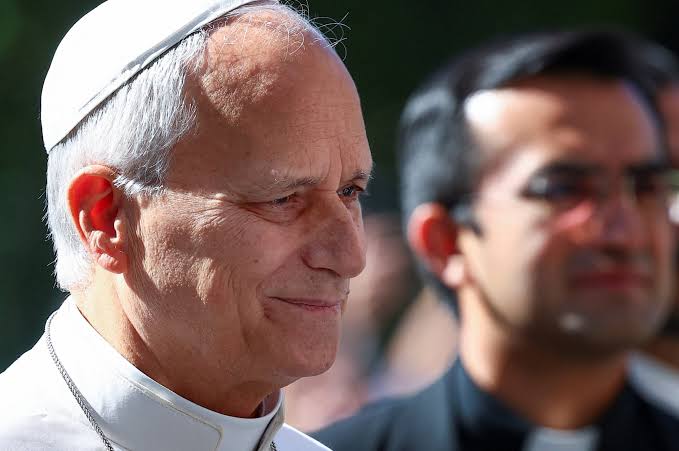
Pope Leo XIV, the head of the Catholic Church, has been admitted to a hospital in Rome, Italy, for surgery to remove a small growth discovered in his lung, raising concerns about the health of the pontiff as the Vatican prepares for his recovery.
The 71-year-old pope was taken to the Gemelli University Hospital on Tuesday, October 13, 2026, where a team of specialists was scheduled to perform the operation in the afternoon. The procedure marks his first hospitalisation since he became the leader of the worldwide Catholic Church on May 8, 2025.
According to the Vatican, the pulmonary nodule was discovered during routine medical examinations, allowing doctors to identify the abnormal growth at an early stage. Although such growths are frequently benign, some can indicate more serious medical conditions, including cancer.
Pope Leo had disclosed the development to worshippers on Sunday following the Angelus prayers at St Peter’s Square, explaining that medical examinations had revealed the growth and that his doctors had recommended surgery.
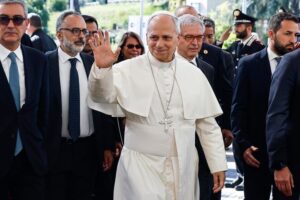
The pontiff subsequently left the Vatican by car on Tuesday, waving to well-wishers who gathered to see him before arriving at the hospital. He appeared composed and smiled as he acknowledged those waiting outside the medical facility.
The Vatican confirmed that the operation would be handled by the hospital’s thoracic surgery team under the leadership of Professor Stefano Margaritora.
The pope is expected to spend approximately one week recovering, while his scheduled audiences have been cancelled until October 20 to allow him time to recuperate. Despite the concerns surrounding the operation, senior Catholic officials who met with the pope ahead of his hospitalisation have offered reassuring accounts of his state of mind.
Vatican Secretary of State Cardinal Pietro Parolin told Italian news agency ANSA that Pope Leo remained calm during their discussion about the lung nodule.
Japanese Cardinal Tarcisio Isao Kikuchi also described the pontiff as relaxed, maintaining his usual sense of humour during their interaction, according to Italian newspaper La Repubblica. Their accounts have provided some reassurance to Catholics and observers closely monitoring the development, although the ultimate outcome will depend on the surgical findings and the pope’s recovery.
The Vatican has historically exercised considerable discretion in communicating details about the health of reigning pontiffs. However, greater attention has been paid to transparency surrounding papal medical conditions since the final illness and death of Pope Francis, Leo’s predecessor, last year. The latest development has therefore placed renewed focus on the health of the new pope, particularly as he continues to undertake the demanding responsibilities associated with leading the Catholic Church.
The Gemelli University Hospital is one of Rome’s principal medical institutions and has a longstanding association with papal healthcare.
Popes admitted to the facility are traditionally accommodated in a specially equipped suite on the hospital’s 10th floor. The accommodation typically includes a chapel, kitchen, bathroom and meeting room to enable the pontiff to continue essential religious and administrative activities during his hospital stay.
However, because the usual papal suite is undergoing renovation, Pope Leo is expected to occupy another suite on the same floor. Security arrangements are expected to remain tight throughout his admission, given his position as the spiritual leader of more than a billion Catholics worldwide.
His personal nurse, Massimiliano Strappetti, who previously cared for Pope Francis during several hospital admissions, is also expected to assist with his recovery. The medical team will monitor the pontiff following the procedure to assess his response to treatment and determine when he can safely resume his regular activities.
A pulmonary nodule is a small, localised growth of tissue in the lung that is often discovered incidentally during medical imaging or routine examinations. Such nodules can develop for several reasons, including previous infections, inflammation, autoimmune conditions and congenital abnormalities. While many are harmless, others may require additional investigations to determine whether they are cancerous.
Professor Federico Venuta, head of thoracic surgery at Policlinico Umberto I Hospital in Rome, explained that these growths are sometimes called coin lesions because they can appear round and coin-shaped on X-ray images. Small pulmonary nodules frequently produce no obvious symptoms, which means patients may remain unaware of their presence until a scan or medical examination reveals them. Larger growths, depending on their location and underlying cause, can sometimes cause persistent coughing, chest pain, shortness of breath or coughing up blood.
In Pope Leo’s case, the Vatican indicated that the nodule was identified during routine health checks rather than investigations prompted by reported symptoms.
The pontiff, who was born in Chicago, United States, is the first American to become pope and has generally been regarded as being in good health.
Medical experts have indicated that the removal of a small pulmonary nodule is not necessarily considered a high-risk procedure, particularly when the growth is detected early and the patient is otherwise in good health.
Marco Scarci, a thoracic surgery expert in the United Kingdom, told Agence France-Presse that the operation was not considered particularly risky and expressed optimism about the pope’s prospects for recovery.
However, he cautioned that recovering from the immediate effects of surgery is different from regaining full physical fitness. While the pontiff may recover from the procedure relatively quickly, returning to his previous level of physical activity could take as long as three months. The precise recovery period will depend on the type of operation performed, the extent of the intervention and whether any complications arise.
Professor Venuta explained that procedures involving pulmonary nodules can vary according to the size and location of the growth and the information doctors need to obtain. Depending on the circumstances, specialists may use image-guided techniques, endoscopic procedures or surgery. When an operation is necessary, it may be performed under general anaesthesia, with the patient receiving breathing support during the procedure.
Doctors may also need to examine the removed tissue to determine the exact nature of the growth and establish whether further treatment is necessary. Even when a pulmonary nodule proves to be malignant, early detection can improve the chances of successful treatment, particularly when the disease has not spread beyond the affected area.
Nevertheless, the Vatican has not announced that Pope Leo’s lung nodule is cancerous. Any conclusion about the diagnosis would therefore be premature until medical assessments establish the nature of the growth. Beyond the immediate concerns surrounding his health, Pope Leo’s hospitalisation has raised questions about whether he will be able to undertake a planned visit to South America next month.
The pontiff is scheduled to travel from November 6 to November 17, with planned stops in Uruguay, Argentina and Peru. The trip is expected to be an important part of his international engagements, bringing him into contact with Catholic communities across the region.
However, the feasibility of the journey will depend partly on the outcome of the surgery, the speed of his recovery and the medical team’s assessment of his fitness for international travel.
Professor Venuta noted that patients are generally advised to avoid flying for approximately 20 days after certain thoracic procedures, although the recommended interval varies according to the nature of the operation and the patient’s individual circumstances.
For Pope Leo, the timing of the planned visit means that his recovery period will be particularly important in determining whether the itinerary can proceed as scheduled.
The Vatican has not announced any changes to the trip or confirmed whether the pope’s medical team will recommend postponing or modifying any of the planned engagements.
As the pontiff prepares for surgery and recovery, attention remains focused on the medical team’s findings and the Vatican’s next official update. The Holy See has not disclosed the precise nature of the pulmonary nodule, confirmed whether it is benign or malignant, or provided a detailed account of the potential complications associated with the operation.
For now, the immediate priority is the successful completion of the procedure and the pope’s safe recovery. The coming days are expected to provide a clearer picture of his medical condition, the length of his hospital stay and the likelihood of his returning to his normal schedule.
For Catholics around the world, the development represents a moment of concern as Pope Leo XIV navigates an important period early in his papacy, with his health and recovery now central to questions surrounding his forthc
 oming religious, administrative and international commitments.