
NEWS
FG, SEDC Launch $100m Southeast Gas Pipeline Project, Target 2027 Construction as President Bola Tinubu, Governors Rally Support

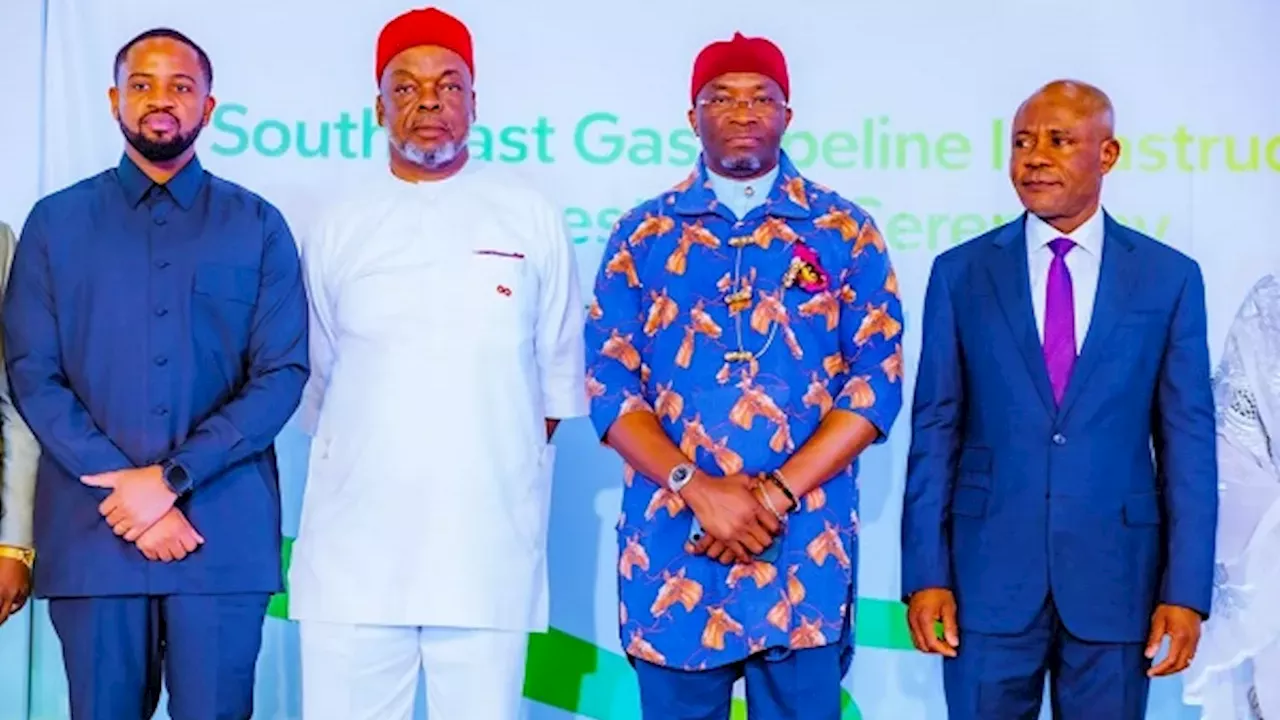
The Federal Government, through the South East Development Commission (SEDC), has taken a major step towards accelerating industrialisation and economic transformation in the Southeast with the commencement of a $100 million gas distribution pipeline project designed to connect industries across the region to reliable and affordable natural gas.
The ambitious 400-kilometre pipeline project, which will traverse Abia, Anambra, Ebonyi, Enugu and Imo states, is expected to unlock fresh investment opportunities, strengthen manufacturing, revive struggling industries, expand agro-processing and create thousands of potential employment opportunities as the region pursues a coordinated industrial development agenda.
With approximately 150 prospective customers already identified and an estimated gas demand of 254 million standard cubic feet per day, the initiative represents a significant move towards establishing an integrated regional gas distribution network capable of supporting existing businesses and attracting new industries.
The investment agreement for the project was signed on Tuesday at the South-East Gas Infrastructure Investment and Project Development Ceremony held at Hotel Presidential, Enugu, bringing together representatives of the Federal Government, the SEDC, state governments, project promoters and other stakeholders committed to the region’s economic development.
President Bola Ahmed Tinubu, represented by the Deputy Speaker of the House of Representatives, Rt. Hon. Benjamin Kalu, described the project as a strategic investment that would connect the Southeast’s natural gas resources to industrial and commercial centres, strengthen the manufacturing sector and unlock economic opportunities across the five states.
“The Southeast’s entrepreneurial spirit is one of Nigeria’s greatest economic assets. I have always believed that the prosperity of the Southeast is inseparable from the prosperity of Nigeria,” the President said.
Tinubu explained that the project aligned with his administration’s commitment to building an integrated regional economy in which infrastructure serves as a catalyst for productivity, investment and job creation.
He stressed that gas infrastructure should not be developed as isolated facilities serving individual markets but as an interconnected system capable of supporting industrial activities across state boundaries.
“Gas infrastructure must therefore serve industries and markets, not stop at political boundaries. That is the economic logic of regional integration,” he said.
According to the President, the proposed pipeline would deliver significant benefits to manufacturers in Aba, strengthen the industrial clusters of Nnewi and Onitsha, attract productive enterprises to Enugu, expand agro-processing and manufacturing activities in Ebonyi, and connect Imo’s gas resources to the wider regional economy.
Beyond supplying existing industries, Tinubu said the project was intended to create the enabling environment for businesses that had yet to be established, industrial parks awaiting development and investors whose plans had been constrained by unreliable energy supplies.
“Our ambition is not simply to deliver gas to existing factories. It is to make possible factories that do not yet exist, industrial parks yet to be developed, and investments that have remained on the drawing board because reliable energy was unavailable,” Tinubu said.
The President described the SEDC as an institution established to deliver measurable development outcomes, urging its management to evaluate its performance through the investments mobilised, infrastructure delivered, opportunities created and improvements made to the living standards of the people.
He noted that the South-East Vision 2050 development framework, supported by Vice-President Kashim Shettima and the governors of the region, provided a foundation for coordinated planning and sustainable economic growth.
Tinubu also highlighted his approval of the South-East Investment Company as part of broader efforts to attract private capital into strategic development projects, explaining that government budgets alone could not adequately finance the region’s development ambitions.
“This is the model I expect from our development institutions: identify strategic economic opportunities, prepare credible projects, commit public resources responsibly and mobilise private capital at a scale government budgets alone cannot achieve,” he said.
Commending the SEDC for committing $3 million to the pipeline project, the President said the commission had also established a framework for mobilising additional investments from state governments, institutions and private investors to support the project’s estimated initial funding requirement of $100 million.
He described the collaboration between public institutions and private investors as essential to developing infrastructure that could remain commercially viable while delivering long-term economic benefits.
“We are not investing in pipelines for their own sake. We are investing in the industries, businesses and jobs those pipelines will make possible,” the President said.
He urged the commission and its partners to maintain commercial discipline, transparency, environmental responsibility, community engagement and the highest safety standards throughout the project’s implementation.
“The true measure of government’s commitment is not what we promise, but what we deliver,” he said, expressing confidence that the initiative would help position the Southeast as a competitive industrial destination within Africa and the global economy.
Reiterating the central objective of the investment, Tinubu said the region’s natural resources must be translated into productive economic activities, employment opportunities and improved living standards.
“Let the gas beneath our soil power our industries. Let that energy become production. Let production become employment. Let employment become prosperity for our people,” he said.
He further called on the SEDC, state governments and project partners to establish clear implementation timelines, measurable milestones and regular progress reports, stressing that the project’s ultimate success would be determined by its ability to attract investments, revive industries, create jobs and improve economic conditions across the five states.
Enugu State Governor, Dr. Peter Mbah, commended President Tinubu for establishing the SEDC, describing the commission as a long-awaited institutional framework for realising the Southeast’s industrialisation aspirations.
“Tinubu loves the Igbo. The SEDC is a commission whose time has come. It was an idea conceived many decades ago, but it took President Tinubu to establish this long-awaited dream of industrialisation of the Southeast,” Mbah said.
The governor described the signing of the investment agreement as the beginning of the investment process, expressing optimism that the pipeline would help advance the region’s long-standing ambition of establishing a common market supported by coordinated industrial development.
“What we have just signed here today is an investment agreement, meaning that investment has commenced,” he said.
Mbah said he was particularly excited that the project was advancing less than 13 months after he publicly advocated the idea, commending the commission for adopting an innovative financing approach that brings governments and private investors together to deliver critical infrastructure.
He explained that reliable gas supply could help reverse the economic pressures forcing young people to leave the Southeast in search of employment and better opportunities elsewhere.
“Before now, it was our young people running out of the region in search of greener pastures. But with what we have now, our young people can sit back and find their future here in the region. This is all thanks to President Tinubu,” he said.
The Enugu governor assured the SEDC and its partners of the commitment of Southeast governors to the project, promising to accelerate the necessary right-of-way arrangements and environmental impact assessment approvals to prevent avoidable delays.
“We, the Southeast governors, are committed to this.
“We will ensure that the right of way and EIA are given accelerated approval,” he said.
Imo State Deputy Governor, Lady Chinyere Ekomaru, who represented Governor Hope Uzodimma, also commended the Federal Government and the SEDC for initiating the project, noting that Imo’s substantial natural gas resources placed the state in a strategic position to benefit from the emerging regional energy network.
She described the timing of the project as particularly significant, especially as companies were seeking opportunities to become offtakers of gas from the Assa North–Ohaji South development.
Ekomaru urged residents of the Southeast to consider the Federal Government’s infrastructure investments in the region when making political choices ahead of the 2027 general elections.
“A vote for APC is a direct vote for the continuation of this project. A bird in hand is worth more than 10 in the bush. Let’s reason wisely,” she said.
Anambra State Deputy Governor, Dr. Onyekachukwu Ibezim, who represented Governor Chukwuma Soludo, commended the SEDC for the initiative but emphasised that the commission’s performance would ultimately be judged by the tangible benefits delivered to residents and businesses.
“We will clap for you when we begin to feel the impact of what you are doing,” he said.
Ibezim observed that the Southeast possessed gas resources capable of supporting industrial growth if adequately developed and connected to the region’s productive sectors.
He called on communities along the proposed pipeline route to support the project and cooperate with its promoters, stressing that local participation would be important to its successful implementation.
“I want to urge the communities through which the pipelines will pass to have a buy-in. We are strongly behind the commission,” he said, while commending the enthusiasm demonstrated by industrialists at the ceremony.
Similarly, Ebonyi State Deputy Governor, Mrs Patricia Obila, representing Governor Francis Nwifuru, underscored the importance of energy infrastructure to industrial development, lamenting that inadequate power supply had contributed to the decline of several businesses and manufacturing enterprises across the region.
“Energy is power. Its importance cannot be overemphasised. With it, factories will produce, the economy will blossom and employment will be great,” she said.
Obila assured the SEDC of the Ebonyi State Government’s cooperation, promising that the state would provide the support required to facilitate the project and help struggling and inactive companies resume operations.
“We will give you all the support needed to operate in Ebonyi to ensure that our moribund companies return back to operations,” she said.
The Permanent Secretary of the Federal Ministry of Regional Development, Dr Mary Ogbe, described the SEDC’s initiatives as important interventions capable of improving living standards across the Southeast.
She assured the governors that the commission would complement their respective development programmes rather than compete with state governments, while encouraging investors to take advantage of the economic opportunities emerging from the regional infrastructure drive.
Providing details of the commission’s involvement, SEDC Managing Director and Chief Executive Officer, Mark Okoye, disclosed that the commission had undertaken technical, financial and legal due diligence before committing funds to the gas pipeline project, which was subsequently approved by its governing board.
Okoye said the commission was targeting aggregate regional investment participation of up to $30 million, including its initial $3 million commitment, as part of its strategy to mobilise the private capital needed to advance the project.
He explained that the investment aligned with the SEDC’s industrialisation programme and its broader commitment to developing infrastructure that would serve the economic interests of the entire Southeast rather than individual states in isolation.
The project promoter, GasSync, represented by Callistus Mba, explained that the proposed pipeline would connect gas resources close to the Southeast to industrial consumers across the five states, reducing the region’s dependence on the expensive transportation of compressed natural gas (CNG) and liquefied natural gas (LNG) by road.
According to Mba, the proposed network would originate from the Ohaji area of Imo State, extend through Owerri and branch towards Aba in Abia State and Onitsha in Anambra State, with further extensions to Enugu and Ebonyi.
The distribution arrangement is expected to make gas more accessible to manufacturers, power-generation facilities and agro-processing companies, potentially lowering energy-related operating costs and improving the competitiveness of businesses across the region.
Mba disclosed that GasSync planned to commence construction at two locations simultaneously to accelerate the delivery schedule.
The decision followed concerns raised by Governor Mbah that constructing the entire pipeline sequentially from Imo State could delay the supply of gas to industries in other parts of the Southeast.
“We are going to start at Ohaji and Onitsha at the same time,” Mba said, explaining that the approach would allow work towards Enugu and Ebonyi to progress alongside construction activities in the Imo and Anambra sections.
He said GasSync had identified approximately 150 prospective customers across the region and was engaging industries to establish sufficient demand for the proposed gas supply.
The prospective customer base includes manufacturing companies, power-generation facilities and agro-processing businesses that require dependable energy supplies to operate efficiently.
Mba specifically mentioned Geometric Power in Abia State among the companies with which discussions were already underway, adding that the pipeline could support efforts to revive struggling industries in Enugu and encourage the development of agro-processing facilities in Ebonyi.
On the implementation schedule, the project promoter disclosed that procurement activities had commenced, funding arrangements were progressing towards financial close, and preparations for engineering, procurement and construction were advancing.
“We intend to start construction in the first quarter of 2027,” Mba said, projecting that the project would be ready for its first gas delivery in the second quarter of 2028, subject to the completion of the necessary requirements and approvals.
He identified regulatory permits, right-of-way arrangements, community engagement and effective coordination between federal and state authorities as critical factors that would determine whether the project could meet its proposed timeline.
Mba consequently urged the governors and relevant institutions to facilitate the necessary approvals and work closely with host communities along the pipeline route to ensure smooth implementation.
With the investment agreement signed, preliminary procurement activities underway and the proposed construction timeline outlined, the Southeast gas pipeline project is emerging as a potentially transformative intervention in the region’s pursuit of sustainable industrialisation.
If successfully delivered, the network could help address one of the major constraints facing manufacturers and other productive enterprises: access to reliable and competitively priced energy.
For Aba’s manufacturing businesses, Nnewi and Onitsha’s industrial clusters, Enugu’s commercial enterprises, Ebonyi’s agro-processing ambitions and Imo’s gas industry, the project presents an opportunity to strengthen production, attract fresh capital and create more employment opportunities for the region’s growing population.
However, its ultimate impact will depend on the timely completion of the required approvals, successful financing, effective community engagement and the ability of the project partners to translate the investment agreement into a functioning gas distribution network.
The projected first gas delivery in the second quarter of 2028 will therefore be a major milestone to watch as the Federal Government, the SEDC, the five state governments and private-sector partners work towards building a more integrated and competitive Southeast economy.