
NEWS
IGBOS CANNOT WAIT 60 YEARS TO BECOME PRESIDENT FOR JUST FOUR YEARS, DEPUTY SPEAKER, BENJAMIN KALU SAYS

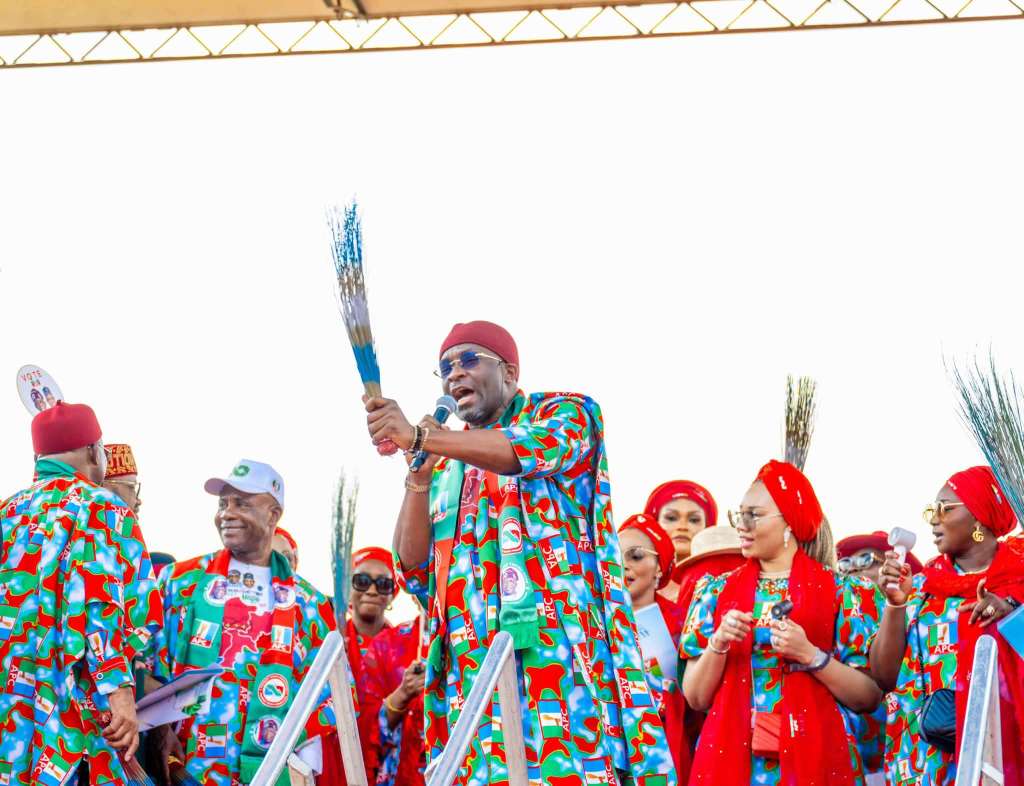
The Deputy Speaker of the House of Representatives, Rt. Hon. Benjamin Okezie Kalu, has declared that the Igbo people of the South-East should not be expected to wait for 60 years to produce Nigeria’s president only to serve a single four-year term, insisting that the region deserves a full eight-year presidential tenure when power eventually rotates to it.
Kalu made the position known on Saturday while speaking at an All Progressives Congress (APC) women’s rally in Enugu, where he faulted calls by some South-East political stakeholders for the region to accept a one-term presidency as part of an arrangement to secure the nation’s highest political office.
The Deputy Speaker argued that the South-East should be accorded the same opportunity enjoyed by other regions, maintaining that an Igbo presidency should not be restricted to four years after decades of waiting and what he described as unfulfilled political promises.
His remarks have added a fresh dimension to the ongoing debate over power rotation, political inclusion and the South-East’s quest to produce Nigeria’s president, particularly as political alignments and discussions ahead of the 2027 general election continue to gather momentum.
Addressing the gathering, Kalu said: “Let me say this that some people are going around telling us that they have made an agreement that Igbos will go for the Presidency for four years.
“Even as Igbos, we have been promised things that never came true. We can’t wait 60 years just to be president for four years.
“Upon the rotation of the presidency to our zone, the Igbo people shall be accorded a complete eight-year tenure, identical to that granted to other regions.“
Kalu’s declaration reflects a growing argument among some South-East political leaders that the region should not accept a shorter presidential tenure as the price for achieving its long-standing ambition of producing Nigeria’s president.
At the heart of the debate is the principle of fairness in Nigeria’s informal power-sharing arrangement, under which political parties and stakeholders have historically considered regional balance in determining who occupies the presidency. Supporters of an eight-year tenure for the South-East argue that the region should have the same opportunity as other zones to complete two terms, subject to electoral victories and constitutional provisions.
The Deputy Speaker’s comments also come against the backdrop of remarks by Peter Obi, the presidential candidate of the Nigeria Democratic Congress (NDC), who has said he would serve only one four-year term if elected president.
Obi’s position has generated discussion about whether a single-term commitment could help address concerns over political competition and regional inclusion, or whether it would place the South-East at a disadvantage in the broader contest for power.
While supporters of a one-term arrangement may view it as a practical compromise capable of reassuring other regions and facilitating the emergence of an Igbo president, Kalu’s position suggests that such a concession should not automatically become the region’s political bargain.
For the Deputy Speaker, the central issue is not merely getting an Igbo person elected president but ensuring that the South-East receives the same opportunity to govern for two terms as other regions, should the electorate renew its mandate.
His remarks further highlight the competing strategies within the South-East over how best to pursue the region’s presidential ambition, with questions of political negotiation, electoral alliances, regional equity and the duration of a potential presidency likely to remain prominent in conversations ahead of the next general election.
However, any president seeking a second term would still have to secure re-election in accordance with Nigeria’s Constitution and the wishes of the electorate.
Kalu’s declaration therefore places him firmly on the side of an eight-year opportunity for the South-East, arguing that after decades of waiting to produce a Nigerian president, the region should not be expected to settle for less than the tenure 
 available to other regions.