
NEWS
Sokoto Government Seals ADC Campaign Office Amid Political Tension, Raises Ownership Questions

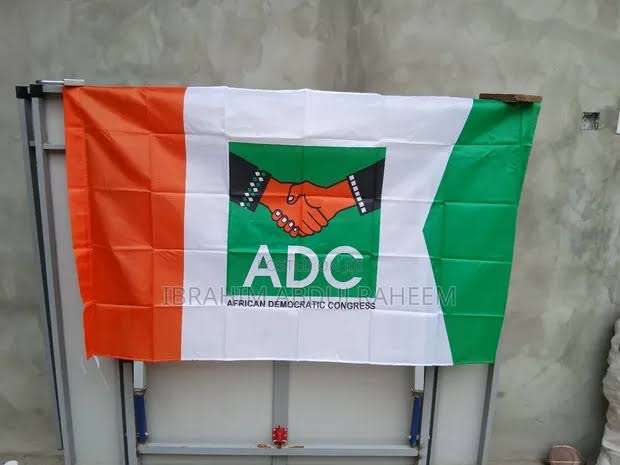
The Sokoto State Government has sealed the campaign office of the African Democratic Congress (ADC) amid rising political tension in the state, citing recent security concerns and unresolved questions surrounding the legal ownership of the property.
The development comes against the backdrop of reported disturbances involving supporters of the opposition party and suspected miscreants, raising fresh concerns about political activities, public safety and the management of opposition party facilities in the state.
The state government has defended its decision, insisting that the action was taken to prevent further violence, safeguard lives and property, and ensure that the situation does not escalate into a broader security crisis.
The Commissioner for Lands and Housing, Barrister Nasiru Dantsoho, announced the development on Monday, explaining that the decision to seal the premises was informed by both the recent security disturbance and findings from a preliminary review of the property’s ownership documents.
According to the commissioner, the government discovered discrepancies in the available records concerning the ownership status of the building, which he said originally belonged to the defunct Savannah Bank.
Dantsoho maintained that the documents reviewed by the relevant authorities did not establish any official transfer of ownership from the former financial institution to another individual or organisation.
“Following a review of the certificate of occupancy and other relevant documents, we discovered that this property belongs to the Savannah Bank, and that ownership has not changed as of today.
“We have written to the NDIC, the custodian of this building, to clarify its present ownership, but we are yet to receive a response,” he stated.
The commissioner disclosed that the state government had formally contacted the Nigeria Deposit Insurance Corporation (NDIC), which he identified as the custodian of the property, to establish its current ownership status.
However, he said the corporation had yet to respond to the government’s inquiry, leaving the authorities without the clarification they considered necessary to determine the party legally entitled to occupy or control the premises.
Dantsoho explained that the government decided to keep the building sealed while awaiting an official response from the NDIC, arguing that allowing activities to continue at the facility before the ownership dispute was resolved could complicate the situation.
He further linked the government’s decision to the security concerns surrounding the property, maintaining that the authorities were determined to prevent a recurrence of the reported disturbance and avoid any development capable of threatening public peace.
The commissioner insisted that the action was not the final determination of ownership but a measure that would remain in place until the relevant authorities completed the necessary verification.
He also addressed individuals and organisations claiming ownership of the building, urging them to present their certificates of occupancy and other relevant documents to the state government for examination.
According to him, any claim supported by verifiable documentation would be considered by the appropriate authorities, with the ultimate objective of establishing who is legally entitled to the property.
Dantsoho maintained that the building could be released to its rightful owner once the ownership question had been conclusively resolved.
Until then, however, he said the premises would remain under the control of the state government.
The commissioner also issued a warning against any attempt to force entry into the sealed facility, stressing that anyone who violated the government’s directive would face legal consequences.
He said the authorities would not tolerate actions capable of undermining the security arrangements put in place around the building, particularly while investigations and ownership verification remained ongoing.
The sealing of the ADC campaign office has added another dimension to the political atmosphere in Sokoto State, where tensions have reportedly intensified following allegations of confrontations involving opposition party supporters and operatives of a state-owned security outfit.
The development could have significant implications for the ADC’s political operations in the state, especially if the premises remain inaccessible for an extended period. Campaign offices often serve as strategic centres for party administration, mobilisation, meetings and coordination of political activities.
Consequently, the continued closure of the facility could affect the party’s ability to use the building for its organisational activities, although the immediate extent of the impact remains unclear.
The circumstances surrounding the sealing also place renewed attention on the relationship between security enforcement, property ownership disputes and the activities of opposition parties in a politically sensitive environment.
While the Sokoto State Government has maintained that its decision was driven by security considerations and the need to establish the property’s legal ownership, the available explanation does not, by itself, establish the final legal status of the building or resolve the competing questions surrounding its control.
The NDIC’s response is therefore expected to be important in determining the property’s ownership history and identifying the party legally entitled to it.
For now, Dantsoho has maintained that the government is prepared to release the building once the necessary verification has been completed.
Until the ownership dispute is resolved and the authorities determine the appropriate next steps, the ADC campaign office will remain sealed, leaving the future of the facility and its role in the party’s political activities in Sokoto State uncertain.