
NEWS
Abia Explains Criteria for Recruitment of 4,000 Teachers, Says Selection Was Based on School Manpower Needs

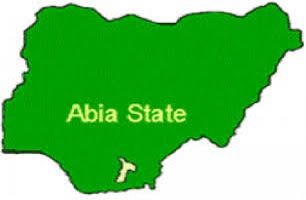
The Abia State Government has provided further clarification on the recruitment of the second batch of teachers into public schools, saying the exercise was driven by identified manpower shortages and conducted under a transparent, needs-based system.
The Commissioner for Basic and Secondary Education, Elder Goodluck Ubochi, made this known during a press briefing in Umuahia, where he explained the processes that guided the selection of successful candidates and addressed concerns over varying cut-off marks across different subjects.
According to Ubochi, Governor Alex Otti had initially approved the recruitment of 5,000 teachers to strengthen the state’s public education system.
However, following the recruitment exercise and subsequent assessment of schools, a total of 5,394 teachers were eventually engaged.
The Commissioner said further evaluations revealed that several schools were still facing significant shortages in specific subjects and areas, prompting Governor Otti to approve the recruitment of an additional 4,000 teachers.
He explained that the second recruitment exercise was structured differently from the first one. While the initial recruitment largely concentrated on applicants with formal education qualifications, particularly holders of Bachelor of Education (B.Ed) and Nigeria Certificate in Education (NCE), the second phase was broadened to accommodate graduates and other qualified candidates.
The adjustment, he said, was necessary to address shortages in technical, vocational and other specialised subject areas where the state needed teachers with specific academic or professional backgrounds.
The exercise reportedly attracted about 36,000 applicants, with approximately 21,000 candidates qualifying to participate in the oral interview stage after a 40 per cent benchmark was adopted for the written assessment.
Ubochi explained that the decision to set the benchmark at 40 per cent was deliberate, stressing that the government wanted to ensure that potentially suitable candidates, particularly those applying for specialised subjects, were not unnecessarily excluded at the early stage.
He said the final selection was, however, not determined solely by the overall examination scores. Instead, the government matched qualified candidates against the actual manpower requirements submitted by principals and heads of schools across the state.
“We had to match the number of qualified candidates with the actual number of teachers required in each subject and school level,” he said.
The approach, according to the Commissioner, resulted in different cut-off marks for different subjects, depending on the number of available vacancies and the number of qualified applicants.
He cited Biology as an example, explaining that about 360 candidates qualified for consideration while only 260 teachers were required. The candidates were therefore ranked according to their performance, with selections continuing from the highest scores until the available vacancies were filled.
This meant that a candidate could score higher than another applicant but still fail to secure employment if the subject in which the candidate applied had fewer vacancies.
Conversely, a candidate with a lower score in another subject could be selected where the number of available positions was greater than the number of qualified applicants.
The Commissioner also pointed to some technical subjects where the number of qualified applicants was lower than the manpower requirement. In such cases, he said, all qualified candidates were selected to ensure that critical vacancies were not left unfilled.
A similar situation occurred in Marketing, where more than 400 applicants reportedly qualified, despite only 11 teachers being required because the subject is not widely offered across public schools in the state.
Ubochi further dismissed suggestions that political considerations influenced the recruitment exercise, insisting that the process was conducted without political interference.
He maintained that neither Governor Otti nor other government officials had a predetermined list of preferred candidates, stressing that applicants were selected based on the required standards and the actual needs of schools. About 5,785 applicants were said to have met the general benchmark.
However, those who were not immediately employed would not be discarded, as the government plans to retain them in a recruitment pool for future vacancies.
The Commissioner explained that the pool would enable the state to quickly fill emerging vacancies without necessarily having to embark on another large-scale recruitment exercise in the immediate future.
The newly recruited teachers are expected to commence orientation programmes in early September ahead of their deployment for the new academic session.
As part of efforts to improve teaching standards, the state government is also collaborating with the Teachers Registration Council of Nigeria (TRCN) to provide professional training for newly recruited teachers, particularly those who do not possess formal teaching qualifications.
According to Ubochi, such teachers will be given up to two years to acquire the necessary professional teaching skills and qualifications required for effective classroom instruction.
He also disclosed that a revised curriculum would take effect from September. The curriculum, he explained, was adapted from the national curriculum to incorporate issues and learning needs considered relevant to Abia State.
Meanwhile, successful candidates have already begun the onboarding process, with relevant candidates being directed to the Secondary Education Management Board and other education agencies for necessary documentation and deployment arrangements.
On posting, the Commissioner said the government would deploy teachers strictly according to identified manpower shortages, rather than allowing candidates to determine where they wanted to work.
He added that the government would continue to engage communities in addressing accommodation challenges for teachers who are posted outside their immediate locations.
The Commissioner assured residents that the recruitment exercise was ultimately aimed at strengthening the state’s public education system by ensuring that schools receive the right number of teachers in the subjects where they are most urgently needed.
He stressed that the government’s approach was designed not merely to increase the number of teachers on the payroll, but to ensure that available teaching personnel are strategically deployed to areas where they can have the greatest impact on students and the overall quality of education in Abia State.