
NEWS
AGRIC COMMISSIONER, DR. AGBAEZE CHARGES EXTENSION AGENTS ON CAPACITY BUILDING AS LIFE-ND, ADP CONVENE STRATEGIC WORKSHOP ON CLIMATE-SMART AGRICULTURE AND SUSTAINABLE FARMING

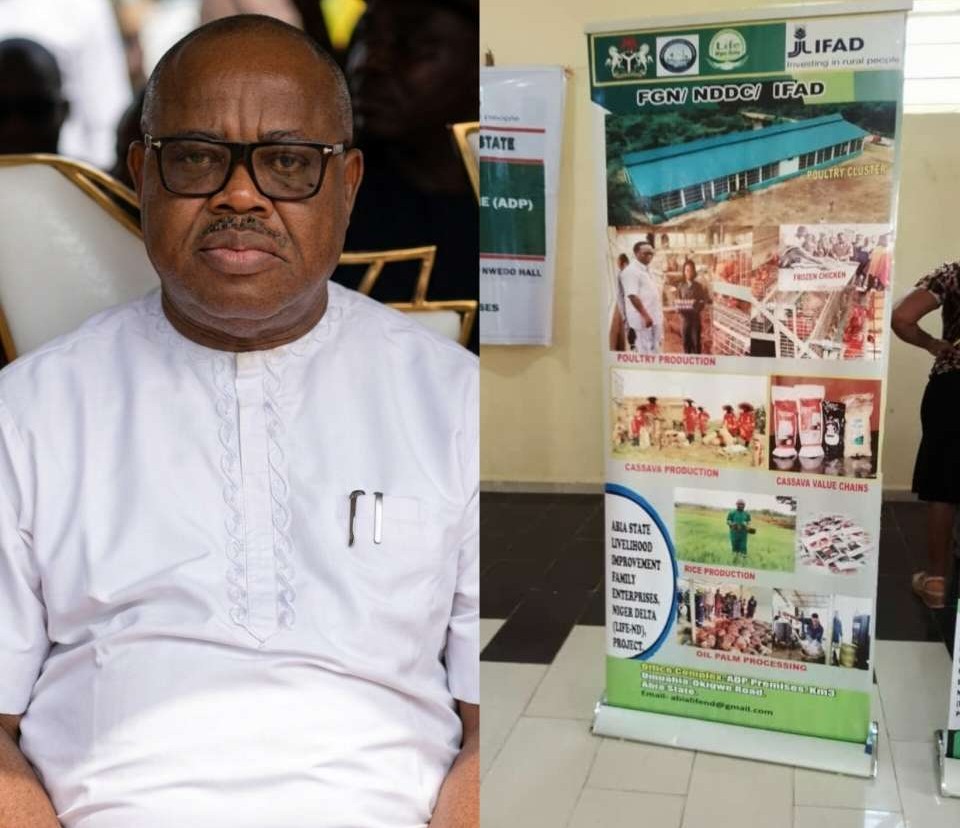
The Abia State Government has intensified efforts to reposition the agricultural sector for improved productivity and food sufficiency, as the Commissioner for Agriculture, Dr. Cliff Agbaeze, called on agricultural extension agents across the state to embrace continuous capacity-building as a critical tool for enhancing service delivery at the grassroots.
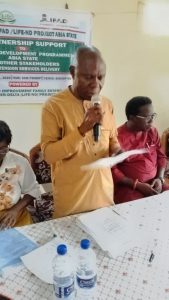
Dr. Agbaeze made this known while declaring open a two-day technical workshop for extension agents, organised under the Livelihood Improvement Family Enterprises in the Niger Delta (LIFE-ND) Project in collaboration with the Abia State Agricultural Development Programme (ADP) and key stakeholders in the agricultural value chain.
The Commissioner underscored the importance of knowledge-driven initiatives in transforming agriculture, noting that the training aligns with the policy direction of the Governor Alex Chioma Otti-led administration, which is focused on strengthening agricultural systems and ensuring sustainable food production across Abia communities. He stressed that equipping extension agents with modern skills and practical knowledge remains pivotal to bridging the gap between innovation and farm-level application.
In his contribution, the Programme Manager of Abia ADP, Mr. Okoro Nleanya, reaffirmed that agriculture remains the backbone of the economy and a vital pathway toward achieving food security. He, however, raised concerns over the mounting challenges confronting farmers, including erratic rainfall patterns, prolonged dry seasons, pest invasions, and the increasing cost of farm inputs.
According to him, these challenges demand a deliberate transition toward smarter, more resilient farming systems capable of withstanding environmental and economic pressures. He highlighted the indispensable role of extension agents as the bridge between research institutions and farmers, emphasizing that the training would empower participants with innovative techniques, modern tools, and improved communication strategies necessary for effective knowledge transfer.
Nleanya further explained that the workshop is designed to promote climate-smart agricultural practices, including agroecology, soil and water conservation techniques, adoption of improved seed varieties, and the use of early warning systems to help farmers adapt to climate variability. He added that addressing post-harvest losses remains a key priority, as it would not only enhance product quality and nutritional value but also significantly increase farmers’ income levels.
Earlier in his remarks, the State Coordinator of the LIFE-ND Project, Dr. Rowland Uchenna Onyeizu, noted that the initiative is structured to complement the efforts of the ADP by strengthening the technical capacity of extension workers. He explained that by leveraging both the field experience and institutional knowledge of participants, the programme would drive more effective and sustainable agricultural service delivery.
He further stated that the workshop caters to both experienced and newly recruited extension agents, providing an opportunity to refresh existing knowledge while also introducing new competencies required to meet evolving agricultural demands.
According to him, the broader objective is to build a robust extension system capable of responding efficiently to the needs of farmers and agribusiness operators.
Onyeizu also highlighted plans to deepen field engagement through increased farm visits, practical demonstrations, and hands-on support, ensuring that knowledge gained during the training translates into measurable impact at the grassroots level.
Also lending his voice, a resource person from the State Agricultural Business Promotion Office (SAPO), Pastor Godwin Chukwukezie, urged participants to move beyond theoretical learning and apply acquired knowledge to achieve tangible results in their agribusiness ventures.
Speaking on behalf of participants, Mr. Alwell Amarizu described the workshop as timely and impactful, pointing out that extension agents continue to grapple with numerous constraints, including inadequate funding, limited access to continuous training, scarcity of improved seedlings, and high cost of inputs. He appealed to the government to introduce supportive measures such as accessible loan schemes and subsidised agricultural machinery to encourage mechanisation and boost productivity.
In a related presentation, a Director with the Abia ADP, Mrs. Nwugo Ihediwa, delivered an in-depth session on climate-smart and climate-resilient agriculture, identifying erratic rainfall, drought conditions, and poor water management practices as major threats to agricultural productivity and farmers’ livelihoods. She expressed optimism that participants would leave the workshop better equipped with practical solutions to mitigate these challenges and improve outcomes within their respective communities.
The workshop marks another strategic step in Abia State’s broader agenda to modernise agriculture, empower farmers, and build a resilient food system capable of sustaining economic grow

 th and rural development.