
NEWS
Enugu Assembly Passes Bill Capping Rent Increases At 2% Every Four Years, Moves To Curb Exploitation By Landlords, Agents

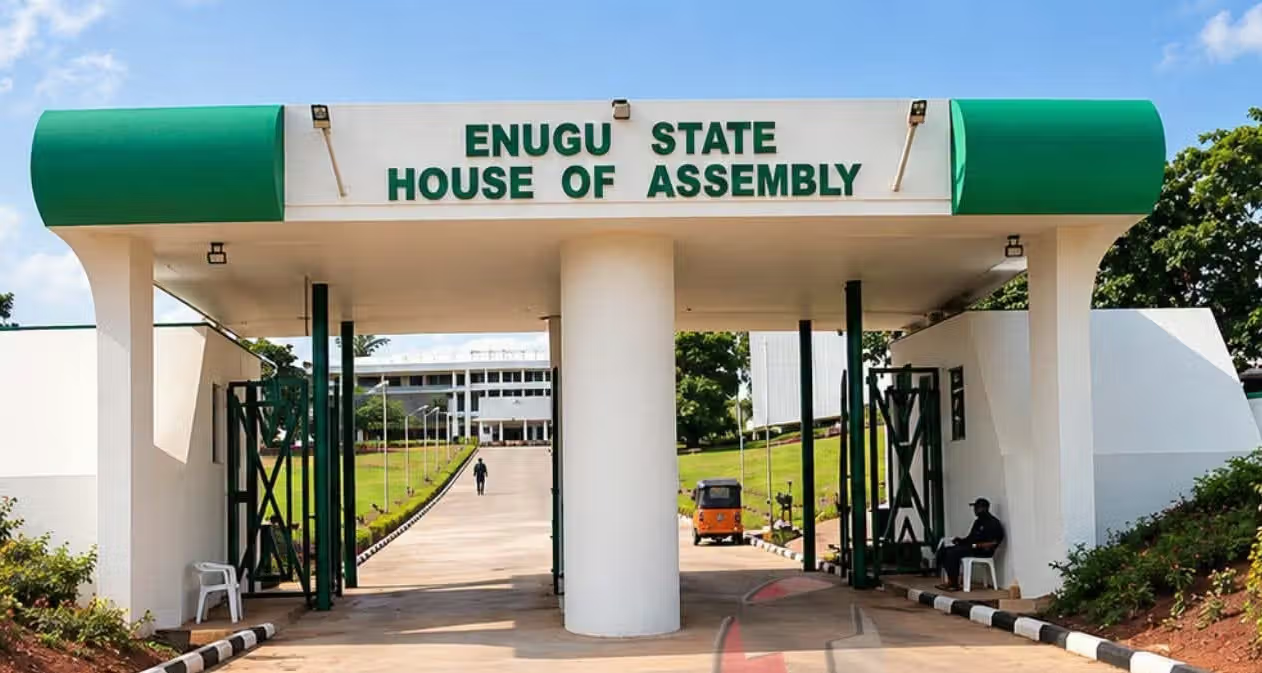
The Enugu State House of Assembly has passed a landmark bill seeking to protect tenants from arbitrary rent increases, excessive agency charges and other exploitative practices by landlords and estate agents across the state.
The legislation, which proposes a maximum rent increment of two per cent within a minimum period of four years, is expected to bring significant relief to residents grappling with the rising cost of accommodation, particularly in Enugu metropolis.
The proposed law also introduces strict limits on agency, legal and caution fees, in what lawmakers described as a major intervention to make housing more affordable and protect residents from unreasonable financial demands when securing rented apartments.
Sponsored by the member representing Nkanu East Constituency, Hon. Okey Mbah, the bill followed growing public concerns over the increasing cost of rent and alleged exploitative practices by some landlords and estate agents.
The passage also comes after Governor Peter Mbah, during a recent interactive television programme, Enugu Kwenu, hosted by Afia TV, promised to engage the State Assembly to accelerate action on pending legislation aimed at addressing the rent crisis and easing the accommodation challenges confronting residents.
The renewed attention given to the proposed legislation culminated in its passage on Tuesday after lawmakers considered and adopted the report of a special committee constituted to review the proposed amendments to the state’s Landlord and Tenant Law.
The bill successfully completed its third reading following the adoption of the committee’s recommendations.
The special committee comprised members of the House Committees on Housing and Investment, Public Petition, Ethics and Privileges, and Judiciary.
The motion for consideration of the committee’s report was moved by the member representing Nkanu West Constituency, Hon. Iloabuchi Aniagu, and seconded by the member representing Awgu North Constituency, Rt. Hon. Jane Eneh.
Presenting the report, the committee chairman and bill sponsor, Hon. Okey Mbah, explained that the recommendations were arrived at after extensive consultations with relevant stakeholders.
He described the proposed amendment as a people-oriented intervention designed to protect tenants, address exploitative practices in the housing sector and substantially reduce the financial burden associated with securing accommodation.
Highlighting the expected impact of the legislation, Mbah said, “This bill will subsidise over 60 per cent of what residents used to pay while trying to secure accommodation.”
Under the proposed provisions, landlords would only be permitted to review rents after a minimum period of four years, with any increment restricted to a maximum of two per cent of the prevailing rent.
However, the legislation provides a limited exception allowing an increment of not more than 10 per cent where the landlord has undertaken reasonable renovation of the property.
Beyond regulating rent increases, the bill also seeks to tackle the controversial charges imposed by some estate agents, which frequently leave prospective tenants paying significantly more than the advertised annual rent.
Speaking with journalists after the passage, Mbah expressed concern over instances where estate agents allegedly impose excessive additional charges on accommodation seekers.
He cited examples of apartments advertised at N300,000 annually attracting total payments of as much as N950,000, while prospective tenants seeking apartments with an annual rent of N500,000 could be required to pay up to N1.4 million after additional charges.
To address such practices, the proposed legislation establishes clear financial limits on agency, legal and caution fees.
Agency fees would be restricted to five per cent of the annual rent, while legal fees would be capped at 10 per cent. Caution fees would equally be limited to 10 per cent of the annual rent and made refundable.
The bill further introduces a bond account to be domiciled under the custody of the State Attorney-General to safeguard tenants’ caution deposits.
According to Mbah, the arrangement would ensure that such deposits are properly accounted for and refunded to tenants at the end of their tenancy, subject to an assessment of the property’s fittings and fixtures.
The provision is specifically intended to prevent situations where tenants lose their caution deposits after vacating rented apartments, irrespective of the condition in which they leave the property.
Reacting to the passage, the Speaker of the Enugu State House of Assembly, Hon. Uche Ugwu, described the legislation as part of the good governance initiatives of Governor Peter Mbah’s administration.
He noted that the proposed law would provide tenants across the state with a new lease of life by establishing legal safeguards against arbitrary rent increases and other exploitative practices within the housing sector.
The Speaker’s remarks underscored the Assembly’s commitment to supporting policies and legislation capable of improving the welfare of residents and addressing everyday economic challenges.
The bill, titled “A Bill for a Law to Amend the Landlord and Tenant Second Amendment Bill, Cap. 101, Revised Laws of Enugu State 2024, House Bill No. 3, 2025,” passed its second reading on March 11, 2026, before undergoing a public hearing on March 26, 2026.
With its passage by the State Assembly, the proposed legislation has now reached another significant stage in the legislative process and awaits the assent of Governor Peter Mbah before it can become law and take effect.
If signed into law, the legislation is expected to introduce a new regulatory framework for landlord-tenant relationships in Enugu State, particularly by placing restrictions on rent increases, regulating additional accommodation charges and strengthening the financial protection available to tenants.