
NEWS
POWER AS THE ENGINE OF REGIONAL RENAISSANCE: Gov. Alex Otti Champions South East Energy Strategy as Vision 2050 Sets Bold Path for Industrialisation, Jobs, and Global Competitiveness

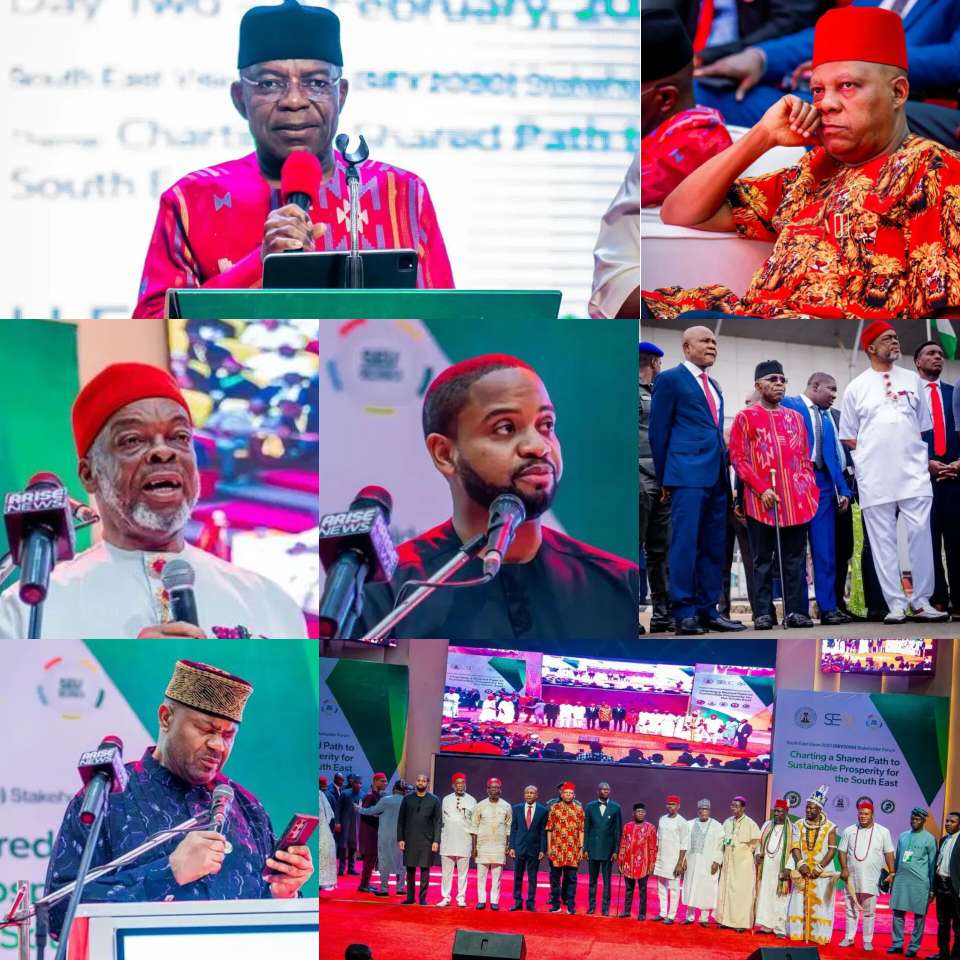
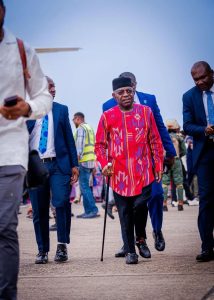
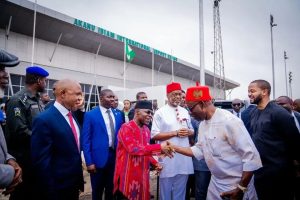
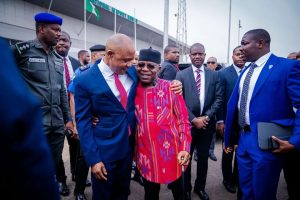
The Executive Governor of Abia State, His Excellency Dr. Alex Chioma Otti, OFR, has made a powerful case for a coordinated regional energy strategy as the indispensable foundation for unlocking massive industrialisation across the South East, declaring that reliable and predictable electricity remains the single most critical driver of economic transformation.
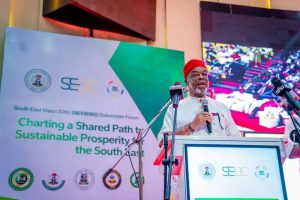
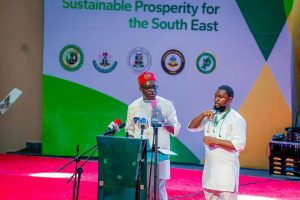
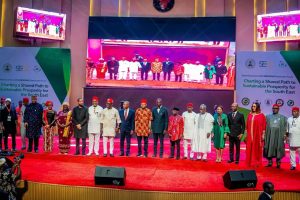
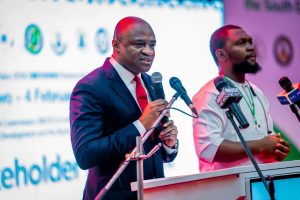
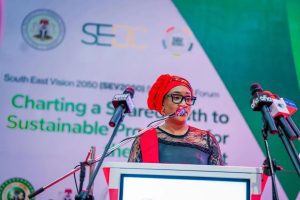
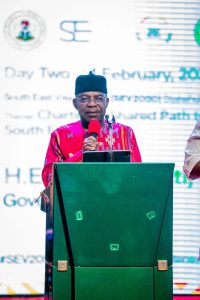
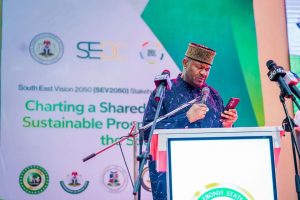
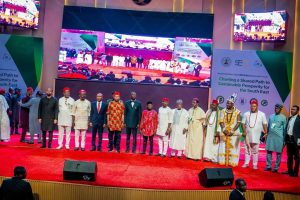
Speaking at the South East Vision 2050 Stakeholders’ Forum in Enugu, Governor Otti delivered a keynote address titled POWERING INDUSTRIALISATION IN THE SOUTH EAST: THE CASE FOR A REGIONAL ENERGY STRATEGY, where he stated:
“Power is the foundation of industrial growth, and the modern Aba experience proves that when electricity is reliable and predictable, industries revive, investments return, jobs are created, and confidence is restored. The South East has abundant gas, coal, oil, solar, hydro and biomass resources, and with deliberate regional coordination, we can generate between 10,000 and 15,000 megawatts of electricity within the next decade. What we require is not just money, but competence, political will, strong institutions, and a clear market-driven framework that attracts long-term investors. If we get our energy strategy right, we will unlock massive industrialisation, retain our young talents at home, and reposition the South East as a global hub of productivity and innovation.”
Governor Otti began by commending the Federal Government, the Vice President, the South East Development Commission (SEDC), and his brother governors in the zone for initiating the South East Vision 2050 agenda, describing it as a historic turning point that shifts the region from fragmented, state-by-state aspirations to a shared, collective future.
He noted that the South East’s global reputation as a hub of enterprise is driven by its people’s relentless search for opportunity. According to him, the core mission of Vision 2050 must therefore be to deliberately create large-scale opportunities within the region through strategic investment in infrastructure, human capital development, and industrialisation.
The Abia Governor stressed that sustainable development follows a clear sequence: massive infrastructure investment,especially in roads and electricity, followed by deliberate industrial expansion. He explained that the private sector naturally flows toward environments where government has already laid a strong foundation through policy clarity and physical infrastructure.
Using Aba as a practical demonstration, Governor Otti highlighted how ongoing road reconstruction, urban renewal, and most significantly, the success of Geometric Power have transformed the city’s economic outlook. He explained that Aba’s ring-fenced power system, which is largely independent of the national grid, has restored confidence, reactivated dormant factories, encouraged the return of entrepreneurs, stimulated real estate growth, and expanded job opportunities. According to him, Aba clearly illustrates that stable electricity supply translates directly into industrial revival.
Governor Otti argued that Nigeria’s energy challenge is not fundamentally about lack of funding, but about weak institutions, poor governance, incompetence, and insufficient political will. He maintained that fixing these structural defects is more critical than merely injecting more capital into the sector.
He applauded the Federal Government for liberalising the electricity market through the Electricity Act of 2023, which empowers states and private investors to participate in generation, transmission, and distribution. He described the Act as a game-changer that now makes regional and subnational energy planning both legal and practical.
Outlining Abia State’s concrete reforms, the Governor disclosed that the state has enacted a mini-grid law, acquired electricity distribution assets formerly held by Interstate Electric, and established the Abia State Electricity Regulatory Authority (ASERA). These measures, he said, place Abia firmly on the path of controlling its energy destiny while building a credible, investor-friendly electricity market.
Governor Otti proposed a three-pillar regional energy strategy for the South East: comprehensive identification and optimisation of all conventional and renewable energy resources; sustained investment in modern energy infrastructure and technology; and adoption of the right market framework that encourages long-term private sector participation.
He catalogued the region’s vast energy endowments, including massive gas reserves in Imo State, oil deposits in Abia, Imo, and Anambra States, coal in Enugu and Ebonyi States, extensive renewable energy potential across the zone, and untapped gas resources in Ukwa West, Abia State. He stressed that when properly harnessed, these assets can power large-scale industrial growth and export-oriented manufacturing.
While acknowledging global energy transition objectives, Governor Otti cautioned against abandoning coal and other available resources prematurely. He noted that Africa contributes less than five percent of global emissions and must balance environmental goals with its pressing development needs.
He concluded by inviting long-term investors to take advantage of the emerging South East energy ecosystem, assuring them that stable regulation and transparent governance will guarantee strong returns while transforming the regional economy, creating millions of jobs, and significantly reducing outward migration.
Earlier, the Minister of Regional Development, Engr. Abubakar Momoh, urged the South East Development Commission to work closely with the Niger Delta Development Commission (NDDC) to drive shared growth between the South East and South South regions. He said such collaboration would enhance key infrastructure areas such as rail transport and agriculture, promote regional integration, and deepen long-term development.
Engr. Momoh also stated that the establishment of the South East Development Commission by President Bola Ahmed Tinubu demonstrates the Federal Government’s commitment to focused, well-coordinated development of the South East.
In his keynote address, Vice President Kashim Shettima described the South East Vision 2050 as a 25-year development blueprint that is central to Nigeria’s economic future. He announced the approval of the South East Investment Company Limited by President Tinubu, explaining that the company will mobilise funds from the diaspora, capital markets, and development finance institutions to support regional projects.
The Vice President noted that the forum represents a decisive shift from short-term thinking to long-term strategic planning, stressing that the future must be deliberately designed rather than left to chance.
Governor Peter Mbah of Enugu State also threw his weight behind the Vision 2050 initiative, describing it as an opportunity for the South East to align with Nigeria’s national Vision 2060 development plan. He proposed the creation of a common market for the region, called for stronger planning and execution mechanisms, and urged citizens to support Federal Government efforts to improve security and promote inclusive development.
The Chairman of the South East Development Commission, Sir Emeka Wogu, alongside its Managing Director, Mr. Mark Okoye, expressed gratitude to President Tinubu for his commitment to the region and pledged that the Commission would work closely with state governments, the private sector, and Nigerians in the diaspora to faithfully implement the Vision 2050 roadmap.
Also speaking, the President of Oha-na-eze Ndigbo Worldwide, Senator Azuta Mbata, commended the Federal Government for promoting regional development and cooperation through the forum. He affirmed that the people of the South East fully support the Vision 2050 objectives and the Renewed Hope 










 Agenda of President Bola Ahmed Tinubu.