
NEWS
President Tinubu Seeks National Assembly’s Approval to Access ₦10.79 Trillion Foreign Loans Under 2026 Budget

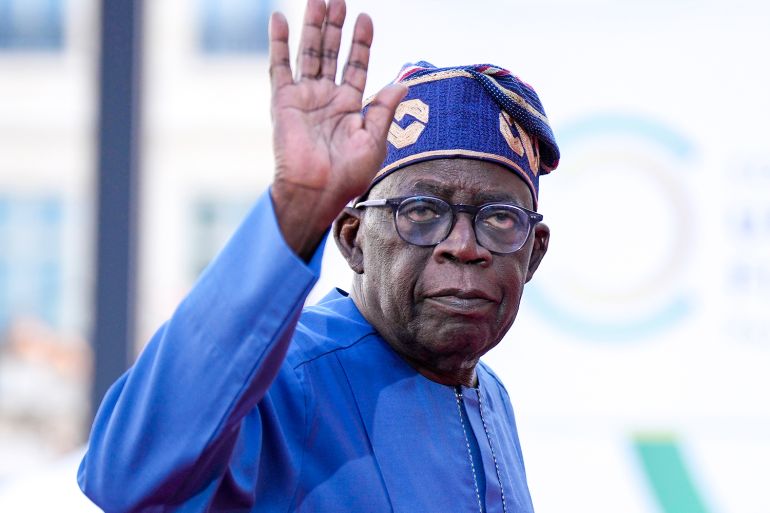
President Bola Tinubu has formally approached the House of Representatives for legislative approval of the terms and conditions governing Nigeria’s proposed ₦10.79 trillion external borrowing under the 2026 Appropriation Act, as the Federal Government moves to secure billions of dollars in foreign financing to fund its budget deficit.
The request, contained in a letter addressed to the Speaker of the House of Representatives, Tajudeen Abbas, was read during Wednesday’s plenary session, November 12, 2026.
In the correspondence, Tinubu sought the lawmakers’ authorisation for the Federal Government to raise $7.71 billion, equivalent to approximately ₦10.79 trillion, using the budget exchange rate of ₦1,400 to the dollar.
The President explained that the request was in compliance with Sections 21(1) and 27(1) of the Debt Management Office Establishment Act, 2003, which mandate the Federal Government to submit the terms and conditions of external borrowing to the National Assembly for legislative approval. The proposed foreign loans constitute part of the ₦29.22 trillion new borrowing provision already captured in the 2026 national budget, which comprises ₦18.28 trillion in domestic borrowing and ₦10.79 trillion in external financing.
Tinubu disclosed that the government would explore several international financing channels to secure the funds, including multilateral and bilateral development institutions, commercial lenders, the International Monetary Fund and the issuance of Eurobonds.
However, the President indicated that the government would place greater emphasis on Eurobond issuance, noting that it offers a relatively faster financing option compared to some other external borrowing arrangements.
According to the proposal, the funds would be channelled into critical national development projects and government programmes across strategic sectors, including defence and security, transportation, agriculture, electricity, education and healthcare. Beyond financing public expenditure, Tinubu also highlighted the potential foreign exchange benefits of the proposed borrowing, explaining that the funds would help strengthen Nigeria’s external reserves and provide additional support for the naira.
He stated that the foreign currency proceeds would be received by the Central Bank of Nigeria on behalf of the Federal Government and subsequently contribute to the country’s external reserves Clarifying the nature of the presidential request, Speaker Tajudeen Abbas explained that Tinubu was not seeking approval for an entirely new borrowing arrangement.
Abbas maintained that the ₦10.79 trillion external borrowing had already received legislative approval as part of the 2026 Appropriation Act, stressing that the latest communication was specifically seeking the National Assembly’s consent to the terms and conditions attached to the proposed foreign loans.
The Speaker further distinguished the request from another separate proposal by the President for additional borrowing, which he said would be presented and considered independently by the lawmakers.
Nigeria’s 2026 budget carries a projected deficit of ₦31.55 trillion, with new borrowing of ₦29.22 trillion identified as a major component of the government’s financing strategy. The latest development has again brought the Federal Government’s growing dependence on borrowing into focus, particularly amid concerns about the country’s debt profile, repayment obligations and the long-term implications of sustained deficit financing.
The Nigeria Labour Congress has previously questioned the justification for continued foreign borrowing, especially following the removal of the petrol subsidy and the subsequent increase in government revenue. The labour organisation has repeatedly raised concerns about the rising cost of servicing public debt and the possibility of transferring an increasingly heavy financial burden to future generations Despite the criticisms, Tinubu’s administration has continued to defend its borrowing strategy, arguing that substantial investments in infrastructure, electricity, transportation, agriculture and other productive sectors are necessary to stimulate economic expansion.
The President has consistently maintained that Nigeria requires massive investments to unlock its economic potential, improve productivity, create employment opportunities and position the country to achieve its ambitious target of becoming a $1 trillion economy by 2030.
With the latest request now before the House of Representatives, attention is expected to shift to the legislative consideration of the proposed loan terms, against the backdrop of mounting public scrutiny over Nigeria’s borrowing appetite and the economic returns expected from the funds.