
POLITICS
President Trump Slams Somalia as ‘Lawless’ State, Claims Tough U.S. Security Actions Crushed Maritime Piracy and Restored Global Shipping Confidence

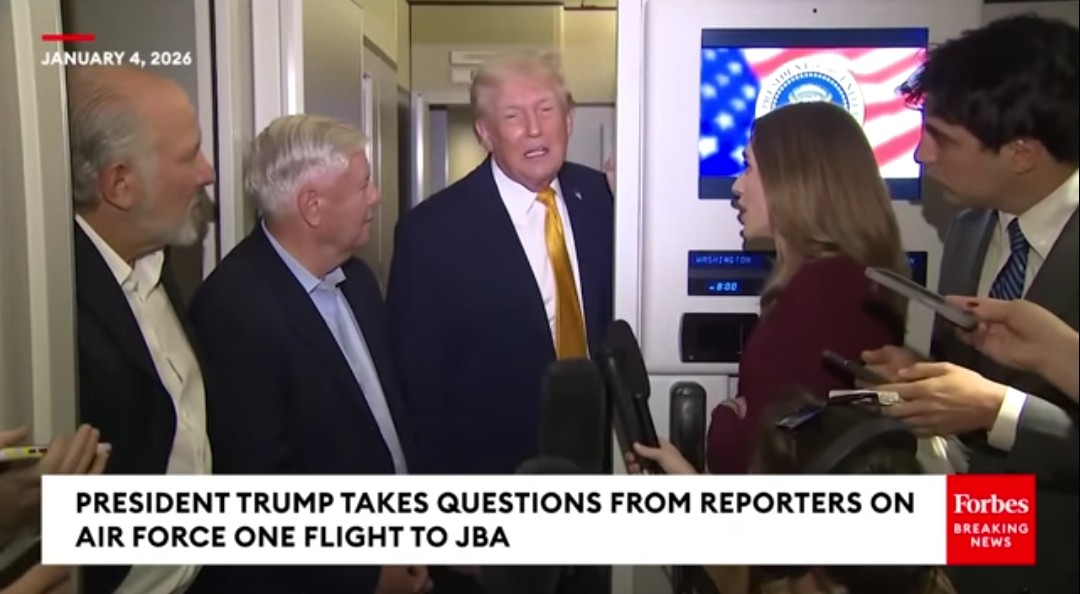
…says “They do not have a military. All they do is run around shooting people and capturing ships”
United States President Donald Trump has launched a blistering critique of Somalia while forcefully defending the security policies he said were responsible for drastically reducing maritime piracy during his time in office. Speaking in an interview aired on Forbes Breaking News, Trump argued that decisive military action and an uncompromising stance against criminal networks at sea were key to ending the wave of ship hijackings that once plagued major international shipping routes.
In his remarks, Trump portrayed Somalia as a failed state lacking effective central authority, insisting that years of weak governance created fertile ground for piracy, violence, and criminality.
According to him, the absence of a functional military and law enforcement structure allowed armed groups to operate freely, threatening international shipping, disrupting global trade, and endangering economic stability, particularly along vital maritime corridors.
Emphasizing his view of the situation, Trump said, “They don’t have a military. All they do is run around shooting people and uh trying to capture ships.” He used the statement to underscore his argument that piracy flourished largely because there was no credible deterrence or enforcement capability to stop it.
Trump further explained that before the implementation of tougher security measures, shipping companies were often hesitant to defend themselves against pirate attacks. He noted that the risks were enormous, ranging from potential explosions to catastrophic financial losses if vessels were damaged or destroyed. This hesitation, he claimed, made commercial ships easy targets and emboldened pirates, who operated with little fear of serious consequences.
According to the former president, that situation changed once the United States adopted a firmer intervention strategy. He asserted that pirates were intercepted and deterred before reaching open waters, breaking the cycle of attacks that had become routine in the region.
Trump maintained that these actions reassured shipping companies, restored confidence in maritime trade, and helped revive global commerce by securing critical sea lanes.
Trump also framed maritime security as a shared global concern, arguing that the benefits of combating piracy extend far beyond U.S. interests. He said safer shipping routes help lower transportation costs, protect international supply chains, and strengthen global economic activity, making security at sea essential for worldwide prosperity.
The comments align with Trump’s long-standing emphasis on strength, deterrence, and hardline security policies.
In recent interviews, he has continued to highlight these themes while criticizing current leadership and defending his record on foreign and domestic policy, presenting his approach as one rooted in decisive action and measurable results.