
NEWS
Saudi Arabia Shelves $2.5bn World Cup Stadium as Budget Pressures Mount

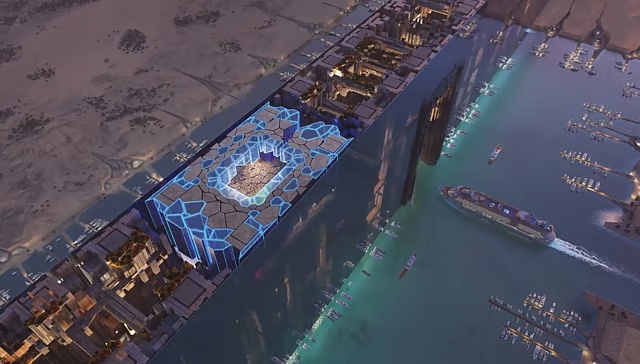
Saudi Arabia has put plans for a $2.5 billion stadium intended for the 2034 FIFA World Cup on hold, as the kingdom moves to rein in spending amid mounting financial pressures linked to oil revenues and disruptions to crude exports.
The decision, reported by Reuters on October 5 and announced by construction intelligence platform MEED Projects, marks another major setback for one of the most ambitious development programmes associated with Saudi Arabia’s Vision 2030 agenda. MEED Projects said the stadium project was “on hold” indefinitely.
The proposed luxury stadium was envisioned as one of 15 venues across five Saudi cities that would host matches during the 2034 FIFA World Cup. Designed to stand approximately 350 metres above ground, the futuristic sports facility was planned as part of The Line, one of the centrepieces of the kingdom’s vast NEOM development. The Line itself was conceived as a futuristic linear city stretching roughly 160 kilometres and forming part of the wider $1.5 trillion NEOM project on Saudi Arabia’s northwestern Red Sea coast.
However, the scale of the original NEOM vision has increasingly come under financial and construction pressure. The Financial Times reported in January that the project was being “downscaled and redesigned” following years of delays and rising costs.
Saudi Crown Prince, Mohammed bin Salman, who chairs NEOM, was reportedly considering something “far smaller”, signalling a significant reduction from the scale initially presented when the project became one of the most closely watched megadevelopments in the world. The stadium is not the only major Saudi development facing uncertainty. The Mukaab, a gigantic cube-shaped skyscraper planned as the centrepiece of Riyadh’s New Murabba development, has also been put on hold. The developments come as Saudi Arabia confronts increasing pressure on its finances, with falling oil exports and disruptions to global energy supplies weighing on government revenues and economic projections.
Saudi Arabia’s finance ministry is anticipating a budget deficit this year, while real GDP is projected to decline by 3.6 percent. The kingdom has also begun cutting back on major entertainment commitments. Saudi officials have canceled next year’s Joy Awards as part of efforts to reduce expenditure on large-scale entertainment events.
The annual televised ceremony, first held in 2019 and traditionally held in January, is organised by Saudi Arabia’s General Entertainment Authority and MBC Group. It attracts prominent figures from the international film, music, television and sporting industries.
The Joy Awards feature categories covering film, television, music, sport and social media, alongside special honours including Lifetime Achievement and Personality of the Year awards. Other major events have also reportedly been canceled, including the Red Sea International Film Festival and Soundstorm, an annual music festival. Both had been scheduled for December. The series of cancellations comes against the backdrop of growing concern over global oil supplies following disruptions around the Strait of Hormuz. Oil stockpiles that provide a buffer against major supply shocks have become “scarily thin”, according to Amin Nasser, chief executive of Saudi state oil giant Aramco.
Speaking at the Energy Intelligence Forum in London on Monday, Nasser warned that the continuing disruption around the strategic waterway was placing additional pressure on global energy markets.
“Until Hormuz fully reopens and confidence returns, the crude reality is that pressure at both ends of the barrel will intensify,“ Amin Nasser stated at the Energy Intelligence Forum in London on Monday, September 5, 2026.
Nasser further warned that even after the Strait of Hormuz reopens, energy-consuming countries could require as long as two years to rebuild their depleted oil stockpiles.
For Saudi Arabia, the latest project cancellations highlight the growing challenge of balancing its expansive Vision 2030 transformation programme with changing economic conditions.
Launched in 2017, NEOM was presented as the crown jewel of Vision 2030, with the kingdom promising a collection of futuristic cities, advanced infrastructure, tourism destinations and technology-driven developments designed to diversify the economy away from its dependence on oil.
The decision to pause the $2.5 billion World Cup stadium, alongside the reported suspension or cancellation of other major developments and entertainment events, now underscores a more cautious phase for some of the kingdom’s most ambitious projects as Riyadh reassesses spending priorities amid heightened economic and energy-market pressures.