
NEWS
“There Was No Internet to Expose the Lies“ — Itsekiri Grandma Recalls How British, Fulani Narratives Shaped Views About Igbos

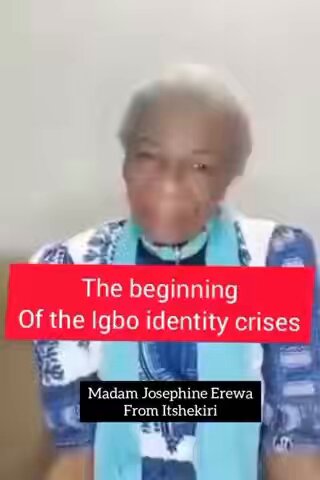
An elderly Itsekiri woman, Madam Josephine Erewa, has offered a striking account of her childhood memories of the Eastern Region and the deep historical connections she says existed between communities before the Nigerian Civil War.
Recounting her experience, Erewa said that while growing up, her understanding of identity and regional belonging was largely centred around the Eastern Region, Igbo people and the famous Onitsha Market.
She recalled that she was attending school in Sapele when the Nigerian Civil War broke out, an experience that she said profoundly shaped her understanding of the tensions and narratives surrounding the conflict.
“When I was growing up, we always said we were Eastern Region; Onitsha Market, Igbo and the Eastern Region were all we knew. I was schooling in Sapele when the war broke out.
“Words cannot explain how much the British and Fulani poisoned our minds against the Igbos. There was no internet or social media then to uncover their lies,“ she narrates.
According to the Itsekiri grandmother, the absence of modern communication platforms made it difficult for people at the time to question or challenge narratives they were exposed to.
She argued that British colonial influence and what she described as anti-Igbo narratives attributed to the Fulani contributed significantly to the hostility that developed against the Igbo people.
Erewa noted that unlike today, there was no internet or social media through which people could immediately access alternative accounts, verify claims or expose what they believed to be misinformation.
Her recollection offers a personal perspective on the complex historical relationships, identities and narratives that existed in Nigeria before and during the civil war, while highlighting how information or the lack of it could shape public perception during a turbulent period in the country’s history.
The account has also reignited conversations about how historical narratives are formed, transmitted and remembered across generations, particularly concerning the events that preceded and followed the Nigerian Civil War.