
BUSINESS
U.S. to Receive Up to 50 Million Barrels of Venezuelan Oil, President Trump Says.

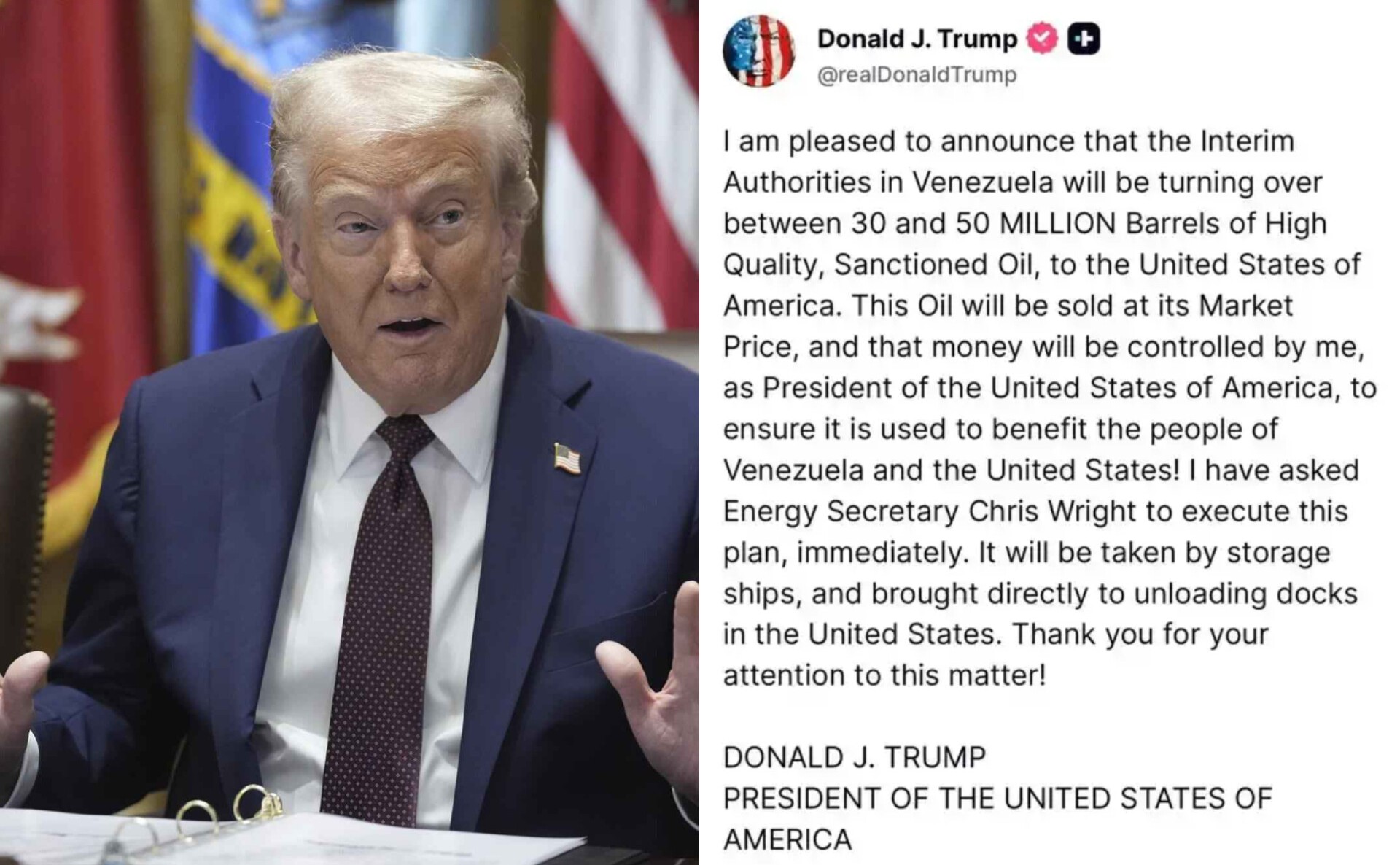
President Donald J. Trump announced late Tuesday that interim authorities in Venezuela have agreed to transfer between 30 million and 50 million barrels of sanctioned crude oil to the United States, marking a major development in U.S.–Venezuela relations.
In a post on his Truth Social platform, President Trump said the oil, described as “high-quality” and sanctioned will be sold at market price, with the proceeds controlled by the U.S. government.
Trump stated he will ensure the funds are used to benefit both the people of Venezuela and the United States.
“I am pleased to announce that the Interim Authorities in Venezuela will be turning over between 30 and 50 MILLION Barrels of High Quality, Sanctioned Oil, to the United States of America,” the president wrote, adding that he has directed Energy Secretary Chris Wright to execute the plan “immediately.”
The oil, Trump said, will be transported aboard storage ships directly to U.S. unloading docks. The announcement follows significant geopolitical shifts in Venezuela after recent U.S. military actions that resulted in the capture of Venezuelan President Nicolás Maduro and his wife, who were taken to New York to face federal charges.
At current crude prices, the volume being transferred could be worth billions of dollars, with analysts noting this could have ripple effects in global energy markets. The decision also underscores the strategic importance of Venezuelan oil, the country holds some of the largest known crude reserves in the world.
Trump’s statement emphasized that the arrangement could help stabilize energy supplies and foster economic benefits on both sides, though details about how the proceeds will be allocated remain limited.
The move has already drawn attention across political and diplomatic circles. Supporters argue it strengthens U.S. energy security and bolsters economic opportunity.
Critics, however, view it as a controversial expansion of executive authority and have raised concerns about international law, sovereignty, and the broader consequences of U.S. involvement in Venezuelan affairs.
The situation remains fluid, with further reactions expected from governments in Latin America, global energy markets, and institutions such as the United Nations.