
COMMENTARY
Wike Slams Rivers Assembly Over ₦600bn Disclosure, Warns of Abuja-Based ‘419’ Politicians Targeting State Funds

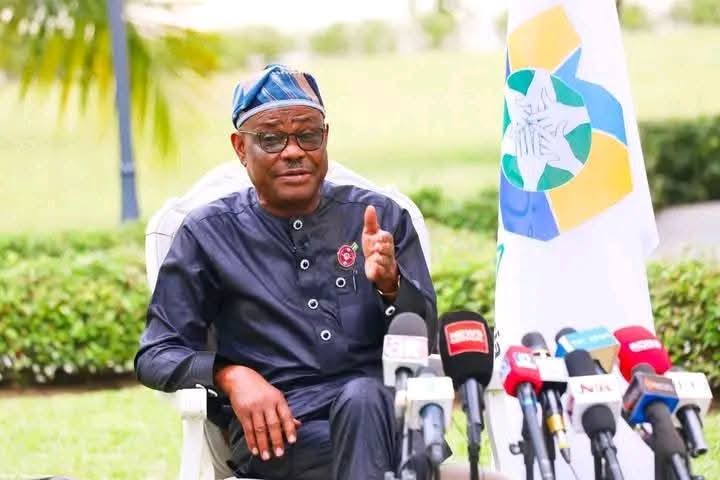
The Minister of the Federal Capital Territory (FCT), Nyesom Wike, has strongly criticized the Rivers State House of Assembly for publicly revealing that the state government has over ₦600 billion in its coffers, describing the move as reckless and dangerous to the state’s financial security.
Wike faulted the disclosure, calling it a “grave mistake” that has unnecessarily exposed Rivers State to political opportunists, commonly referred to as “jobbers,” who he said are more interested in exploiting public resources than contributing to genuine development.
According to the former Rivers State governor, the public announcement has now positioned the oil-rich state as a soft target for politicians whose primary motivation is access to money rather than service to the people. He argued that many political actors across the country are constantly scanning for states perceived to be financially buoyant, with the intention of inserting themselves into power structures to benefit personally.
Wike further alleged that the financial figures disclosed by the Assembly were not accurate and should never have been made public in the first place. He stressed that sensitive financial information, when mishandled, can attract undue pressure and manipulation from external forces seeking to benefit at the expense of the state.
Warning of organized political exploitation, Wike said political “419” operators, particularly those based in Abuja, closely monitor states believed to be flush with funds. According to him, such individuals rely on misinformation, influence-peddling, and proximity to power to defraud governments and divert public resources.
Emphasizing the seriousness of the threat, the FCT Minister bluntly stated, “They are after Rivers money,” cautioning that Rivers State must be vigilant to avoid becoming a playground for political profiteers.
Wike made these remarks during a visit to the Rivers State House of Assembly, where he advised lawmakers to exercise greater caution and discretion in handling sensitive matters of state, especially issues related to finances. He urged the legislators to understand that while transparency is essential in governance, it must be balanced with wisdom, responsibility, and strategic judgment.
He concluded by warning that careless disclosures not only weaken a state’s negotiating position but also expose it to exploitation, pressure, and political manipulation, stressing that effective governance demands both openness and prudence in managing public affairs.