
NEWS
Yelewata Elders Apologise to Peter Obi, Invite Him Back After Convoy Blockade


The people of Yelewata in Guma Local Government Area of Benue State have apologised to the Labour Party presidential candidate, Peter Obi, following the disruption of his planned visit to the community.
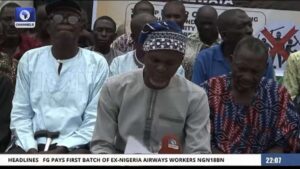
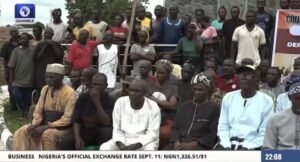
The apology was issued by the Council of Yelewata Elders during a press conference held at the Yelewata Genocide Memorial Hall, where community leaders dissociated themselves from the youths who reportedly blocked Obi’s convoy as he travelled to the area.
The elders expressed deep regret over the harassment, embarrassment and inconvenience suffered by Obi and members of his delegation, stressing that the former Anambra State governor had embarked on the journey out of sympathy and concern for families devastated by the June 2025 massacre.
Obi had planned to visit Yelewata to commiserate with survivors and families of victims of the deadly attack, while also offering personal relief support to residents still struggling with the aftermath of the tragedy.
The elders questioned the circumstances surrounding the disruption of the visit, particularly because Obi was travelling to the community primarily to console victims and identify with residents who, according to them, have endured prolonged hardship with inadequate assistance since the attack.
Beyond the apology, the community leaders used the occasion to raise fresh concerns about the reconstruction and rehabilitation efforts in Yelewata, particularly donations and other forms of assistance reportedly received for the victims and rebuilding of the affected community.
They called for greater transparency from the government regarding the management of funds, donations and other support allegedly provided by individuals, local donors and international organisations for the reconstruction of Yelewata and the rehabilitation of affected residents.
According to the elders, more than 270 people lost their lives in the June 13–14, 2025 attack, leaving numerous families displaced and traumatised and the wider community grappling with the consequences more than a year after the tragedy.
The community leaders subsequently appealed to Obi to accept another invitation to Yelewata, assuring him that residents are ready to receive him and that his proposed visit remains welcomed by the community.
They maintained that the people of Yelewata had no objection to Obi’s planned condolence visit and sought to clearly separate the wider community from the youths allegedly responsible for stopping his convoy.
The controversy followed reports that Obi’s convoy was blocked by youths near Makurdi Airport as he attempted to proceed to Yelewata for the condolence visit.
The elders’ latest intervention has therefore not only offered an apology to the Labour Party presidential candidate but has also reopened public discussion about the condition of Yelewata’s displaced residents, the support available to survivors and the transparency of donations and reconstruction assistance reportedly channelled to the communi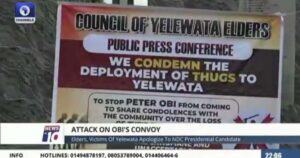


 ty since the massacre.