
NEWS
2027: Atiku Picks Amaechi as Running Mate, Unveils Powerful ADC Ticket Amid Growing Opposition Realignment

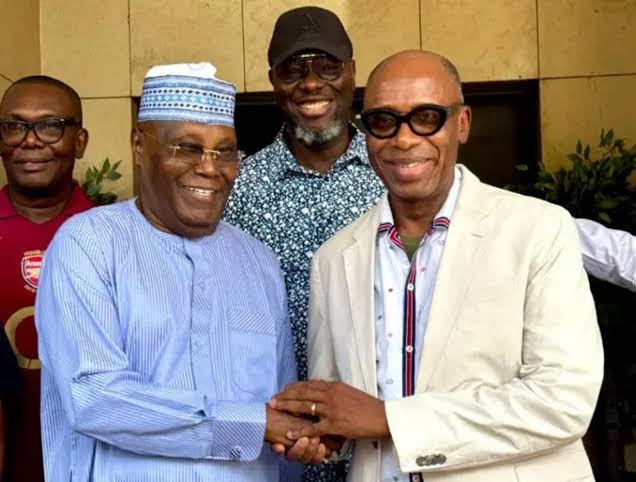
Former Vice President Atiku Abubakar has reportedly secured a major political breakthrough ahead of the 2027 presidential election by settling on former Minister of Transportation and ex-Governor of Rivers State, Chibuike Rotimi Amaechi, as his running mate on the platform of the African Democratic Congress (ADC).
Barring any last-minute changes, the development signals the emergence of a formidable Atiku-Amaechi presidential ticket, a move political observers believe is designed to strengthen the ADC’s chances in the fiercely contested January 16, 2027 presidential election.
The decision follows weeks of intense consultations and negotiations within the opposition coalition and comes amid growing political realignments across the country. The pairing is widely seen as a strategic response to the rival alliance reportedly being championed by former Labour Party presidential candidate Peter Obi and former Kano State Governor Rabiu Musa Kwankwaso under the Nigeria Democratic Congress (NDC).
Political analysts note that the choice of Amaechi provides a North-East/South-South balance to the ADC ticket while also bringing together two of the country’s most experienced political figures. The development marks a significant departure from the events leading up to the 2023 general election when Atiku declined to select former Rivers State Governor Nyesom Wike as his running mate despite Wike’s strong showing in the Peoples Democratic Party presidential primary.
Interestingly, Amaechi had previously dismissed speculations linking him to a vice-presidential position. After obtaining and submitting his ₦90 million presidential nomination form, the former minister insisted he was pursuing his own presidential ambition and was not positioning himself for the number two slot.
He also rejected suggestions of a consensus arrangement within the party, insisting on a direct primary process. However, sources close to the former transportation minister revealed that he eventually accepted the proposal following sustained pressure from influential political leaders across the North-West and South-South regions.
According to insiders, Atiku assured Amaechi that the vice-presidential nominee would play a prominent role both during the campaign and in a future administration if the ADC emerges victorious at the polls.
The latest development also appears to validate earlier speculation within political circles that the ADC had been considering an Atiku-Amaechi alliance as part of its broader electoral strategy.
Meanwhile, prominent ADC chieftain, Eze Chukwuemeka Eze, moved to calm tensions within the party by dismissing claims attributed to media personality and party stalwart Dele Momodu that Amaechi had rejected the vice-presidential offer.
In a statement shared through his verified social media platforms, Eze described the remarks as a personal opinion capable of generating unnecessary tension and misunderstanding within the party. He clarified that Amaechi’s earlier comments merely indicated that no formal approach had been made to him regarding the position at the time.
As political activities gather momentum ahead of 2027, Atiku used the occasion of Democracy Day to launch a strong criticism of the administration of President Bola Ahmed Tinubu, accusing it of undermining the spirit and legacy of the June 12 democratic struggle.
In a Democracy Day statement personally signed by him, the former vice president called on Nigerians to resist bad governance, reject intimidation, and defend democratic values.
He urged citizens to draw inspiration from the sacrifices made by pro-democracy activists who fought for freedom and democratic governance, stressing that the significance of June 12 must not be allowed to fade.
Atiku further alleged that the current administration had, over the past three years, engaged in a deliberate effort to weaken opposition parties ahead of the 2027 elections.
According to him, opposition platforms have been subjected to manufactured leadership crises, orchestrated defections, political intimidation, and the misuse of state institutions.
The former vice president also claimed that institutions expected to serve Nigerians impartially had increasingly become instruments of partisan politics. He alleged that anti-corruption agencies, security institutions, the National Assembly, and sections of the judiciary had been used to pressure, harass, and intimidate opposition figures into silence or defection.
With opposition forces repositioning ahead of the next general election, the emergence of a potential Atiku-Amaechi ticket is expected to further reshape the political landscape and intensify preparations for what is already shaping up to be one of Nigeria’s most competitive presidential contests.