
NEWS
Nigeria Bans Indigenous Languages in Schools, Mandates English as Sole Medium of Instruction to Boost Learning Outcomes and Global Competitiveness

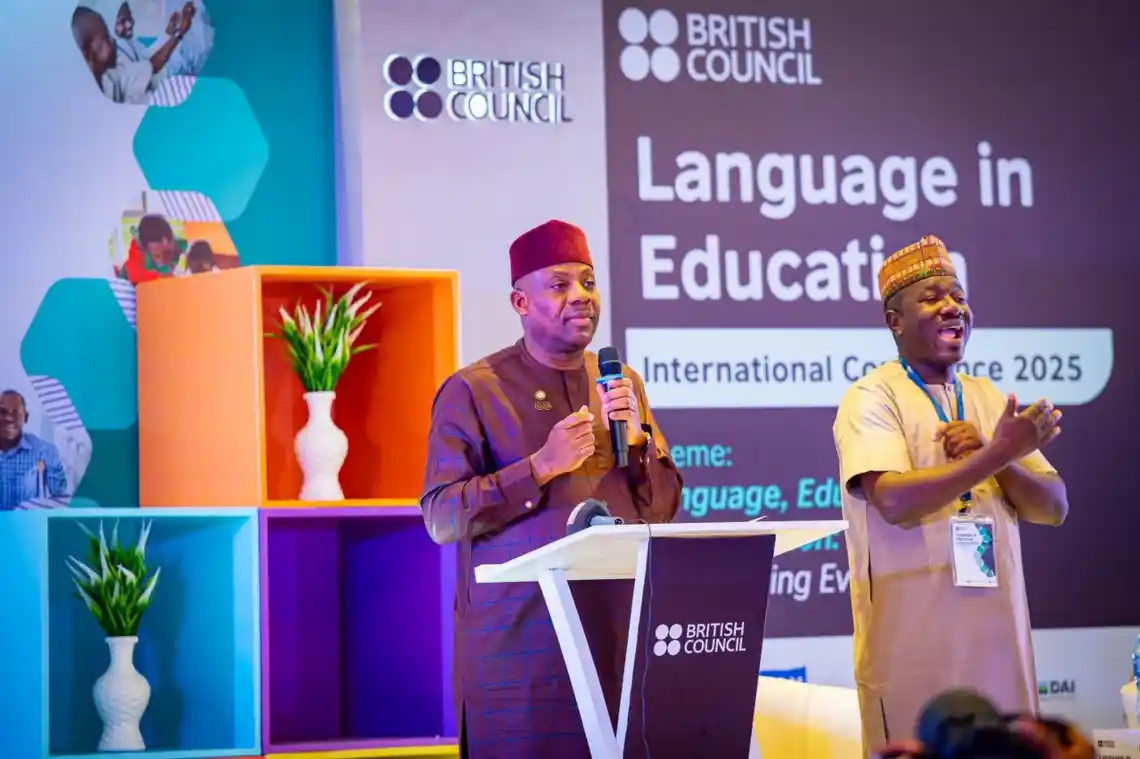
In a landmark move set to reshape the nation’s education landscape, the Nigerian government has officially suspended the use of indigenous languages as the medium of teaching in schools across the country, directing teachers to prioritise English as the primary language of instruction.
The announcement was made by the Minister of Education, Dr. Tunji Alausa, on Wednesday during the Language in Education International Conference 2025, hosted by the British Council in Abuja. The two-day conference, themed “Language, Education and Inclusion: Empowering Every Learner,” convened policymakers, educators, researchers, and development partners from Africa, South Asia, and the United Kingdom to explore strategies for promoting equitable and quality education through language.
Addressing participants, Dr. Alausa emphasized that while the preservation of indigenous languages remains vital for cultural identity, the use of English as the main medium of instruction is now a strategic imperative to enhance comprehension, learning outcomes, and Nigeria’s global competitiveness.
“The English language should be used to teach our students at all levels as a means of instruction,” the minister stated.
He further explained, “Over the years, mother tongues have been used to teach, and this has largely been responsible for the failures recorded in exams. The national policy on language has been cancelled. English now stands as the medium of instruction across all levels of education.”
Dr. Alausa highlighted that English also serves as a unifying tool across Nigeria’s linguistically diverse landscape, offering students wider access to global knowledge, technology, and international opportunities. He noted that the decision is grounded in empirical evidence, citing data showing that excessive reliance on mother tongue instruction in certain regions has negatively impacted student performance in national examinations such as WAEC, NECO, and JAMB.
“The new policy reflects a shift toward evidence-based governance, moving beyond what has been an emotional attachment to language identity in the education sector,” Alausa added.
The British Council, a key partner in the conference, reaffirmed its commitment to promoting inclusive and equitable education through language-responsive teaching initiatives across Sub-Saharan Africa.
Julian Parry, Director of English Programmes for Sub-Saharan Africa, emphasized the pivotal role of language in education, describing it as “a bridge to inclusion, identity and opportunity for every learner,” while underscoring the importance of global collaboration and knowledge-sharing to improve educational outcomes.
Echoing this sentiment, Chikodi Onyemerela, Director of Programmes at British Council Nigeria, highlighted inclusion as a cornerstone of the Council’s educational partnerships.
“We are deeply privileged to be hosted in Nigeria. Since 2015, through our Pan-Ethnic Classrooms Programme, we have developed inclusive pedagogy initiatives that enable teachers to embed inclusive practices in the classroom,” Onyemerela said.
This sweeping policy shift signals a major transformation in Nigeria’s education sector, as the government moves to align classroom instruction with international standards and strengthen students’ proficiency in English, widely regarded as the global language of commerce, technology, and higher education.