
NEWS
Global Study Ranks the 20 Most Dangerous Addictions as Pornography Falls Surprisingly Low Despite Public Perception

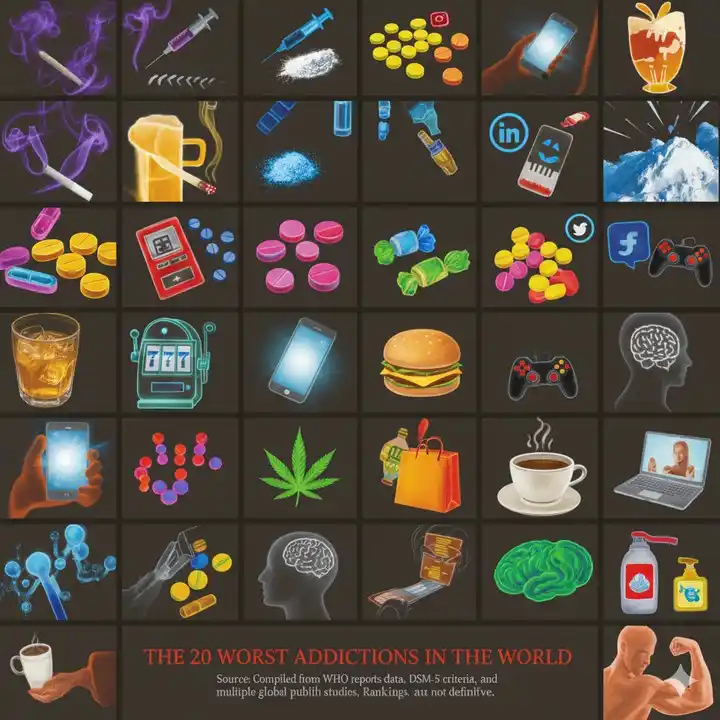
A comprehensive review of global addiction data has revealed the 20 most dangerous and widespread addictions affecting humanity today, drawing on World Health Organization (WHO) reports, the Centers for Disease Control and Prevention (CDC), DSM-5 diagnostic criteria, and multiple public health studies worldwide. While many assume addictions related to digital and sexual behaviors dominate, the findings highlight a stark reality: the most notorious perceived addictions, including pornography, are not among the top 10 most severe or prevalent.
According to the compiled rankings, nicotine and tobacco use remain the deadliest and most widespread addiction, followed closely by alcohol consumption, which continues to claim millions of lives annually due to liver disease, accidents, and other health complications. Traditional drugs like heroin and cocaine, along with prescription opioids and methamphetamine, remain high on the list due to their extreme physiological and psychological impacts, including high rates of overdose and mortality.
Gambling, smartphone addiction, social media, and video gaming round out the top ten, reflecting the rising concern over behavioral addictions in the digital age. While these habits may not carry the same physical lethality as heroin or cocaine, their chronic effects on mental health, productivity, and social interactions are increasingly recognized as major public health concerns.
Beyond the top ten, the study identifies other significant yet often overlooked addictions. Junk food, sugar, caffeine, chronic marijuana use, internet overuse, shopping, pornography, inhalants, workaholism, and performance-enhancing drugs each pose unique physical, emotional, or social risks.
Notably, pornography, despite being frequently cited in popular discourse as highly addictive is ranked 17th, well below alcohol, nicotine, and behavioral addictions such as gaming and gambling. This ranking suggests that while pornography can impact mental health and relationships, its overall addictive potential and public health burden are comparatively lower than commonly assumed.
Experts emphasize that understanding addiction requires a nuanced perspective that accounts for both physiological dependence and behavioral reinforcement. While public perception often exaggerates certain modern digital and sexual addictions, evidence continues to point to substances like tobacco, alcohol, and opioids as the most destructive worldwide.
The full list of the 20 addictions, in order of severity and prevalence, is as follows:
1. Smoking/Nicotine
2. Alcohol
3. Heroin
4. Cocaine
5. Prescription drugs (opioids, painkillers)
6. Methamphetamine
7. Gambling
8. Smartphone addiction
9. Social media
10. Video games
11. Junk food
12. Sugar
13. Caffeine
14. Marijuana (chronic use)
15. Internet addiction
16. Shopping addiction
17. Pornography
18. Inhalants
19. Workaholism
20. Steroids/performance drugs
This ranking underscores the urgent need for global awareness campaigns, targeted interventions, and comprehensive treatment strategies, prioritizing both substance and behavioral addictions based on their real-world impact rather than perception alone.