
NEWS
South Korea’s Former President, Yoon Suk Yeol Sentenced to Life Imprisonment Over Martial Law Decree and Insurrection Conviction

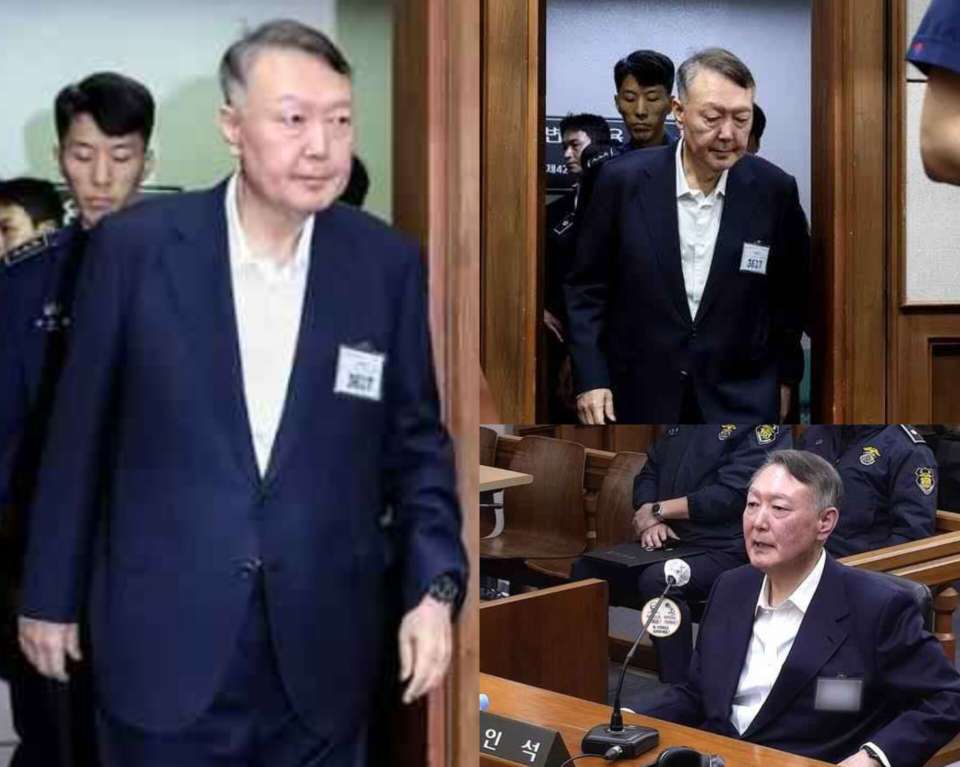
A dramatic chapter in South Korea’s democratic journey unfolded on Thursday as a court handed former President Yoon Suk Yeol a life sentence after convicting him of abuse of authority and masterminding an insurrection tied to his controversial attempt to impose martial law in December 2024.
The verdict, delivered by the Seoul Central District Court, marks one of the most consequential criminal convictions of a former national leader in the country’s modern history. The ruling follows months of intense political tension that left the nation sharply divided and its democratic institutions under strain.
Prosecutors had sought the death penalty, arguing that Yoon’s emergency martial law declaration was unconstitutional and a calculated move to weaken democratic governance. They maintained that his actions disrupted the functioning of the National Assembly of South Korea and interfered with the country’s election management system, moves they described as a direct assault on the liberal democratic constitutional order.
Court filings detailed how the martial law order allegedly led to the obstruction of legislative proceedings and attempts to neutralize political opposition. Under South Korean law, masterminding an insurrection carries a maximum punishment of death or life imprisonment. Although courts still pronounce death sentences, South Korea has not carried out an execution since 1997, making life imprisonment the harshest practical penalty.
During the trial, prosecutors accused the former president of instructing troops to storm parliament with orders to remove and detain political opponents. He was also alleged to have deployed soldiers and police officers to strategic locations, including opposition party offices and key government facilities, in what prosecutors described as a coordinated effort to consolidate control.
Security was visibly heightened around the courthouse ahead of the verdict. Police units were heavily deployed, with buses forming protective barricades around the premises amid concerns that rival political supporters could clash following the judgment.
Yoon, 65, a conservative former prosecutor before entering politics, denied all wrongdoing throughout the proceedings. He insisted that his actions fell within presidential powers and defended the martial law declaration as a necessary measure to confront what he characterized as persistent obstruction from opposition lawmakers.
Now detained at the Seoul Detention Centre, the ousted leader is expected to remain in custody as his legal team prepares to file an appeal. The appeals process could prolong the political and legal reverberations of a case that has already reshaped South Korea’s political landscape.
The ruling stands as a defining moment for the country’s judiciary and democratic institutions, reinforcing the principle that even the highest office in the land is not beyond the r
 each of the law.