
NEWS
University Student Demands ₦15 Million Over Alleged False Rape Accusation as Social Media Storm Sparks National Debate on Defamation and Digital Justice

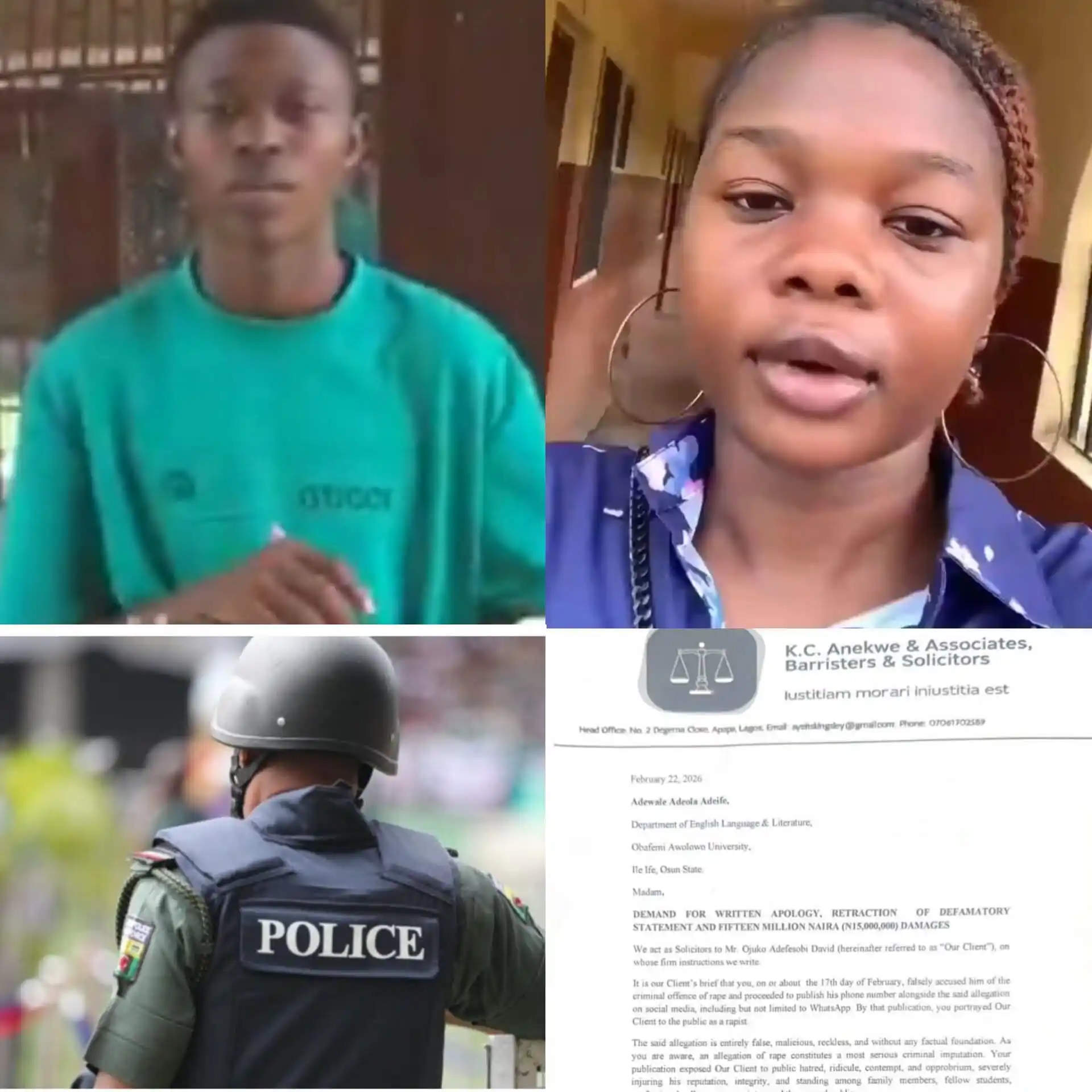
A university student has formally demanded ₦15 million in damages after he was allegedly falsely accused of rape on social media, igniting one of the most widely discussed online controversies in recent days.
According to a legal letter dated February 22, 2026, solicitors from K.C. Anekwe & Associates, acting on behalf of Mr. Ojukọ Adesobi David, accused a woman of making a false rape allegation on or about February 17. The accusation was subsequently circulated across multiple social media platforms, gaining rapid traction and exposing the student to widespread public scrutiny.
The allegation reportedly included the public release of David’s phone number, an action that allegedly triggered a flood of calls and messages from strangers branding him a rapist. Within hours, his name began trending in online discussions as a suspected sexual offender, with digital conversations amplifying the claim before any formal investigation or verification had taken place.
His legal representatives described the allegation as entirely false, malicious, reckless, and without factual foundation. They argue that the accusation resulted in severe reputational harm, emotional distress, and loss of business opportunities, significantly affecting both his personal life and professional prospects.
For several days, the student’s identity remained entangled in online narratives portraying him as guilty, demonstrating the speed at which information verified or not can spread in the digital age.
However, the case took a dramatic turn when the woman at the center of the allegation later released a public apology video clearing David of wrongdoing. In the video, she reportedly admitted that the accusation stemmed from annoyance rather than any actual incident.
Despite the public apology, David maintains that the damage had already been done. His lawyers argue that the apology lacked genuine remorse and failed to adequately repair the reputational and emotional harm allegedly inflicted. They contend that once such an allegation circulates online, the digital footprint can remain indefinitely through screenshots, reposts, and archived discussions.
As a result, the student is demanding ₦15 million in compensation for defamation and related harm, alongside a written apology and full public retraction on all platforms where the allegation appeared. He is also seeking the immediate removal of all defamatory content and a formal undertaking that such statements will never be repeated.
The accused party has reportedly been given 14 days to comply with the demands, failing which legal proceedings may commence. As of the time of reporting, the matter remains at the pre-litigation stage, with no court filing yet confirmed.
Legal analysts say the dispute underscores the growing phenomenon of trial by social media, where allegations can spread to thousands within minutes, often outpacing due process. Unlike physical harm, reputational damage can persist long after innocence is established, especially in an era where digital records rarely disappear completely.
Public opinion appears divided. Some commentators argue that ₦15 million is excessive, while others maintain that publicly labeling someone a rapist without substantiated evidence carries grave consequences that justify substantial financial penalties. A few have even suggested that the student could have demanded a significantly higher sum.
Observers also note that had the allegation not been retracted, the student’s academic future, career trajectory, and even personal safety might have suffered irreversible harm.
Beyond the individuals involved, the case has reignited public discourse on false accusations, social media justice, due process, reputational harm, and legal accountability in the digital era.
Supporters of the lawsuit argue that imposing strong legal consequences could deter reckless or malicious accusations online. Critics, however, caution that large financial penalties might discourage genuine victims from speaking out, particularly in sensitive cases involving sexual misconduct.
For now, the dispute remains unresolved, but its impact on public conversation is undeniable. The incident stands as a stark reminder that a single accusation posted online can alter a life overnight whether proven true or false.