
NEWS
U.S. DEFENSE SECRETARY, PETE HEGSETH DISMISSES CONCERNS OVER ALLEGED RUSSIA–IRAN INTELLIGENCE SHARING, SAYS AMERICA HAS “THE BEST INTELLIGENCE IN THE WORLD” AND FULLY TRACKS REGIONAL DEVELOPMENTS

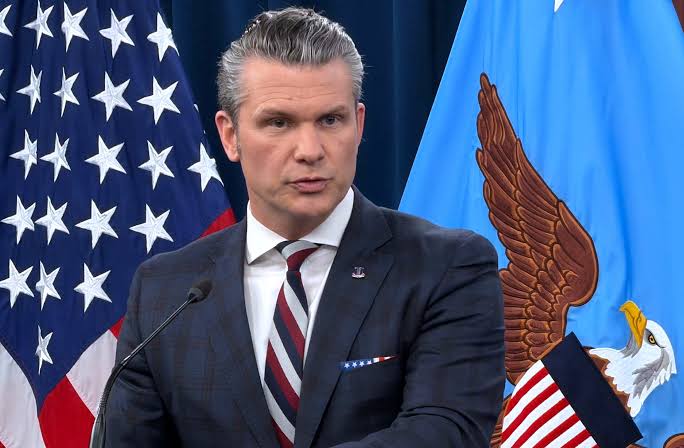
The United States government has downplayed growing concerns over reports that Russia may be providing intelligence to Iran regarding the positions and movements of American troops, with U.S. Defense Secretary, Pete Hegseth insisting that Washington remains firmly in control of the situation and closely monitoring all developments.
According to a report by The Times of Israel published on March 7, 2026, Hegseth made it clear that the United States is not alarmed by the alleged intelligence cooperation between Russia and Iran concerning the activities of American forces in the region.
Addressing the issue, the defense chief emphasized that the United States possesses unmatched intelligence capabilities and that American military leadership remains fully informed about every strategic movement and communication within the theatre of operations.
Hegseth stressed that the United States military is actively tracking all relevant developments and maintains full situational awareness.
According to him, American commanders on the ground are well briefed and constantly integrating intelligence updates into operational strategies.
He further reassured that the alleged information-sharing between Russia and Iran does not pose a threat to American troops, noting that U.S. military planners are prepared to counter any potential risks that may arise.
The defense secretary underscored that the United States maintains a dominant intelligence network globally and is fully aware of interactions occurring between international actors involved in the situation.
In his words, “We have the best intelligence in the world. We’re aware of who’s talking to who.”
Hegseth also noted that American military leadership continuously incorporates intelligence reports into tactical and strategic planning, ensuring that all relevant information is factored into operational decisions on the battlefield.
He emphasized that the role of the United States military is not merely defensive but also proactive in safeguarding national interests and maintaining strategic superiority.
According to him, the responsibility of the armed forces includes ensuring that adversaries remain under pressure rather than allowing American forces to be placed at risk.
Hegseth further explained that U.S. military operations are structured to neutralize threats before they escalate, stressing that any actions or communications that should not be occurring—whether openly or through covert channels are being confronted decisively by the United States.
Reiterating the confidence of the U.S. defense establishment, the secretary assured that American commanders and intelligence agencies remain vigilant and well-prepared to handle any evolving developments within the geopolitical landscape.
He concluded by assuring that the American public can remain confident in the leadership of their commander-in-chief and the capabilities of the U.S. military and intelligence community, which he said are fully aware of ongoing communications and activities among international actors in the region.